
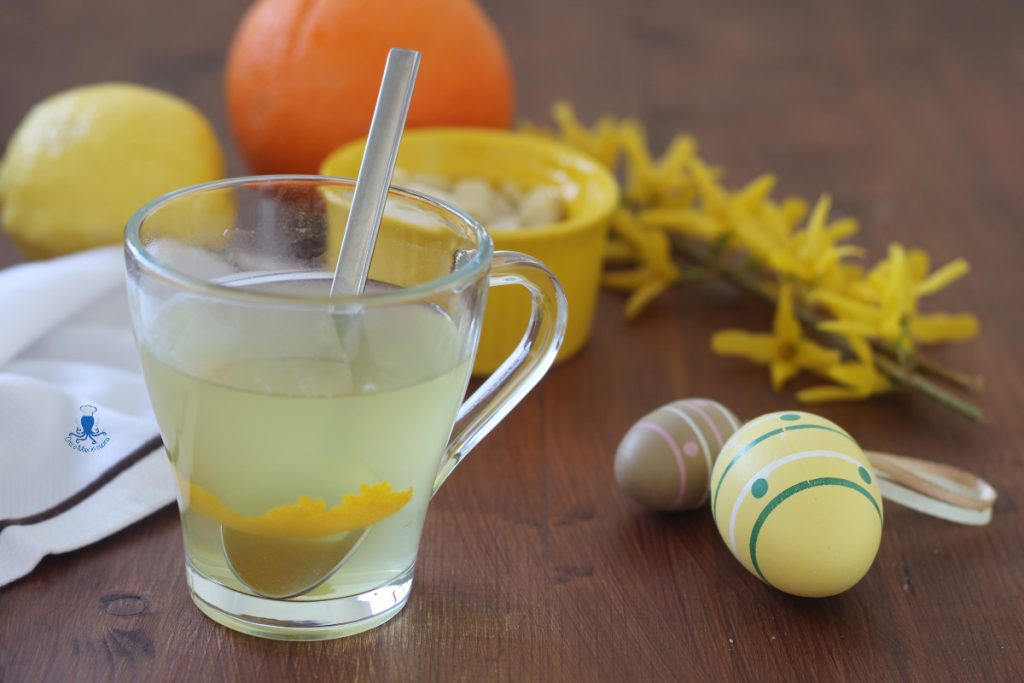
The Easter citrus and almond herbal tea is a simple, fragrant infusion that recalls the typical flavors of Easter pastries. The scent of orange and lemon blends with the delicacy of almonds to create a warm, aromatic drink, ideal to enjoy on spring afternoons or after festive meals.
This herbal tea is very easy to prepare and requires few ingredients, but the result is surprisingly fragrant. The citrus peels release all their natural aroma into the hot water while the sliced almonds give a slightly sweet and delicate note.
This tea is inspired by the aromas of the traditional Italian Easter cake Colomba, thanks to the combination of citrus and almond that creates a warm and very pleasant infusion.
During the infusion the almonds absorb the citrus aroma and become soft and aromatic. Don’t discard them after straining the tea: they are delicious to eat.
Thanks to the natural scent of citrus, this tea is particularly pleasant after meals when you want a light, warm drink to accompany digestion.
- Difficulty: Very easy
- Cost: Very economical
- Preparation time: 5 Minutes
- Cooking time: 5 Minutes
- Portions: 1 cup
- Cooking methods: Stovetop
- Cuisine: Italian
- Seasonality: Easter, Spring
Ingredients for the Easter citrus and almond herbal tea:
- 1 cup still water
- to taste organic lemon peel (2–3 strips)
- to taste organic orange peel (2–3 strips)
- 2 teaspoons sliced almonds
- 1 teaspoon acacia honey
Tools for the Easter citrus and almond herbal tea:
- 1 Small saucepan
- 1 Cup
- 1 Knife
- 1 Teaspoon
Steps for the Easter citrus and almond herbal tea:
To prepare the Easter citrus and almond herbal tea, start by washing the orange and the lemon thoroughly.
With a vegetable peeler or a sharp knife, remove a small strip of orange peel and a strip of lemon peel, trying to take only the colored part of the zest. The white pith can make the tea slightly bitter.Bring the water almost to a boil in a small saucepan. When the water is very hot but not at a full rolling boil, add the citrus peels and the sliced almonds.
Let the ingredients steep in the hot water for about five minutes so they can slowly release all their aroma.At this point, strain the tea directly into the cup. If you wish, sweeten with a teaspoon of honey and stir gently.
Serve the tea while still hot. The almond slices left in the strainer will have absorbed the citrus aroma: you can eat them or use them to enrich yogurt or fruit salad.
The beneficial effects of the citrus and almond herbal tea:
This tea is a warm, natural beverage that combines simple, fragrant ingredients. Orange and lemon peels release natural aromatic oils into the hot water, making the infusion particularly fragrant and pleasant even after meals.
Hot citrus-based drinks are traditionally appreciated because they help make the break moment more relaxing and can accompany digestion thanks to their fresh, lightly citrus aroma.
The sliced almonds add a delicate, rounded note to the tea. During the infusion they absorb the citrus scent and become soft and aromatic, so they can be eaten after straining the infusion.
What is the difference between an herbal tea and a decoction?
Often the two terms are used as if they were synonyms, but in reality herbal tea (infusion) and decoction are two different preparations.
An herbal tea (infusion) is made by pouring hot water over the ingredients and letting them steep for a few minutes. This method is ideal for delicate plant parts such as flowers, leaves and peels.
A decoction, on the other hand, requires a different preparation: the ingredients are put directly into cold water and boiled for a few minutes. This method is mainly used for harder parts such as roots, barks or seeds.
In this recipe we use the infusion method because citrus peels release their aroma gently simply by steeping.
FAQ (Questions and Answers)
Can I prepare this tea without honey?
Yes, honey is optional. The tea is already very fragrant thanks to the orange and lemon peels and can be enjoyed as is.
Is it important to use organic citrus?
Yes, it is advisable to use organic oranges and lemons because this recipe uses the peels, which should be clean and free from treatments.
When should I drink this tea?
This tea is perfect during the Easter period, but it can be enjoyed at any time of the day when you want a warm, fragrant drink.
