
The raggmunk is one of those dishes that tells a story even before it reaches the table. A simple, rustic recipe deeply rooted in Swedish tradition, it also resonates with contemporary kitchens thanks to its straightforwardness, versatility and that irresistible combination of a crisp exterior and a soft interior. It’s no surprise that in recent years raggmunk has been enjoying renewed popularity, becoming one of the most sought-after Nordic recipes online for those who love discovering authentic flavors and internationally charming comfort food.
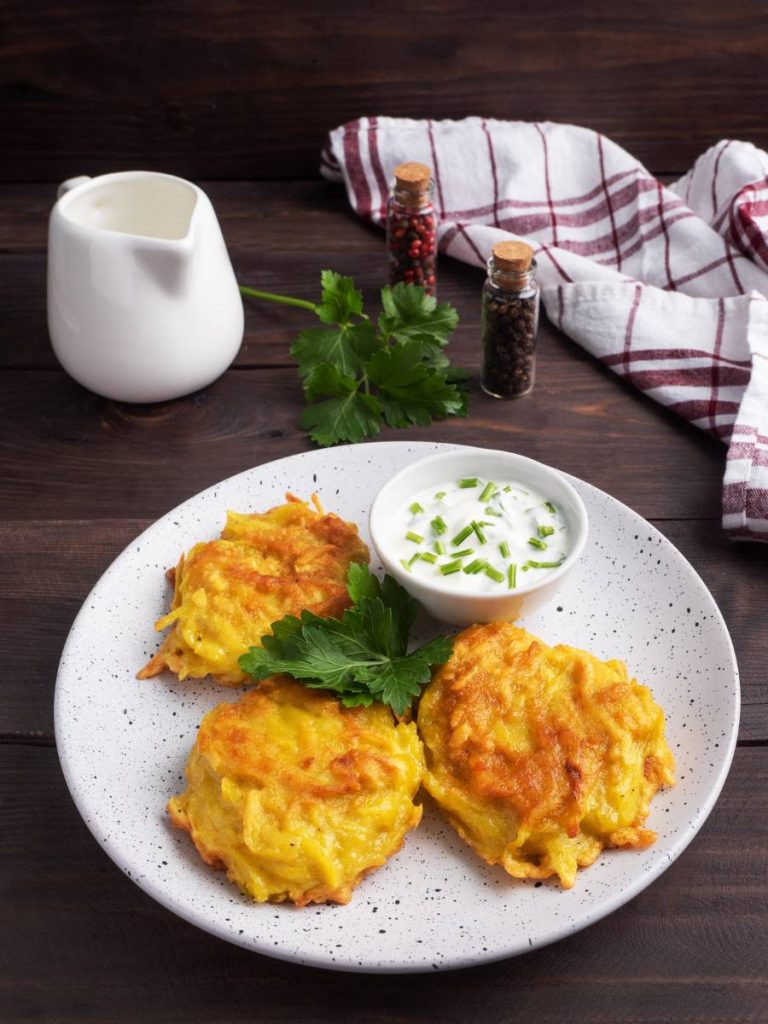
Made with just a few ingredients – potatoes, flour, milk and eggs – raggmunk perfectly demonstrates how Scandinavian cooking can elevate humble ingredients with technique and sensitivity. The potato, the undisputed star, is finely grated to create a light batter that, once poured into the pan, turns into a golden, crunchy pancake. The result is a dish reminiscent of Swiss rösti or Jewish latkes, but with its own personality: thinner, more delicate and surprisingly elegant.
What makes raggmunk even more interesting is its traditional pairing with lingonberry jam (lingonsylt), a preserve typical of the Nordic countries. The contrast between the savory pancake and the sweet-tart jam creates a perfect, almost iconic balance that captures the essence of Swedish cuisine: essential, clean and harmonious. Alternatively, raggmunk can be served with crispy bacon, sour cream or seasonal vegetables, easily transforming into a main course, a creative appetizer or a Scandinavian-style brunch.
From a nutritional standpoint, raggmunk is simple yet hearty—ideal for those seeking quick, inexpensive and satisfying recipes. Preparation takes just a few minutes and requires no complex techniques, making it perfect for kitchen novices or anyone who wants to bring something different to the table without fuss.
In this article you’ll discover how to make the perfect raggmunk, which potatoes to choose, how to get the right texture and which variations to try to personalize the recipe. I’ll guide you step by step through a dish that smells of home, northern woods and traditions that stand the test of time. A recipe that wins at first bite and deserves a special place in your comfort food repertoire.
If you’re ready to bring a bit of Sweden into your kitchen, raggmunk is the ideal starting point.
The desire to travel the world is never too great, and if we can’t do it in person we can do it virtually by cooking something from afar. From my collection “Around the World” I leave you a few tasty recipes.
- Difficulty: Easy
- Cost: Budget-friendly
- Rest time: 30 Minutes
- Preparation time: 10 Minutes
- Cooking time: 8 Minutes
- Portions: 4 servings
- Cooking methods: Stovetop
- Cuisine: Scandinavian
- Seasonality: All seasons
- Energy 489.40 (Kcal)
- Carbohydrates 73.71 (g) of which sugars 6.69 (g)
- Proteins 14.53 (g)
- Fat 16.31 (g) of which saturated 9.96 (g)of which unsaturated 6.31 (g)
- Fibers 6.57 (g)
- Sodium 690.97 (mg)
Indicative values for a portion of 400 g processed in an automated way starting from the nutritional information available on the CREA* and FoodData Central** databases. It is not food and / or nutritional advice.
* CREATES Food and Nutrition Research Center: https://www.crea.gov.it/alimenti-e-nutrizione https://www.alimentinutrizione.it ** U.S. Department of Agriculture, Agricultural Research Service. FoodData Central, 2019. https://fdc.nal.usda.gov
Ingredients for raggmunk
- 1.75 lb potatoes
- 1 cup whole milk
- 3/4 cup all-purpose flour (+ 1 tbsp (approximately 100 g))
- 1 egg (large)
- 2 teaspoons salt
- as needed butter (for frying)
Tools
- Crepe pan
Preparation of raggmunk
In a bowl, whisk together the milk and flour. Beat the egg with the salt. Grate the potatoes using the fine or coarse side of the grater, depending on your preference, and add them to the batter. Let rest for 30 minutes before frying the potato pancakes.
Heat a generous knob of butter in a pan. Pour about 1/2 cup of batter into the pan and fry until you get a thick pancake (more or less like American-style pancakes); try to spread the batter so the grated potatoes are evenly distributed throughout the “pancake” and not just in the center. Fry over medium heat on both sides until the pancake is golden and crisp at the edges. Be careful not to overheat it, otherwise it will brown before the potatoes are properly cooked. It will take about 4 minutes per side.
Place the pancakes on a plate or baking tray and keep them warm in the oven at about 158-176 °F.
Fry the bacon or sliced pork until golden and crispy, then drain on paper towels.
Serve the hot potato pancakes with fried bacon or pork and lingonberry jam.I also love them simply with a little yogurt sauce or sour cream flavored with chives.
Follow me on social media
my Facebook page Facebook my profile Instagram my page Pinterest
FAQ (Questions and Answers)
What are the typical dishes of Scandinavian cuisine?
Scandinavian cuisine includes iconic dishes such as Swedish meatballs (köttbullar), cured salmon (gravlax), potato pancakes (raggmunk), rye bread, fish soups and cinnamon pastries like kanelbullar. These recipes are simple, seasonal and based on local ingredients such as potatoes, berries, fish and whole grains.
Why is Nordic cuisine considered so healthy?
Scandinavian cooking relies on fresh, minimally processed, nutrient-rich ingredients: omega-3-rich fish, whole grains, legumes, seasonal vegetables and berries. The limited use of sugars and saturated fats, together with lighter cooking techniques, helps make it one of the most balanced and appreciated diets in Europe.
What is the difference between Swedish, Norwegian and Danish cuisine?
While they share many ingredients, each country has its own specialties: Swedish cuisine is famous for meatballs, potato pancakes and berry preparations; Norwegian cuisine highlights fish and seafood such as salmon and cod; Danish cuisine is known for smørrebrød, open-faced sandwiches rich in fresh ingredients and creative combinations.
