
The soft focaccia with cherry tomatoes and asiago is an irresistible leavened bread, perfect for those who love tall, alveolated textures rich in topping. This preparation is based on a simplified breadmaking method that doesn’t require a stand mixer: thanks to the rounds of folds performed at regular intervals, the dough gains strength and structure, trapping the air that will make it feather-light after baking. The pairing of the sweetness of the cherry tomatoes with the melty heart of asiago cubes creates a Mediterranean flavor contrast, completed by a final aromatic brush that adds shine and savoriness. Follow my technical tips to achieve a homemade focaccia with a crunchy base and a crumb as soft as a cloud!
If you like leavened breads try easy pizza, the super-soft danubio pizzaiola, the rolled pizzaiola pizza or the skillet focaccia with spinach.
Browse my SAVORY TARTS to find ones you like!
Follow my FACEBOOK page for lots of daily cooking inspiration!
OTHER SAVORY LEAVENED BAKES
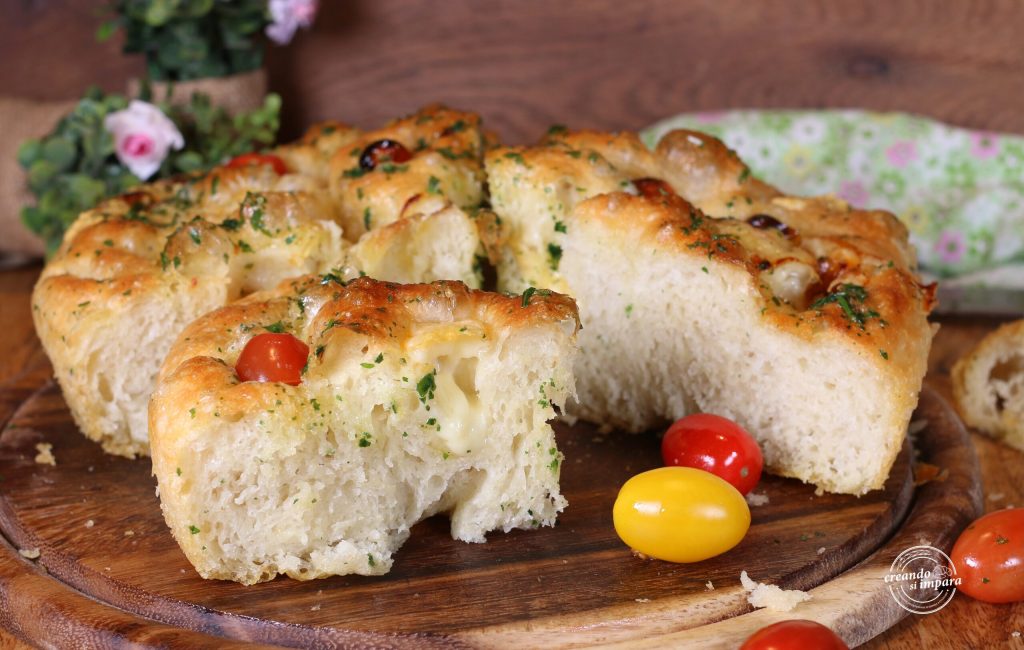
- Difficulty: Easy
- Cost: Inexpensive
- Rest time: 4 Hours
- Preparation time: 30 Minutes
- Cooking time: 25 Minutes
- Cooking methods: Oven
- Cuisine: Italian
- Seasonality: All seasons
Ingredients for your soft focaccia
- 4 cups type 0 flour
- 1 2/3 cups water (lukewarm)
- 2 1/4 tsp fresh brewer's yeast (about 7 g)
- 7 oz cherry tomatoes (about 1 1/2 cups)
- 5.3 oz asiago (cubed)
- 1 teaspoon salt
- to taste extra virgin olive oil
- 1 tablespoon chopped parsley
Tools
This post contains affiliate links
- Pan
Steps to prepare the soft focaccia with cherry tomatoes and asiago
Start by pouring the lukewarm water into a large bowl and dissolving the brewer’s yeast in it. Gradually add the flour and the salt, starting to mix with a fork until all the liquid is incorporated. Long kneading is not necessary: the aim at this stage is to get a rough, well-hydrated mass. Cover the surface of the mixture with a drizzle of olive oil, seal the bowl with plastic wrap or a damp cloth and let rest for 30 minutes. This first rest allows the gluten to begin forming spontaneously, making the dough of your homemade focaccia more elastic and easier to work in the following steps.
After this time, perform the first round of folds in the bowl: with slightly oiled hands, lift a flap of dough from the outside and bring it toward the center, rotating the bowl until you complete the circle. Rest another 30 minutes and repeat the operation, but this time perform the rounds of folds on the work surface, folding the dough onto itself to incorporate air. Shape into a smooth ball and return it to the oiled bowl until it doubles in volume. These intervals of rest and handling are the technical secret for a soft focaccia that isn’t gummy, ensuring large and regular internal alveolation.
Generously oil a baking pan and gently pour the risen dough into it, trying not to deflate it. Round the dough slightly and start dabbing the surface with your fingertips, creating the classic focaccia dimples. Cover again with plastic wrap and let rise for another 45 minutes. During this final rise, the dough will relax, filling the entire pan and becoming full of air bubbles. The manual shaping is a crucial step: do not use a rolling pin, because the pressure of the fingers allows oil to accumulate in the holes, creating alternating soft and crunchy spots typical of Apulian or Genovese focaccia.
Brush again with a drizzle of oil, focusing on the dimples, and press the halved cherry tomatoes and the asiago cubes into the dough. Press the ingredients well so they remain embedded in the dough during oven expansion. Bake at 356°F (180°C) on the lower rack for about 25 minutes. The low position is a technical trick to ensure a well-browned, crunchy base, while the cheese will melt without burning too early. As soon as it comes out of the oven, brush the surface with a mix of oil, parsley and salt. Serve your soft focaccia still hot to enjoy the melty asiago and the intense aroma of the flavored oil.
Tips for a perfect result
Water temperature: Make sure the water is lukewarm, not hot. Excessive heat would kill the yeast, while cold water would slow the folding rounds too much, preventing the soft focaccia from rising properly.
Don’t skimp on the oil: Extra virgin olive oil is the ingredient that gives the characteristic flavor and the external crunch. Use a good amount both on the pan and on the dough before the final rise.
Juiciness of the cherry tomatoes: If the cherry tomatoes are very watery, place them cut side up; this way the juice won’t overly wet the dough, keeping the homemade focaccia dry and alveolated.
Fun variations
Salty touch: Add some pitted black olives together with the cherry tomatoes for a stronger, typically Mediterranean flavor.
Spicy variation: If you love bold flavors, add pieces of fresh chili pepper or use a spicy asiago to give character to the filling of your focaccia.
Oregano aroma: Replace the parsley with dried oregano directly in the dough or in the final oil mix for a scent that recalls classic pizza.
Storage
At room temperature: The focaccia keeps well for 24 hours when stored in a paper bag or wrapped in a kitchen towel.
Reheating: If you have leftovers, warm it for a few minutes in the oven or on a hot pan; it will return to being crisp and the asiago will melt again like freshly made.
Freezing: You can freeze the focaccia already sliced. When ready to eat, toast it directly in the toaster or in the oven at 320°F (160°C) for a quick and perfect result.
Now it’s your turn!
This soft focaccia with cherry tomatoes and asiago is the queen of family lunches or picnics. The simplicity of the folding method makes it accessible to anyone who wants to try leavened breads without effort.
How do you prefer to garnish the dimples? Do you like to sink the toppings deep or do you prefer the cherry tomatoes to stay on the surface? Let me know in the comments if the melty asiago won over your guests and if the golden crust turned out just as you wanted!
FAQ (Questions & Answers)
Can I use sourdough starter?
Certainly! Replace the brewer’s yeast with about 100-120 g of refreshed sourdough starter, but keep in mind that the rising times for your soft focaccia will be significantly longer (about 6-8 hours to double).
Why do the dimples disappear during baking?
If the dimples vanish, it means the dough was underproofed after shaping or that you pressed too lightly. Don’t be afraid to really “sink” your fingertips into the dough of the homemade focaccia.
Can I replace the asiago?Yes, you can use smoked scamorza or mild provolone. Avoid fresh mozzarella that is too watery, as it would release too much liquid and compromise the baking of the focaccia’s bottom.
