
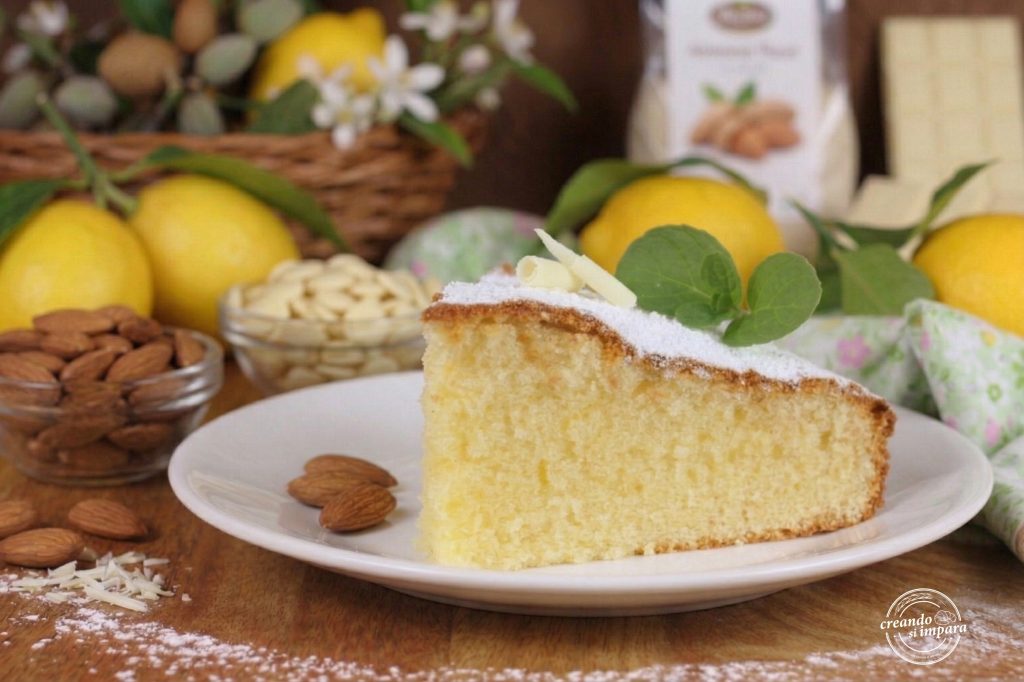
The lemon caprese cake is a bright, fresh take on the classic Neapolitan almond cake. This recipe stands out because it contains no wheat flour, replaced entirely by a blend of almond flour and potato starch, which gives the cake a moist, almost fudgy texture. The technical secret of this gluten-free cake is the initial emulsion between the butter and citrus aromas, followed by the incorporation of whipped egg whites that provide the necessary airiness. The addition of melted white chocolate creates a rich structure that welcomes the intense aroma of lemon juice and zest. It’s a refined dessert, perfect to serve with a dusting of powdered sugar to finish a meal with elegance. Follow my precise steps to achieve a tender center and a slightly crunchy top!
If you love chocolate desserts try the super soft chocolate cake without butter, milk and eggs or the chocolate chip bread, perfect for breakfast. You can dive into the hot chocolate with cream and caramel or try the dark chocolate cream. But don’t miss the classic chocolate cake.
HERE you can find all my desserts
follow my page FACEBOOK for daily delicious ideas.
LEMON DESSERTS
- Difficulty: Very easy
- Cost: Economical
- Preparation time: 10 Minutes
- Cooking time: 40 Minutes
- Portions: 8 Servings
- Cooking methods: Oven
- Cuisine: Italian
- Seasonality: All seasons
Ingredients for your lemon caprese
- 7 tbsp butter
- 1/2 cup sugar
- 1/3 cup potato starch
- 1 tsp baking powder
- 1 lemon
- 2 cups almond flour
- 1 tbsp lemon extract
- 1 pinch salt
- 4 eggs
- 3.5 oz white chocolate
- as needed powdered sugar
Tools
This post contains affiliate links
- Electric beaters
- Cake pans 8 2/3 in diameter
Steps to prepare the lemon caprese cake
Start by working the soft butter with the sugar in a large bowl using electric beaters. Add the lemon zest, the strained juice and the lemon extract (or the zest of two more lemons for an even stronger flavor). Once you have a smooth cream, break the eggs and incorporate one yolk at a time, waiting for the previous one to be fully absorbed before continuing. This technical step is crucial to create a stable emulsion that will support the weight of the almond flour during baking, ensuring that your caprese cake will not be heavy or overly greasy.
Add the melted white chocolate to the mixture, making sure it is warm, not hot, so as not to compromise the butter’s structure. Then fold in the almond flour, the potato starch and the sifted baking powder. Mix with a spatula using circular motions. The use of almond flour combined with potato starch is the trick to achieve that moist, slightly grainy texture typical of a gluten-free cake. Make sure there are no lumps of starch, as they could create air pockets in the cake and spoil the perfect texture when slicing.
In a separate bowl, whip the egg whites to stiff peaks with a pinch of salt. Once ready, gently fold them into the main batter with delicate upward motions so as not to deflate the mixture. This manual aeration is the final touch for your caprese batter: the whites act as a physical leavening agent that, together with the chemical leavening, will allow the cake to rise evenly while keeping a fudgy center. The final batter should look light, airy and intensely citrus-scented, ready to be transferred to the pan.
Line a pan about 8 2/3 in in diameter with parchment paper and pour in the batter, leveling it gently. Bake in a preheated oven using convection at 338°F for about 40 minutes. Convection baking is ideal for this recipe because it helps dry the surface creating the classic thin crust while the inside of the homemade cake remains moist. Do the toothpick test: it should come out with a few moist crumbs attached. Let the cake cool completely before unmolding, as the flourless structure is very fragile when hot. Serve decorated with plenty of powdered sugar.
Tips for a perfect result
Butter at room temperature: The butter should be creamy. If it’s too cold it won’t incorporate the sugar and aromas properly, compromising the softness of the caprese cake.
Good quality almonds: If you can, grind peeled almonds yourself; a slightly irregular texture gives a more authentic chewiness compared to very fine almond flour.
Chocolate temperature: Melt the white chocolate in a bain-marie or in the microwave at low power. If it gets too hot it tends to separate and become grainy, ruining the caprese batter.
Fun variations
Pistachio caprese: Replace 100 g of almond flour with pistachio flour for a two-tone version with a more refined taste.
Limoncello twist: Add a tablespoon of limoncello to the batter along with the lemon juice to intensify the alcoholic, citrusy note of the cake.
Almond decoration: Before baking, sprinkle the surface with almond flakes; they will toast and turn golden in the oven, creating a nice contrast with the soft center.
Storage
Under a dome: The cake stays moist and fragrant for 3-4 days at room temperature. In fact, it’s often even better the next day as the lemon flavor stabilizes.
In the refrigerator: If you prefer a firmer texture, almost like a lemon truffle, store it in the fridge in an airtight container.
Freezing: You can freeze the homemade cake already portioned. Thaw at room temperature for about an hour before serving and freshen with a dusting of powdered sugar.
Your turn!
The lemon caprese cake proves that the absence of wheat flour can deliver extraordinary results in flavor and texture. It’s a dessert that smells of sunshine and celebration, able to win you over at the first bite.
How do you prefer to serve it? With a dollop of whipped cream or enjoy it plain to savor the pure citrus note? Let me know in the comments if baking at 338°F was perfect for your oven and if this cake will become the new “must” on your blog!
FAQ (Questions and Answers)
Why did the cake crack on the surface?
Cracks are a typical aesthetic trait of a caprese cake: they indicate that the outer crust has become crisp while the center remained moist. A dusting of powdered sugar will cover them and lend a rustic look.
Can I omit the baking powder?
Traditional Neapolitan recipes often skip it, but a pinch of baking powder helps achieve a softer result, especially if you’re not very experienced at whipping egg whites to stiff peaks.
Can I use brown sugar?
Yes, but keep in mind that brown sugar will slightly darken the color of your lemon cake, making it less visually “sunny”.

