
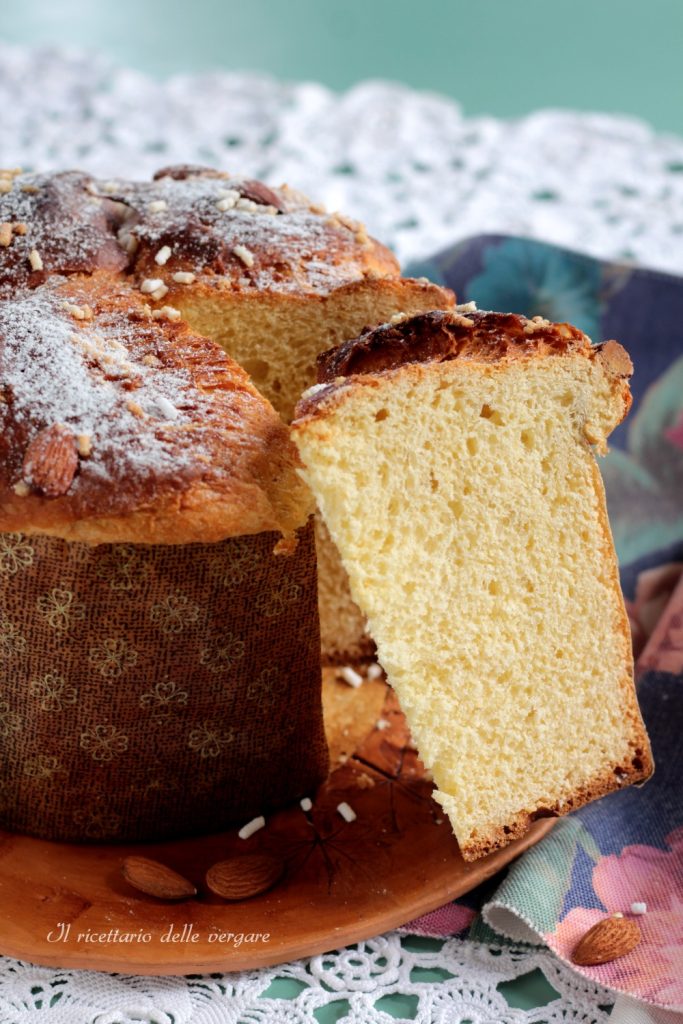
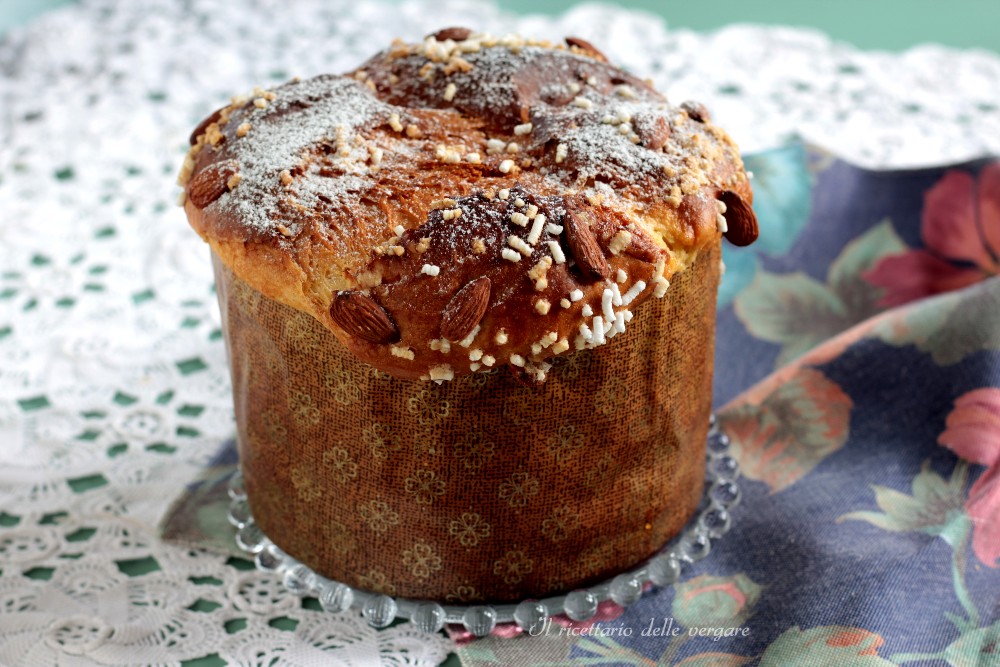
The Venetian Focaccia (Fugassa) is the undisputed protagonist of my Easter 2026, a cake scented with butter, citrus and vanilla that fills the whole kitchen already while baking.
Some people look forward to unwrapping the Easter egg, while others, like me, wait only for that magical moment when the dough ferments and rises into a soft, golden cloud. Today I take you to the heart of Venetian tradition with a recipe that is pure poetry.
Remember that Easter 2026 falls on April 5: a useful tip is to start the dough on Holy Thursday (April 2) or Good Friday (April 3), so the Venetian Focaccia (Fugassa) has time to rest one day in a bag, making the aromas of the emulsion even more intense for Sunday breakfast.
Born as the ‘poor man’s cake’ — when rural tables celebrated by adding a little sugar and eggs to bread dough — the Venetian Focaccia (Fugassa) has become over time a pastry masterpiece. Often living in the shadow of the colomba, those who know it appreciate its extra virtue: simplicity. No candied fruit, no crunchy glazes, just an incredibly stringy structure that melts in the mouth.
OTHER RECIPES TO TRY
- Difficulty: Very easy
- Cost: Budget-friendly
- Rest time: 5 Hours
- Preparation time: 45 Minutes
- Cooking time: 45 Minutes
- Portions: for a 1 kg mold (about 2.2 lb)
- Cooking methods: Oven
- Cuisine: Italian
- Seasonality: Easter
- Energy 368.74 (Kcal)
- Carbohydrates 48.54 (g) of which sugars 19.39 (g)
- Proteins 10.08 (g)
- Fat 15.45 (g) of which saturated 7.85 (g)of which unsaturated 7.03 (g)
- Fibers 2.08 (g)
- Sodium 185.94 (mg)
Indicative values for a portion of 95 g processed in an automated way starting from the nutritional information available on the CREA* and FoodData Central** databases. It is not food and / or nutritional advice.
* CREATES Food and Nutrition Research Center: https://www.crea.gov.it/alimenti-e-nutrizione https://www.alimentinutrizione.it ** U.S. Department of Agriculture, Agricultural Research Service. FoodData Central, 2019. https://fdc.nal.usda.gov
Ingredients — Venetian Focaccia (Fugassa)
- 4 cups Manitoba (strong) flour (W330-350 — about 500 g)
- 3/4 cup granulated sugar (about 150 g)
- 2/3 cup unsalted butter (room temperature — about 150 g (5.3 oz))
- 3 medium eggs (total about 150 g (5.3 oz))
- 2 pcs egg yolks (about 35–40 g (1.2–1.4 oz))
- 0.9 oz fresh yeast (about 25 g — or 0.25 oz active dry yeast (7 g / 1 packet))
- 1 tbsp honey (about 20 g)
- 1 orange zest (about 5 g (0.18 oz))
- 6 tbsp warm water (about 90 ml (3 fl oz))
- 1 tsp salt (about 5 g)
- 1 lemon zest (grated) (about 3 g (0.11 oz))
- 1 vanilla seeds (seeds from 1 whole vanilla bean (about 1 g))
- 1/4 cup pearl sugar (about 50 g (1.8 oz))
- 1/2 cup whole almonds (about 60 g (2.1 oz))
- 1 egg white
Tools — Venetian Focaccia (Fugassa)
- Planetaria
- Tarocco
- Stampo per panettone
Steps — Venetian Focaccia (Fugassa)
The Venetian Focaccia (or Fugassa) is the emblem of Venetian Easter pastry. Often confused with the colomba, it is distinguished by the absence of candied fruit and by an incredibly stringy, light structure. Thanks to the stand mixer, we can achieve a perfect gluten network — the secret for vertical rise and softness that lasts for days.
For a perfect result, make sure eggs and butter are at room temperature: if they are cold from the fridge, they will drastically slow down fermentation.
Preparation of the Emulsion (the secret of the aroma)
In a small cup, combine 1 tbsp of honey, the orange zest (about 5 g), the lemon zest (about 3 g) and the vanilla seeds. Mix well and cover with plastic wrap. Let rest while you proceed: the honey will “extract” the essential oils from the citrus.The “Petit Dough” (First Boost)
In the stand mixer bowl, dissolve 0.9 oz fresh yeast (about 25 g) in the 6 tbsp warm water (not hot). Add 100 g of flour from the total (about 3/4 cup) and mix. Cover and let ferment in a warm place for about 45–60 minutes.Main Dough
Using the paddle attachment (K), add the remaining flour and sugar to the petit dough. Start mixing and add the eggs and yolks one at a time. Once absorbed, switch to the dough hook and work until the dough “attaches” well to the bowl. Add the aromatic emulsion, the salt and finally the soft butter in pieces, a little at a time.Handling a “Slow” Dough (If it doesn’t come away)
If the dough is too soft:
Technical break: Turn off the machine and let it rest for 10–15 minutes.
Change hook: Switch from the paddle to the dough hook.
Restart: Run at medium-high speed. If after 5 minutes it is still smeared on the bottom, add small amounts of flour at a time (one tablespoon at a time) until it “attaches” and cleans the bowl.First Proof (Trick for cold kitchens)
Place the dough in a greased bowl and cover with plastic wrap.
VERGARA’S TIP: If your kitchen is cold and the dough hasn’t moved after an hour, place the bowl in the turned-off oven with the light on and a small pot of boiling water on the bottom rack. The warm, humid environment will wake the yeast and it should double in about 2–3 hours.Shaping and “Rounding” (750 g mold)
Turn the dough out onto a buttered work surface. Perform reinforcing folds and shape into a smooth ball (rounding). Place about 850 g (~1.9 lb) of dough into the 750 g mold (use the leftover for brioche).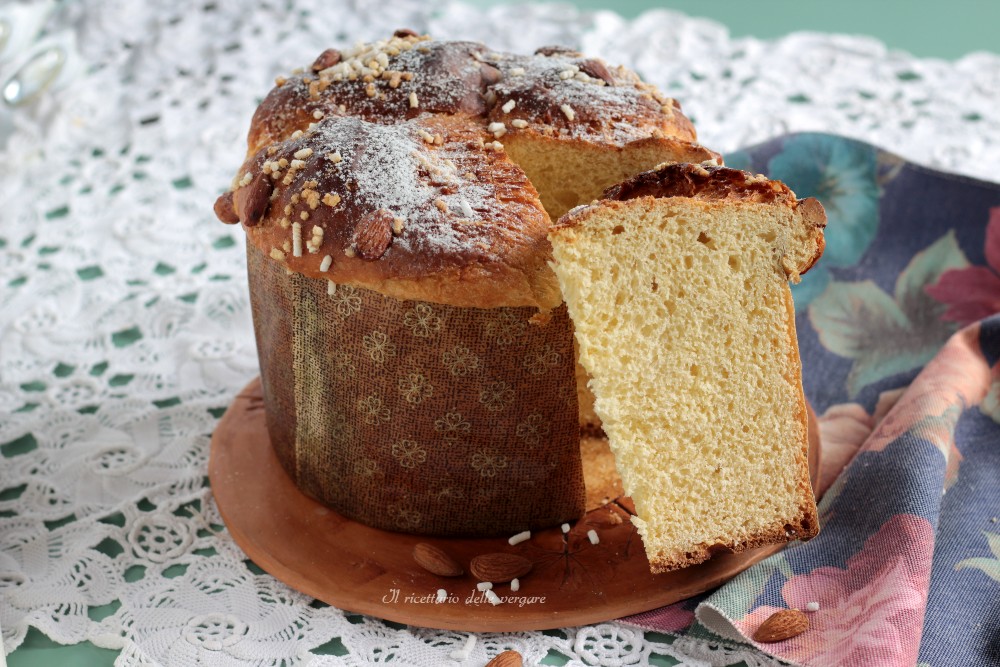
Second Proof
Let rise covered (again, in the oven with light on if needed) until the dome is 2 cm (about 3/4 in) from the rim of the mold.Finishing and Baking
Preheat the oven to 338°F (conventional). Brush with the egg white, add the pearl sugar and almonds. Make a light cross cut on top. Bake on the lowest rack for 40–45 minutes. If it darkens too much, cover with aluminum foil after the first 20 minutes.Toothpick Test and Cooling
Check doneness with a long skewer. Let cool completely before sealing in a plastic bag to keep it soft.If you like, follow me on Facebook by clicking Il ricettario delle vergare and leave a like. I’ll be waiting for you, Ivana.
You can also find me on Instagram and on Pinterest.
If you enjoyed this recipe, click the stars below; to give the maximum score, click the last star. Your rating is very important to me. Thank you.
Return to the HOME to read all the other recipes.
