
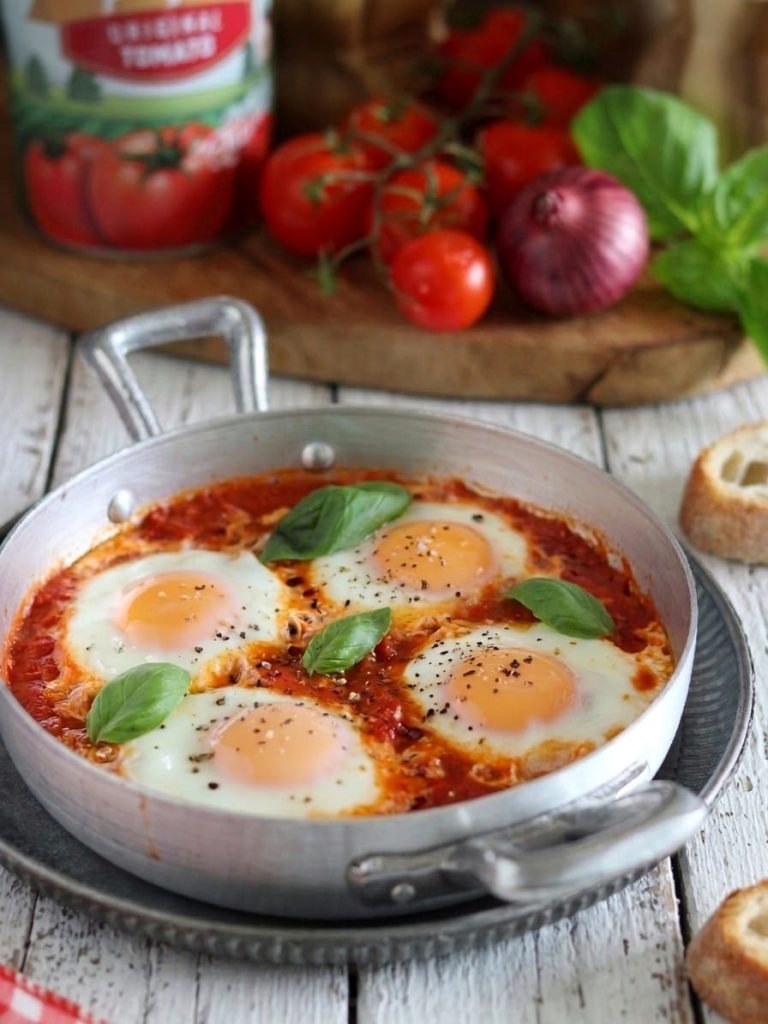
Eggs in purgatory represent the essence of humble Neapolitan cooking: a few, easily found ingredients that together create a dish full of flavor. The secret is the quality of the tomato and the perfect cooking of the eggs, with the whites fully set and the yolk still soft to be soaked up with a good piece of bread.
Perfect for a quick lunch, an informal dinner or even a savory brunch, these eggs are ready in minutes but deliver a surprisingly tasty result. Serve them piping hot, perhaps with rustic bread and a seasonal side, they are a small Italian traditional comfort food that always wins everyone over.
At my home, especially in winter, eggs in purgatory have taken a permanent spot on the weekly menu; they are in fact the Tuesday-night dinner-saver when I come back late from the gym with neither the desire nor the time to stand by the stove. I just prepare the sauce before leaving and, once back, cook the eggs while I set the table and dress the accompanying salad.
To discover why the dish has this particular name, I invite you to read the Q&A box placed below the recipe description.
Now take a minute to read the recipe and then…let’s cook AND eat!!
See also
- Difficulty: Very easy
- Cost: Affordable
- Preparation time: 10 Minutes
- Cooking time: 4 Hours 20 Minutes
- Portions: 2
- Cooking methods: Stovetop
- Cuisine: Italian
- Seasonality: All seasons
Ingredients
- 1 onion (small)
- to taste extra virgin olive oil
- 400 g peeled tomatoes
- 4 eggs
- to taste salt
- to taste black pepper
- A few leaves basil (fresh)
Tools
- 1 Skillet
- 1 Lid
- 1 Wooden spoon
Steps
Preparing eggs in purgatory is very simple and quick, and you’ll dirty only one skillet since the eggs cook directly in the tomato sauce.
First, peel and thinly slice the onion, then sauté it (without burning) in a skillet in which you have heated 2-3 tablespoons of extra virgin olive oil.
Meanwhile, crush the peeled tomatoes by hand and when the onion is completely softened add the tomatoes to the skillet along with a few basil leaves. Season with salt and pepper and let simmer for 10-15 minutes.
When the tomato sauce has reduced, use a spoon to make 4 wells in the sauce which will hold the individual eggs. For convenience I prefer to crack each egg into a small bowl first and then let it slide into the sauce one at a time. This way you avoid getting pieces of shell in the sauce.
At this point cover with a lid and let the eggs cook until the whites are fully set and the yolks still soft. It will take about 5-6 minutes.
Once the eggs are ready, add a little extra salt on the surface of each egg, another grind of pepper and a few fresh basil leaves.
Plate and enjoy your eggs in purgatory hot and don’t forget to do the “scarpetta” (dip your bread) 😉.
Storage
It is not recommended to store eggs in purgatory because the eggs tend to change texture. It is preferable to consume this dish just after preparing it.
FAQ (Questions and Answers)
Why are they called “eggs in purgatory”?
The name comes from the appearance of the dish: the red of the tomato sauce symbolically represents the flames of purgatory, while the white eggs recall souls immersed in fire. It is therefore a figurative name born from popular tradition.
How long does it take to prepare them?
The dish is very quick: it takes about 15–20 minutes in total, considering the time to prepare the sauce and cook the eggs.
How many eggs can be cooked in the same skillet?
It depends on the size of the skillet. Generally 2–4 eggs are cooked, leaving a bit of space between them so they can cook properly.
Should the yolk be runny or cooked through?
Traditionally the yolk remains soft, as it mixes with the sauce when eaten. However, you can cook it longer if you prefer a fully set yolk.
Can you make the dish spicier?
Yes. Just add fresh or dried chili pepper to the sauce while cooking to get a more intense flavor.
What do you serve eggs in purgatory with?
They are usually served with rustic bread or toasted bread, ideal for doing the so-called “scarpetta” in the sauce.
Can they be prepared in advance?
It is better to prepare them at the moment, because freshly cooked eggs have a better texture. If necessary, you can prepare the sauce in advance and add the eggs only at serving time.
