Bone broth is a rich, natural preparation, known for the presence of collagen and its benefits. It is obtained by slow-cooking bones and is more intense and nutritious than the classic meat broth. Different from the classic vegetable broth, this broth is obtained mainly from bones rich in marrow and connective tissues, left to simmer for a long time together with celery, carrot and onion. The difference from meat broth is not only in the taste but also in the structure: bone broth is more intense, deep and enveloping and, once cold, tends to become naturally gelatinous, a sign of the presence of collagen, a valuable substance released during slow cooking. In this article we will look at the benefits, differences and how to best prepare and use homemade bone broth.
It is precisely the collagen in bone broth that makes it so appreciated: it contributes to skin health and elasticity, helps to support joints and connective tissues and makes the broth more nutritious and satisfying. The natural presence of minerals makes it a rich yet balanced food, perfect even when you are looking for something simple but restorative.
It is not a recent trend but an ancient knowledge, linked to a cuisine that truly nourished with what was available. Preparing bone broth at home means recovering this approach: less waste, more substance, more flavor and above all more “health” naturally. To make it start with cold water, add the bones (better if first roasted in the oven for an even more intense flavor), add the vegetables and let it cook slowly for many hours, skimming occasionally if necessary and adding, if desired, a splash of vinegar or wine to help extract nutrients.
The result is a rich and natural broth, perfect to use in many ways: as a base for soups and purees, to prepare risottos with a more pronounced flavor, to enrich sauces and braises or simply to enjoy hot, on its own, as comfort food. And it doesn’t end there: with the leftover meat and vegetables used to make it, you can create another very useful preparation in the kitchen, the homemade meat stock cube, perfect for wasting nothing and always having a concentrated flavor ready to use.
Bone broth keeps easily in the refrigerator for a few days; by reducing it over low heat it can become a precious brown stock or it can be frozen so you’ll always have it ready when needed. A simple preparation, but capable of making a difference in the kitchen, turning even the most everyday dish into something deeper, more authentic, closer to traditional humble cooking. I remember that my grandmother often prepared it, she got the bones from her trusted butcher and during the colder seasons she simmered it for hours on the wood stove and the aroma filled the house; then in the same broth, she—being from Trentino—dipped wonderful Speck dumplings (canederli). I no longer cook it on a wood stove, I cook it on low heat in a cast iron or aluminum pot, I buy the bones specifically to extract a nutritious, collagen-rich broth, but the smell around the house is always the same and takes me back to childhood…
Let’s go to the kitchen
Also watch:
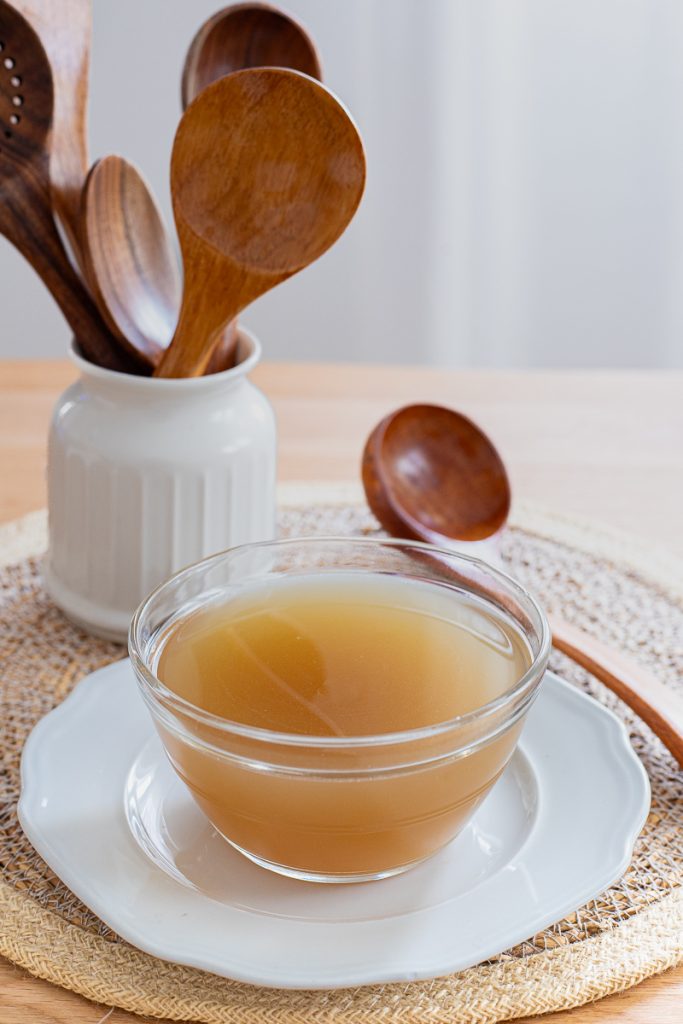
- Difficulty: Very easy
- Cost: Very inexpensive
- Preparation time: 5 Minutes
- Cooking time: 18 Hours
- Cooking methods: Stovetop
- Cuisine: Italian
- Seasonality: All seasons
Ingredients to make bone broth
- 4 1/2 lbs beef (bones and cartilage)
- 2 stalks celery
- 2 carrots
- 1 onion
- to taste salt
- 1 shot (about 1 fl oz) apple cider vinegar (or white wine)
- 12 2/3 cups water
Tools
- Pot
- Stovetop
Steps to make bone broth
To prepare homemade bone broth, start with the bones, choosing ones rich in marrow and tissues, essential to obtain a flavorful and full-bodied broth.
Arrange them on a baking tray and brown them in a hot oven for about 30-40 minutes, until well golden: this step is not essential, but it will give the broth a richer, more intense flavor.
In the meantime prepare the vegetables: peel the carrots, clean the celery and cut the onion into large pieces.
Then transfer the roasted bones to a large pot together with the vegetables and cover everything with cold water. Slowly bring it close to a simmer, without rushing.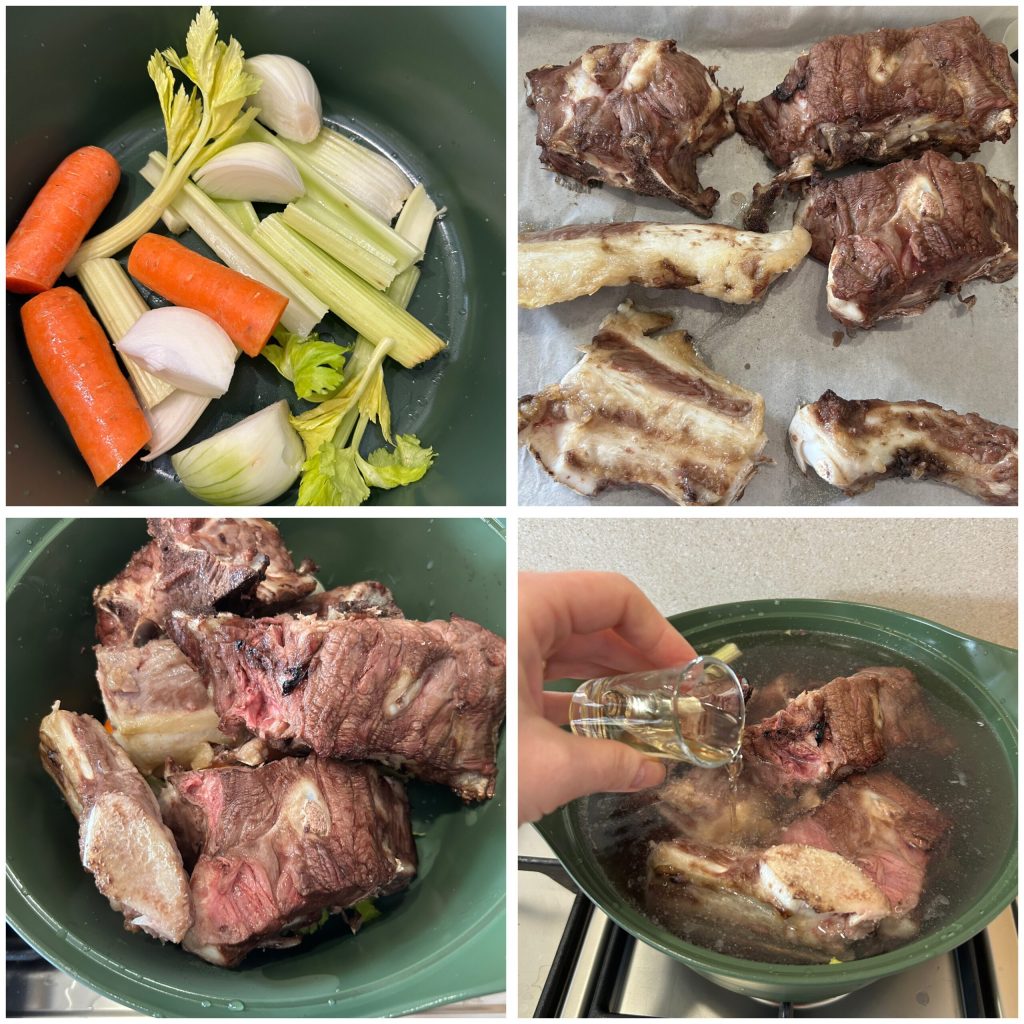
When impurities start to rise to the surface, remove them with a spoon. Then add a splash of vinegar; it helps the bones release their minerals.
Let cook over low heat for several hours: I let it go for about 18 hours, on the smallest burner, never exceeding 194–196°F. During cooking you will see a layer of fat forming on the surface: do not worry, you can remove it later if you prefer.
Over time you will notice that the meat attached to the bones will tend to come away easily, almost dissolving, while the cartilages will have largely broken down into the broth, enriching it.
At this point turn off the heat and let the broth rest overnight. In the colder months you can also leave it at room temperature; in summer, once cooled, transfer it to the refrigerator.
The next day you will see the fat rise and solidify on the surface: it will be very easy to remove, obtaining a cleaner broth that is still rich and full of flavor.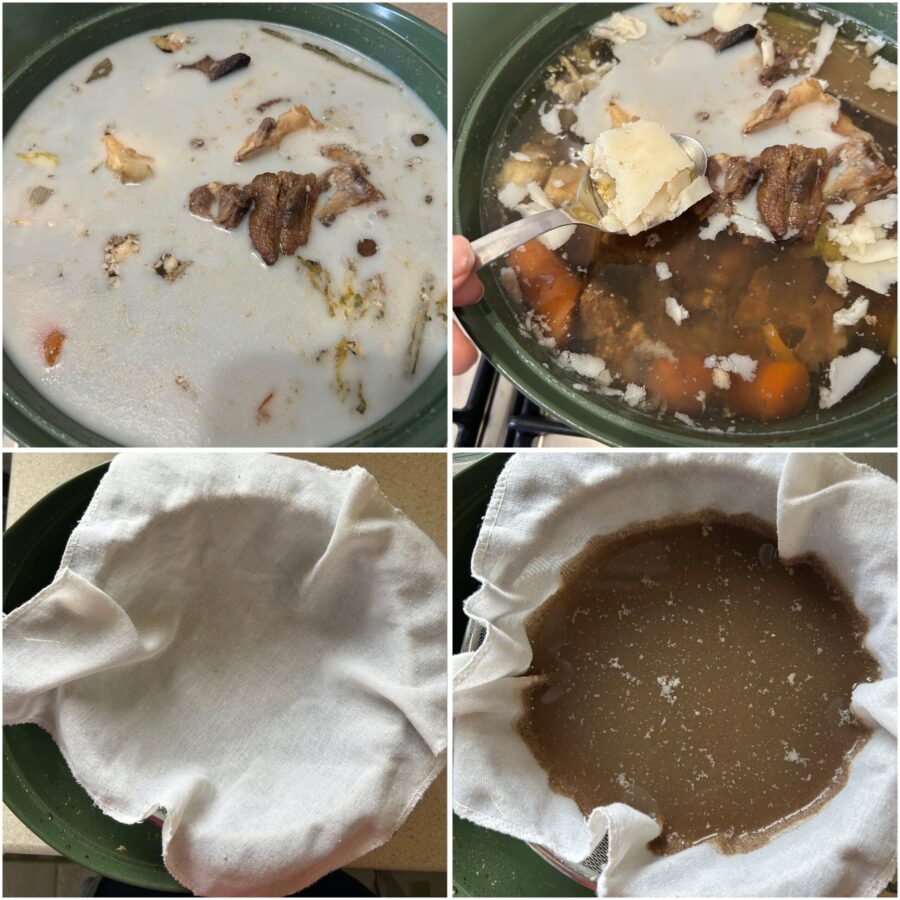
Warm the broth on the stove without bringing it to a boil, only enough to loosen it slightly: the gelatinous consistency is entirely natural. Remove the bones and vegetables and proceed to strain it once.
For an even cleaner result, strain the broth a second time using a cloth or cheesecloth: in this way you will also remove the finest impurities, obtaining a clear but substance-rich broth.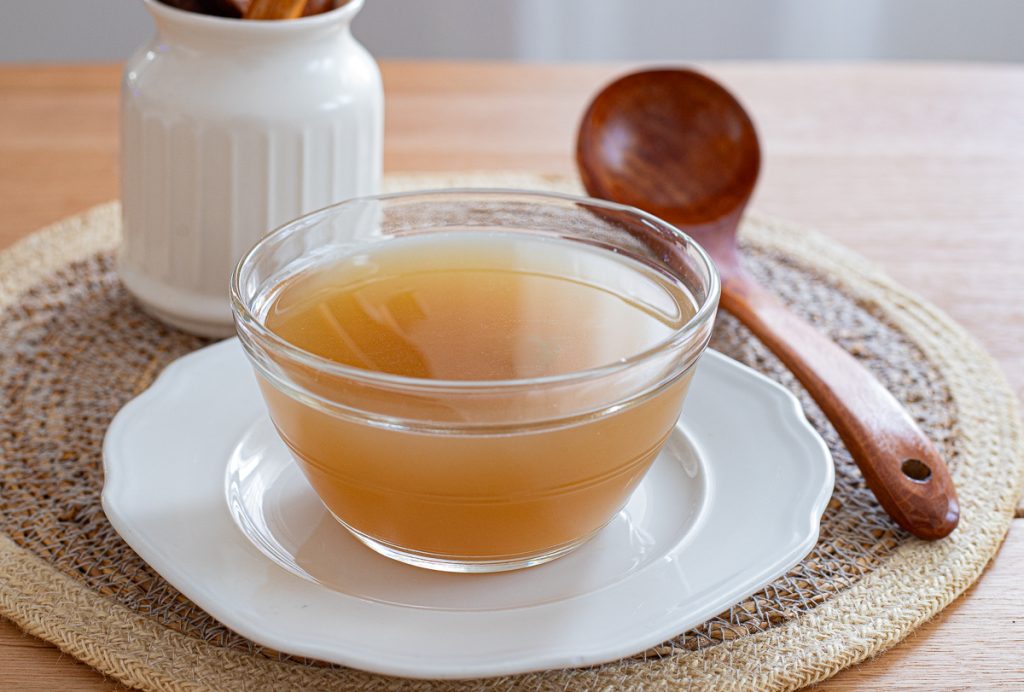
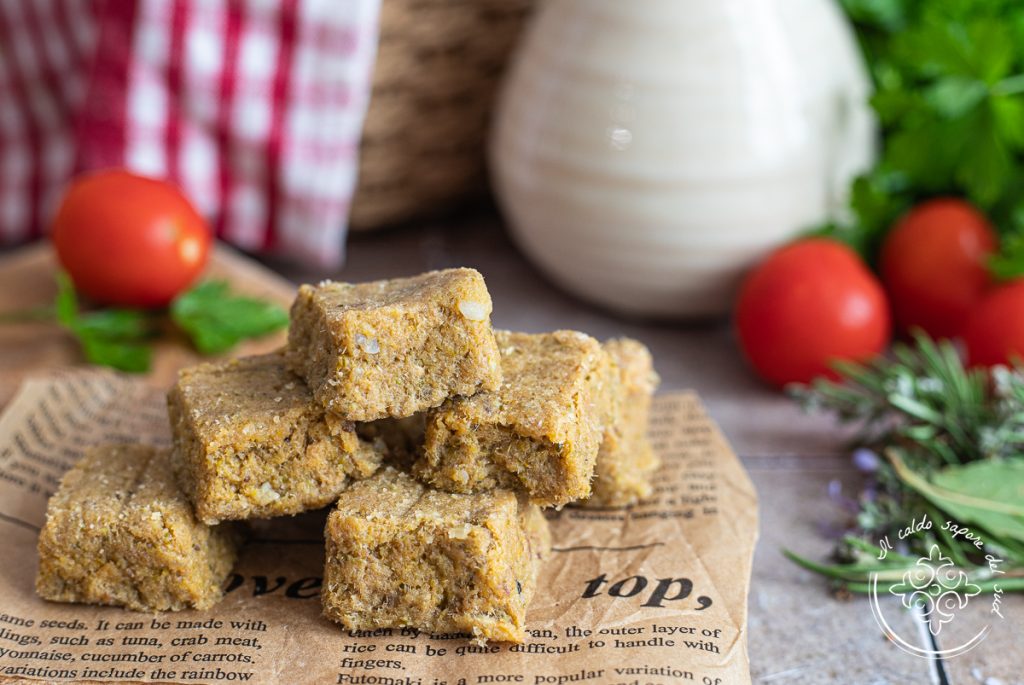
Let’s move on to recovering the leftover parts, which you can eat or transform into a meat stock cube, following the Homemade Meat Stock Cube recipe.
Storage notes and tips
Bone broth keeps in the refrigerator for 3-4 days, well sealed in an airtight container. If you prefer, you can also freeze it in portions so you’ll always have it ready when needed.
Once cold, you will notice that the broth tends to become gelatinous: this is completely normal and is a sign of the natural presence of collagen. Simply heat it slightly to return it to a liquid consistency.
The fat that solidifies on the surface after resting is easy to remove and allows you to obtain a cleaner, more delicate broth. You can, however, decide to leave a small portion of it for a richer flavor.
For an even more intense result, you can always roast the bones in the oven before cooking: it is a simple step that really makes a difference.
Finally, don’t throw anything away: with the meat and vegetables used for the broth you can prepare an excellent homemade meat stock cube, perfect for enriching many everyday preparations without waste.
If you want to stay updated on my recipes, follow me also on:
pinterest; twitter, you tube and tiktok.
From here, you can return to the HOME and discover new recipes!
Your Questions
What’s the difference between bone broth and meat broth?
Bone broth is richer and more concentrated because it is made with bones and cooked much longer, releasing collagen and gelatin. Meat broth, on the other hand, is lighter and more immediate, ideal for everyday use.
Why does bone broth become gelatinous?
Because of the presence of collagen: during long cooking it transforms into natural gelatin, which makes the broth fuller-bodied and, once cold, slightly solid.
How long should bone broth cook?
Cooking can vary from 6 to 24 hours. A long, gentle simmer allows you to extract flavor and nutrients best.
Is bone broth really good for you?
It is a natural, nutrient-rich food thanks to the presence of collagen and minerals. It can contribute to overall well-being and is particularly appreciated for its nourishing and satiating effect.
How is bone broth used in cooking?
It can be used as a base for soups and stews, for risottos, to enrich sauces and braises, or simply to drink hot.
How do you store bone broth?
In the refrigerator it keeps for 3-4 days, while in the freezer it can last up to 3 months, preferably divided into portions.