
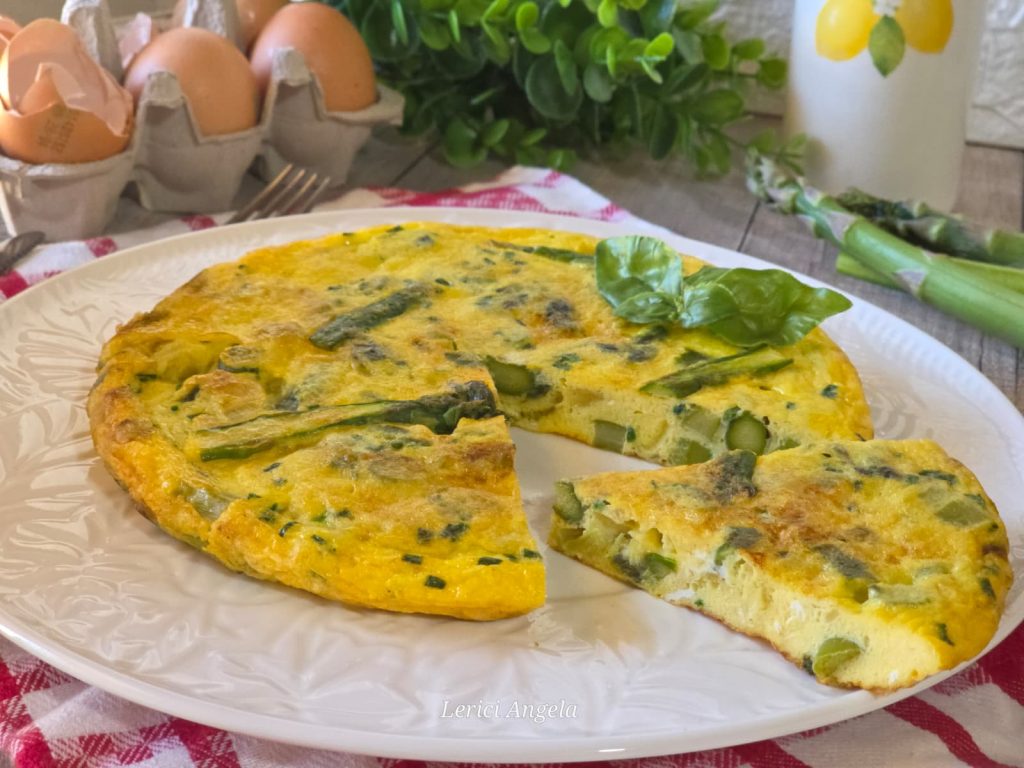
Asparagus frittata and the secret to making it tall, fluffy and light. It’s a main course that can also be served as an appetizer in small portions.
There’s something magical about bringing spring colors to the table, especially when you are lucky enough to live in a region like my Friuli, where at this time the fields offer wonderful asparagus.
The ones you see in the photo I picked this morning at my village market: zero-mile asparagus, a brilliant emerald green with stalks so firm they scream freshness. Together with very fresh eggs, they became the stars of this dish.
Today I’ll reveal how to transform them into a tall, spongey frittata, keeping an eye on lightness and technique.
My little secrets for a perfect result:
Professional Cleaning: I lightly peeled the tough ends of the stems to ensure every bite is tender.
The Light Trick (Oil + Water): To make the recipe lighter and easier to digest, I used a small trick: a drizzle of oil and two tablespoons of water to sauté the asparagus and the spring onion.
This way the vegetables gently wilt without excessive frying, preserving all their flavor.
I cooked it in a skillet, flipping it halfway through to get that perfect golden crust, but this recipe is so versatile that it’s also great cooked in an air fryer or in the oven.
Ready to discover all the steps?
Let’s make it together!”
- Difficulty: Very easy
- Cost: Budget-friendly
- Preparation time: 15 Minutes
- Cooking time: 20 Minutes
- Portions: 4People
- Cooking methods: Stovetop, Electric oven, Frying
- Cuisine: Italian
- Seasonality: Spring
- Energy 195.61 (Kcal)
- Carbohydrates 4.76 (g) of which sugars 1.89 (g)
- Proteins 12.92 (g)
- Fat 14.88 (g) of which saturated 5.44 (g)of which unsaturated 3.91 (g)
- Fibers 2.41 (g)
- Sodium 416.32 (mg)
Indicative values for a portion of 150 g processed in an automated way starting from the nutritional information available on the CREA* and FoodData Central** databases. It is not food and / or nutritional advice.
* CREATES Food and Nutrition Research Center: https://www.crea.gov.it/alimenti-e-nutrizione https://www.alimentinutrizione.it ** U.S. Department of Agriculture, Agricultural Research Service. FoodData Central, 2019. https://fdc.nal.usda.gov
Ingredients
Asparagus frittata and the secret to making it tall, fluffy and light
- 6 eggs
- 1 bunch asparagus (any variety you prefer)
- 1 spring onion (or shallot)
- 2 oz Parmesan
- to taste chives (or chopped parsley)
- 2 tbsp extra virgin olive oil (2 tablespoons water)
- to taste salt
- pepper
Tools
- Frying Pan
- Lid
- Bowl
- Peeler
- Air Fryers
Steps
Asparagus frittata and the secret to making it tall, fluffy and light
Wash the asparagus and remove the toughest ends.
A little trick?
Lightly peel the stem with a peeler to remove fibrous strands.
Slice the stems into rounds, leaving the tips whole.
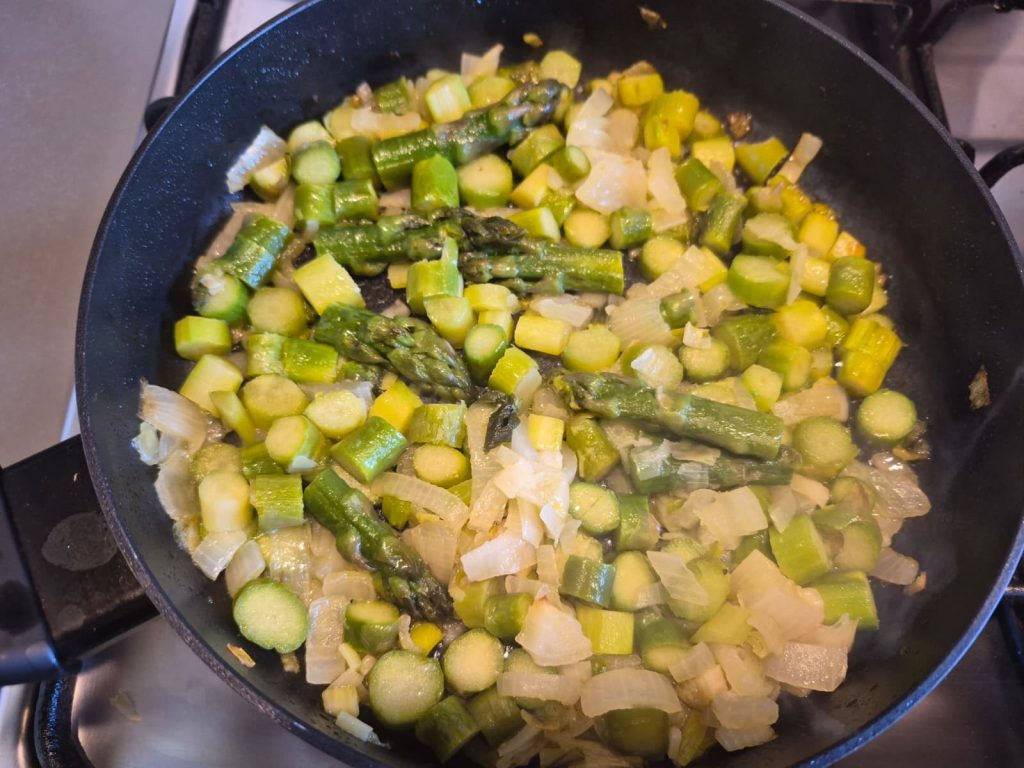
Slice the spring onion and put it in a skillet with a drizzle of oil and the two tablespoons of water.
Add the sliced stems, cover and let them steam over medium-low heat.
Halfway through cooking (after about 4-5 minutes), add the more tender tips.
This way they will remain whole, crunchy and a bright emerald green, without falling apart.
The water allows the vegetables to cook while staying “al dente”, without weighing down the dish.
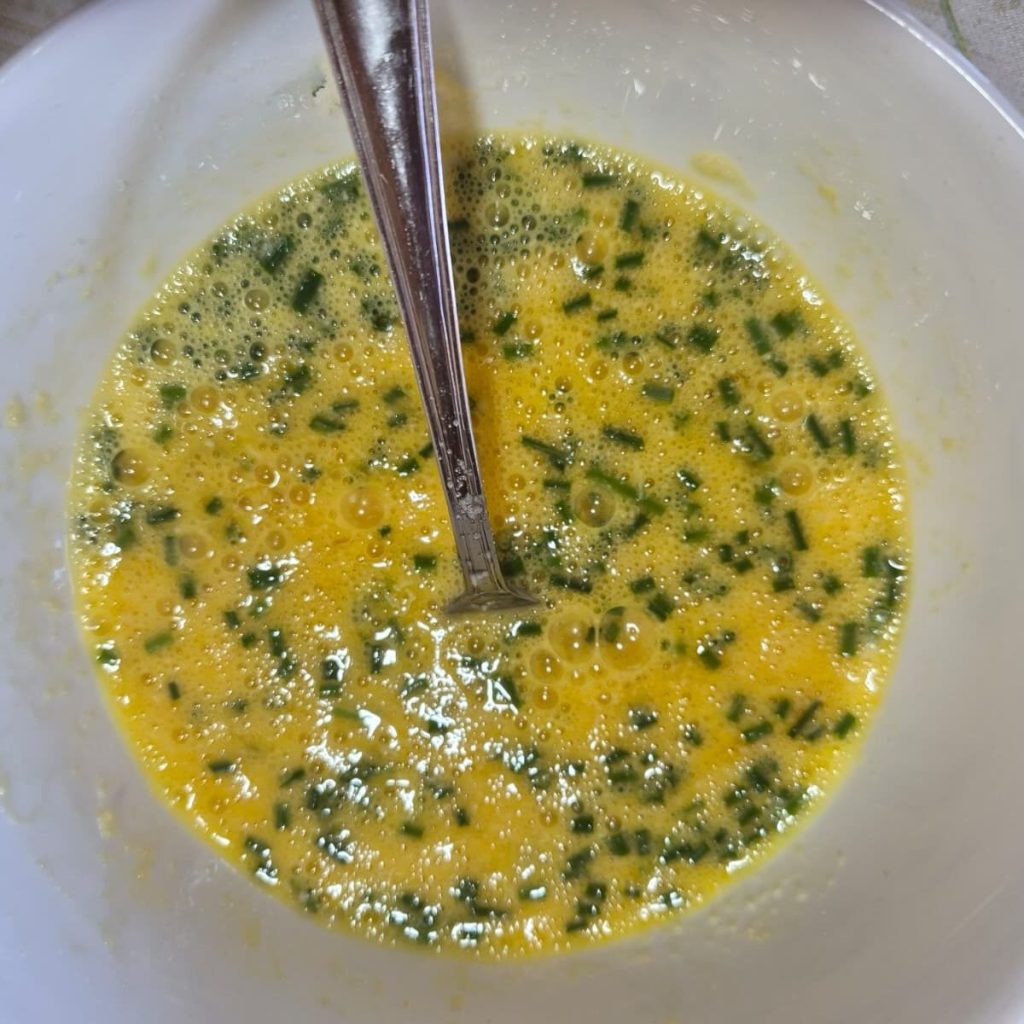
While the vegetables finish steaming, beat the 6 eggs in a bowl with the Parmesan, chives, salt and pepper.
After preparing the egg and asparagus mixture, you can choose the cooking method that suits you best. Here are the times and tips for each:
In the Skillet (My Method):
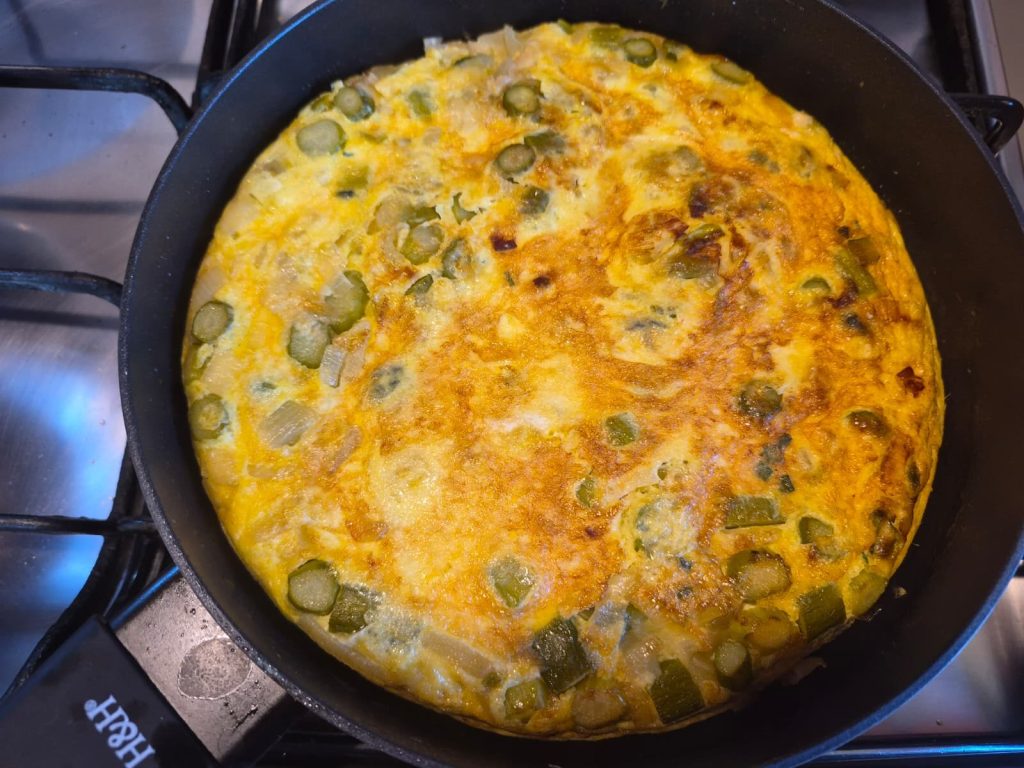
Pour the mixture over the asparagus, cover with the lid and cook over low heat for about 10 minutes. Flip it halfway through using the lid to brown both sides well.
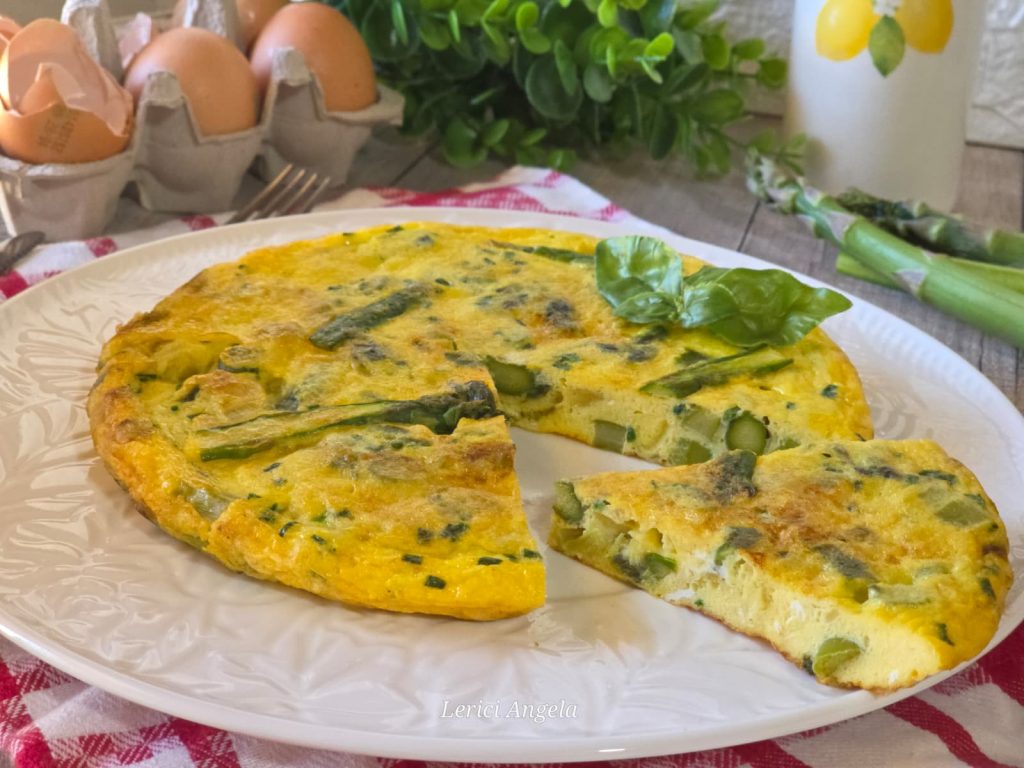
This is the classic method to get it tall and fluffy.
In the Oven: If you don’t want the hassle of flipping it, pour everything into a pan lined with parchment paper (diameter 8.7-9.5 in).
Bake at 356°F for about 20-25 minutes. It will puff up evenly, almost like a savory cake.
In the Air Fryer: Ideal for a quick cook without added fats. Use a pan that fits into the basket and cook at 338°F for about 12-15 minutes.
Check browning in the last minutes: it will be crispy outside and very soft inside!
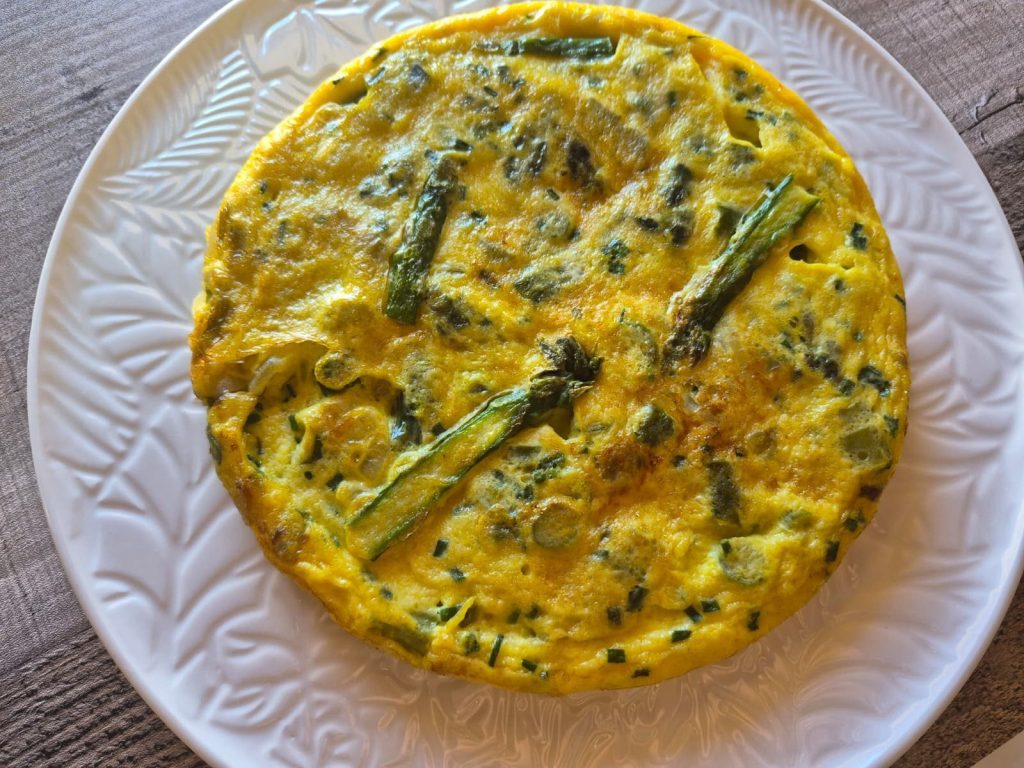
Serve it warm, perhaps garnished with a few fresh basil leaves as I did. The sweetness of the spring onion and the tenderness of the asparagus will win you over!
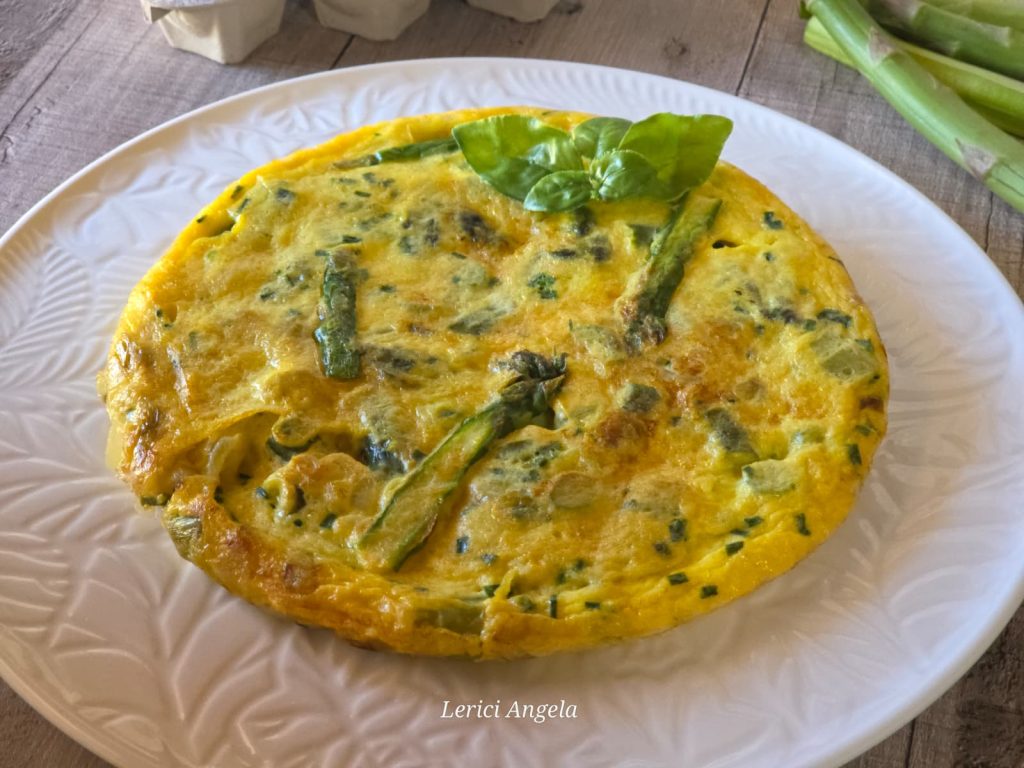
Enjoy your meal.
Which asparagus to choose?
“In this recipe any type of asparagus is fine, so don’t be afraid to experiment!
Green: classic, flavorful and perfect with spring onion (like the ones I used).
White: more delicate and sweet, typical of many areas of our Friuli, giving the frittata a more refined taste.
Purple: intense and slightly bitter, ideal for those seeking a stronger contrast.
Wild: if you’re lucky enough to find it in our woods, use it! It’s thin and very aromatic, perfect for a frittata with an old-fashioned flavor.”
Storage
This frittata is picnic royalty! Being tall and compact, it’s perfect for stuffing into a rye sandwich or a soft focaccia. It stays tender even the next day if stored in the refrigerator in an airtight container.
Notes
The asparagus frittata is great hot, but it shows its best if left to rest for 5-10 minutes: the flavors settle and the texture becomes perfect.
Pair it with a mixed salad or cherry tomatoes for a touch of acidity that balances the sweetness of the spring onion.
The tough ends of the stems we removed are full of flavor. Don’t throw them away! You can boil them to make a fragrant vegetable stock or steam them, then blend with a potato and a drizzle of oil to make an asparagus velouté as a starter.
Curiosities
If you want a stronger flavor, you can replace the Parmesan with grated Pecorino or add cubes of fresh Montasio cheese for an irresistible gooey center.
If you want the asparagus to keep a bright emerald green, once they are steamed with the oil-and-water trick, don’t cover them further unless strictly necessary: exposure to oxygen helps preserve the chlorophyll color.
FAQ (Questions & Answers)
Can it be frozen?
“Yes, asparagus frittata can be frozen! If you made extra, let it cool completely, then cut it into slices.
Wrap each slice individually in cling film or place them in an airtight container separated by parchment paper.
It keeps well in the freezer for about 2-3 months.
When you want to enjoy it, simply thaw in the refrigerator and then reheat for a few minutes in the oven or in a skillet to restore crispness.
Avoid the microwave if you want to keep the outer crust crispy!Vegan version, please?
If you prefer an egg-free version, you can turn this recipe into a delicious chickpea frittata. It’s protein-rich, naturally gluten-free and very light!
Substitution: Instead of the 6 eggs, prepare a batter with about 1 2/3 cups (200 g) chickpea flour and about 1 1/2 cups (350 ml) water.
Preparation: Whisk well to remove lumps and let the batter rest for at least 30 minutes (this is the secret to making it digestible).
Cooking: Proceed with the light sauté of asparagus and spring onion (oil + water) as in the original recipe. Then pour the chickpea batter over the vegetables.
The extra touch: Add a pinch of turmeric for a nice golden yellow color and a teaspoon of nutritional yeast flakes to evoke the flavor of Parmesan.
