
Panko vs Breadcrumbs: tips for a crispy coating that doesn’t get greasy
The main problem when frying at home is heaviness: classic breadcrumbs tend to absorb a lot of oil, making the coating dark, greasy and sometimes gummy.
Many people think that to achieve that light, crunchy fry seen in Japanese restaurants you need hard-to-find ingredients or complicated techniques, and they settle for a mediocre result that feels heavy.
But to solve this issue you only need one ingredient that we all have in the pantry: sliced sandwich bread.
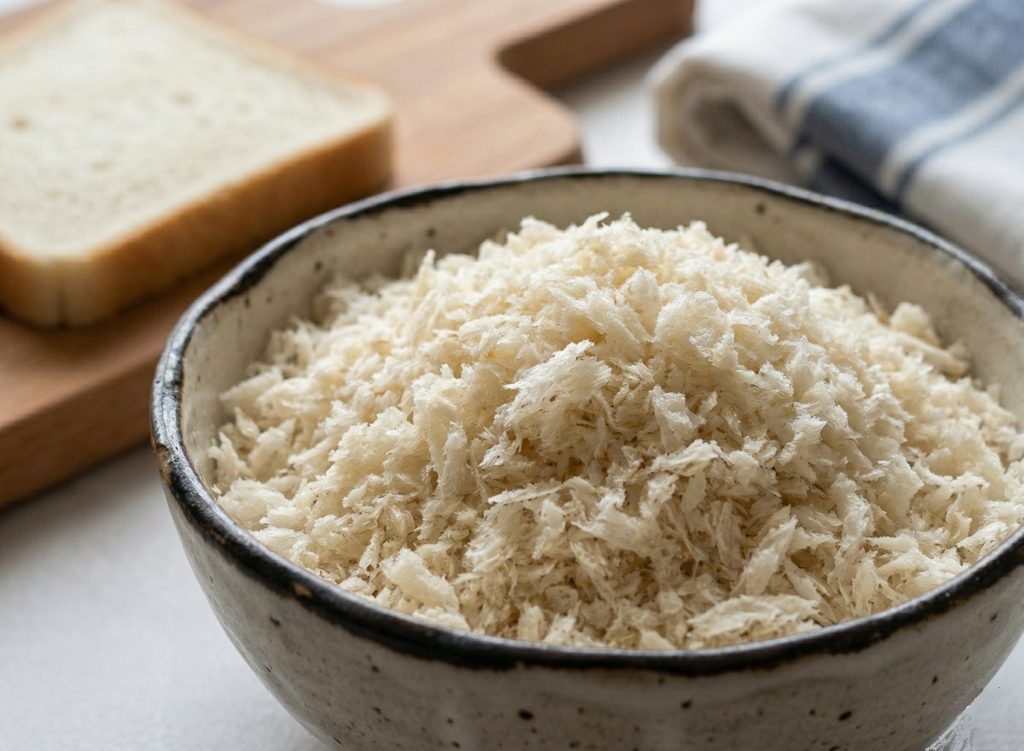
The secret of homemade panko lies in working with the crumb only, reduced into coarse flakes rather than a fine powder.
Thanks to this irregular structure, during frying the crumbs trap air and let oil slide away instead of retaining it. The result is a pale, incredibly crunchy and light coating.
Making it takes only 5 minutes in the oven and will let you turn shrimp, croquettes and cutlets into chef-worthy dishes with digestibility you’ve never experienced before.
Homemade Panko: the secret for dry, ultra-light fries
- Difficulty: Very easy
- Cost: Very inexpensive
- Preparation time: 5 Minutes
- Cooking time: 5 Minutes
- Portions: base for a coating for 2-4 people
- Cooking methods: Oven
- Cuisine: Italian
Ingredients for Homemade Panko
- 3.5 oz white sandwich bread (type: pan carré or sandwich bread)
Tools
- Knife
- Food processor
- Non-stick baking tray
How to make Japanese panko: the recipe with a single ingredient
Take the slices of sandwich bread and, with a sharp knife, carefully remove all the dark outer crust. Cut the remaining white crumb into rough cubes.
Transfer the bread chunks to a food processor. Here you need to be careful: do not blend continuously, but use short pulses. You want irregular, coarse crumbs (resembling flakes), not a fine powder.
Spread the crumbs on a baking tray lined with parchment paper, spreading them well so they don’t overlap. Bake in a preheated convection oven at 248°F for just 5 minutes. The panko should not toast or darken: it should only lose moisture. When it comes out of the oven it will still feel slightly soft to the touch.
Let the panko cool completely right on the tray. Only once cold will it become crumbly and acquire its characteristic “glassy” and crunchy texture.
Notes on Ingredients and Substitutions
The Bread: Use good-quality sliced bread. It is essential to remove the crust completely to keep the white color typical of original panko.
Whole Wheat Variation: If you prefer a more rustic note, you can use whole wheat bread, but remember the final texture will be slightly less “airy”.
Storage
Homemade panko is incredibly convenient: once dry and cold, seal it in an airtight jar. It keeps in a cool, dry place for up to 6 months.
Recipe Variations
Flavored Panko: You can add a pinch of ground ginger or dried lime zest for Asian-style coatings.
Herb Panko: Mix in dried parsley or thyme after baking for a Mediterranean version.
Tea’s Tips
If after the oven the crumbs seem too large for your liking, don’t put them back in the processor! Crumble them gently with your hands: you’ll keep the flake shape but reduce the size without making dust. Remember: panko isn’t just for frying, it’s also excellent for gratinating roasted vegetables!
FAQ (Questions & Answers)
Why did my panko turn brown?
Most likely the oven temperature was too high or it stayed in for an extra minute. Original panko should remain white or only slightly ivory. Check the timer carefully!
Can I use stale bread?
Yes, but it must be very plain white bread. The secret of panko is the softness of the initial crumb that creates light flakes; bread that is too hard will produce heavier crumbs.
Why does oil slide off with panko?
Unlike fine breadcrumbs that create a “barrier” which soaks up fat, panko flakes create an irregular surface with air pockets that repel excess oil during cooking.
