
The lemon curd is an Anglo-Saxon cream, intense and fragrant, that represents the very essence of lemon preserved in a jar. Unlike classic pastry cream, this preparation contains no milk and relies entirely on the bright flavor of the filtered lemon juice and the richness of the egg yolks. The technique used here, which calls for adding cold butter off the heat, is the secret to obtaining a glossy finish and a texture that melts in the mouth. Pre-dissolving the potato starch in water guarantees a velvety cream free of lumps, making this homemade lemon cream a versatile must-have in your pastry toolkit. Follow my technical tips for perfect storage and an irresistible aroma!
If you love lemon desserts try the lemon loaf, the lemon semifreddo, the lemon sorbet without an ice cream maker or the no-bake lemon paradise cake.
Find among all my DESSERTS the one that’s right for you!
Follow my page FACEBOOK HERE for daily kitchen inspiration!
OTHER LEMON DESSERTS
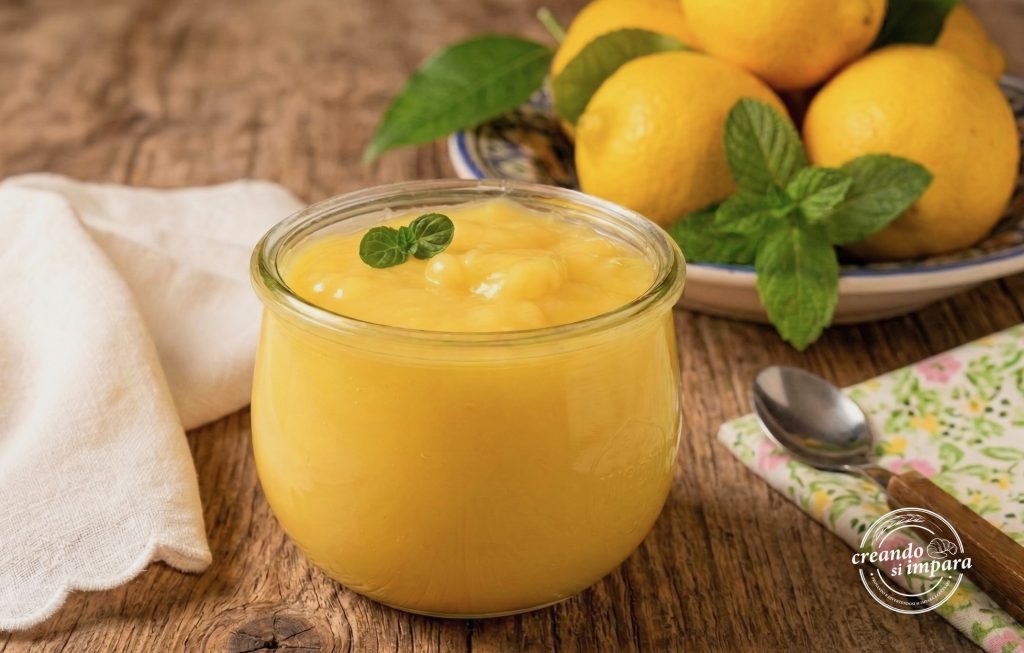
- Difficulty: Very easy
- Cost: Inexpensive
- Rest time: 5 Hours
- Preparation time: 10 Minutes
- Cooking time: 5 Minutes
- Portions: 8 People
- Cooking methods: Stovetop
- Cuisine: Italian
- Seasonality: All seasons
Ingredients for your lemon curd
- 3 egg yolks
- 1 2/3 cups water
- 3.4 fl oz lemon juice
- 1 lemon zest
- 1/4 cup potato starch
- 3 1/2 tbsp cold butter
- 3/4 cup sugar
Steps to prepare the lemon curd
Begin by carefully separating the egg yolks from the whites. In a small, heavy-bottomed saucepan, whisk the potato starch into the cold water using a hand whisk, making sure to dissolve any lumps. Then add the sugar and mix well. Pour in the filtered lemon juice and add the whole lemon peels previously removed with a peeler (taking care not to include the bitter white pith). Finally, add the yolks and mix until you obtain a smooth, homogeneous liquid. This cold stage is essential so that the starch does not gelatinize prematurely during the cooking of your flavorful recipe.
Place the pan over low heat and start cooking the mixture, stirring constantly with the whisk. Continue cooking until the cream visibly thickens and coats the back of a spoon. This is a delicate technical step: the heat must be steady but never excessive to avoid the yolks “breaking,” which would compromise the silkiness of the lemon curd. Once the desired thickness is reached, remove immediately from the heat. The presence of the starch helps stabilize the structure, making the cream more resistant to the temperature swings common for homemade lemon cream.
As soon as the cream is off the heat, add the cold butter straight from the fridge, cut into small pieces. Stir vigorously until the butter is completely melted and emulsified. This is the real technical secret: the thermal shock between the hot cream and the cold fat creates a very fine structure and gives the cream a mirror-like shine. Now remove the lemon peels with tongs or by straining through a fine-mesh sieve; this way you extract all the essential oil aromas without leaving solid residues in your velvety preparation.
Pour the lemon curd while still hot into a previously sterilized glass jar. Cover with plastic wrap directly on the surface to prevent an unpleasant skin from forming as it cools. Let it cool completely at room temperature and then place the jar in the refrigerator for at least 2-3 hours before use. Chilling allows the flavors to stabilize and the texture to become even thicker and more spreadable, transforming your effort into a perfect lemon curd ready to enjoy.
Tips for a perfect result
Untreated lemons: Since you use the whole peels in the mix, it is vital to choose organic lemons to avoid pesticides ending up in your flavorful recipe.
Keep the whisk moving: Never leave the pan unattended on the heat; the secret for a smooth curd is constant movement to prevent the cream sticking to the bottom.
Butter temperature: Do not use butter at room temperature; ice-cold butter is what guarantees the final “polish” of the cream, making it look professional.
Tasty ideas to use your lemon curd
Shortcrust filling: Use the lemon curd to fill small shortcrust shells, maybe decorating with a torch-melted meringue for a mini Lemon Meringue Pie.
Sponge cake filling: Spread the cream between layers of a soft cake or inside a Swiss roll for an irresistible citrus contrast.
Topping for yogurt and pancakes: Add a spoonful of curd over Greek yogurt or on morning pancakes for a boost of energy and vitamin C.
Base for a mousse: Fold the curd into whipped cream or ricotta to make a super quick and velvety lemon mousse.
Storage
In the refrigerator: Lemon curd keeps perfectly for 1 week tightly sealed in its jar.
Vacuum sealed: If you use sterilized jars and vacuum-seal them, you can store them in a dark pantry for a few months, but once opened they should be consumed quickly.
In the freezer: You can freeze small cubes of lemon curd to use as an unexpected “core” inside muffins or small hot cakes during baking.
Now it’s your turn!
The lemon curd is pure citrus magic in a jar. Its versatility makes it a precious ally in the kitchen, capable of turning even the simplest dessert into a refined pastry creation.
How do you plan to use your first jar? Do you prefer it plain, spread on a slice of toast, or do you already have a special cake in mind to fill? Let me know in the comments if the cold-butter technique made your cream as glossy as you hoped and if this homemade lemon cream will become a “must-have” in your fridge!
FAQ (Questions and Answers)
Why does my lemon curd taste like egg?
This can happen if the heat was too high on the stove. If you notice a slight omelet-like aftertaste, strain the cream through a fine sieve to remove any tiny bits of overcooked yolk.
Can I replace the butter?
Yes, you can use a good-quality plant-based alternative or deodorized coconut oil, but keep in mind the final texture of your lemon curd may be slightly less silky.
Is the starch mandatory?
In the original English recipe it wouldn’t be used; however, it makes the cream more stable and reliable, perfect for filling cakes that need to hold their shape when sliced.
