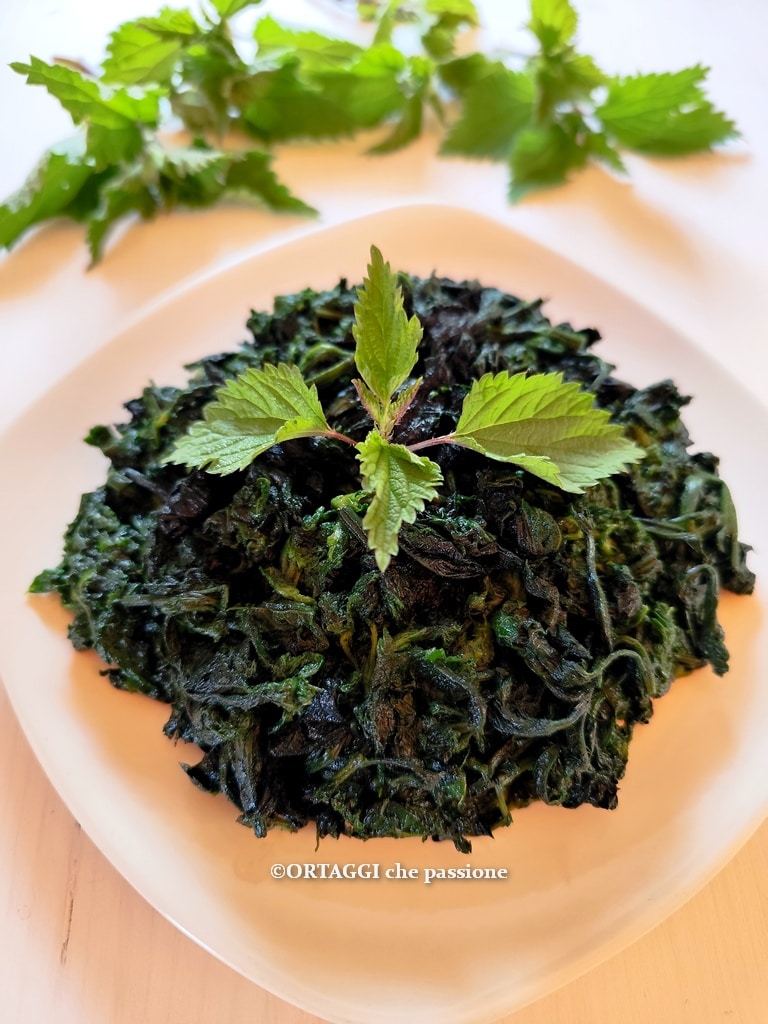
Stinging nettles in the pan are a simple preparation made only with nettles, but not everyone likes it due to its very intense flavor. To make this side dish more delicate, you can add a bit of ricotta, or use them to prepare a soup with potatoes. Or you can turn them into a tasty omelette or farifrittata without eggs.
What do nettles taste like? Bold, green, slightly herbaceous, and ferrous.
#Nettles SEASON – spring and fall (when the shoots are tender), do not pick nettles with flowers or seeds.
RECIPES with nettles
- Difficulty: Easy
- Cost: Very Cheap
- Preparation time: 15 Minutes
- Portions: 4 People
- Cooking methods: Stovetop
- Cuisine: Healthy
- Seasonality: Spring, Fall
- Energy 23.00 (Kcal)
- Carbohydrates 3.75 (g) of which sugars 0.13 (g)
- Proteins 1.36 (g)
- Fat 0.29 (g) of which saturated 0.03 (g)of which unsaturated 0.00 (g)
- Fibers 3.45 (g)
- Sodium 101.90 (mg)
Indicative values for a portion of 100 g processed in an automated way starting from the nutritional information available on the CREA* and FoodData Central** databases. It is not food and / or nutritional advice.
* CREATES Food and Nutrition Research Center: https://www.crea.gov.it/alimenti-e-nutrizione https://www.alimentinutrizione.it ** U.S. Department of Agriculture, Agricultural Research Service. FoodData Central, 2019. https://fdc.nal.usda.gov
Stinging Nettles in the Pan
- 7 oz stinging nettles
- as needed water
- 1 pinch salt
- 1 drizzle extra virgin olive oil (or peanut oil – optional*)
Optionally, stew with a drizzle of oil and a clove of garlic, or in a sauté of onion. Alternatively, boil with a splash of water.
Tools
- Gloves latex
- Pan with lid
Stinging Nettles in the Pan
Wear gloves to avoid the stinging sensation and use scissors. Harvest the most tender tips, usually the first 4-6 inches of the plant. Choose clean areas, away from busy roads or treated fields.
How to recognize edible nettle? Recognizing edible nettle is easier than it seems, but requires some attention. The most common and used species in cooking is the Urtica dioica, the so-called greater nettle. It has dark green, oval-lanceolate shaped leaves with serrated edges and a slightly rough surface. They grow opposite on the stem (i.e., two by two facing each other) and are covered with stinging hairs, which are the ones responsible for the sting when you touch it raw. The stem is also often hairy and can be slightly square to the touch.
Wear gloves (latex) to avoid the sting and rinse them well under running water. Let them soak for a few minutes, then drain.
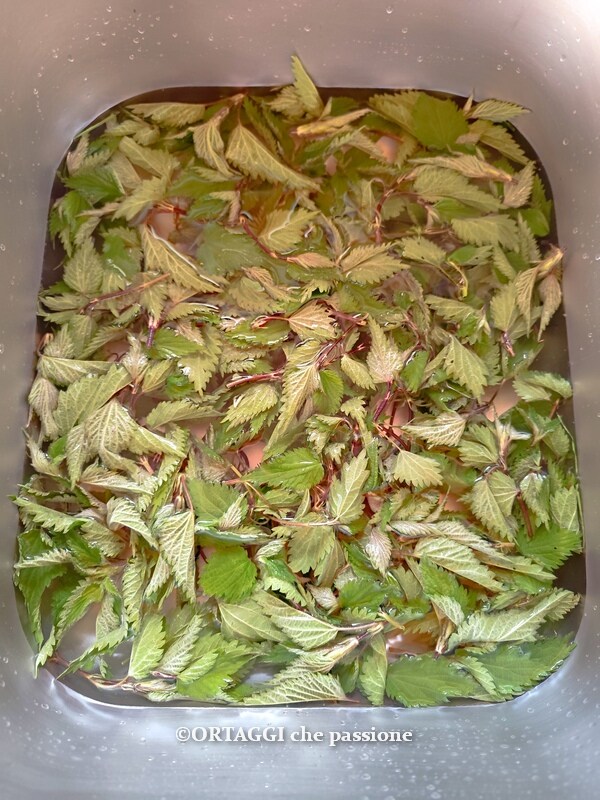
Once wet, they lose their stinging power.
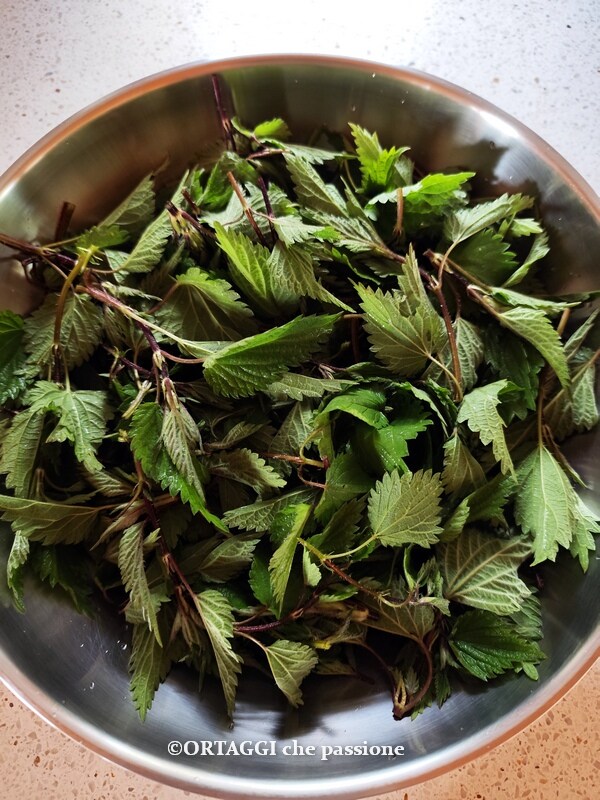
In a pan, pour the nettles with a splash of water and, optionally, a drizzle of oil. Add salt, cover, and stew over medium heat.
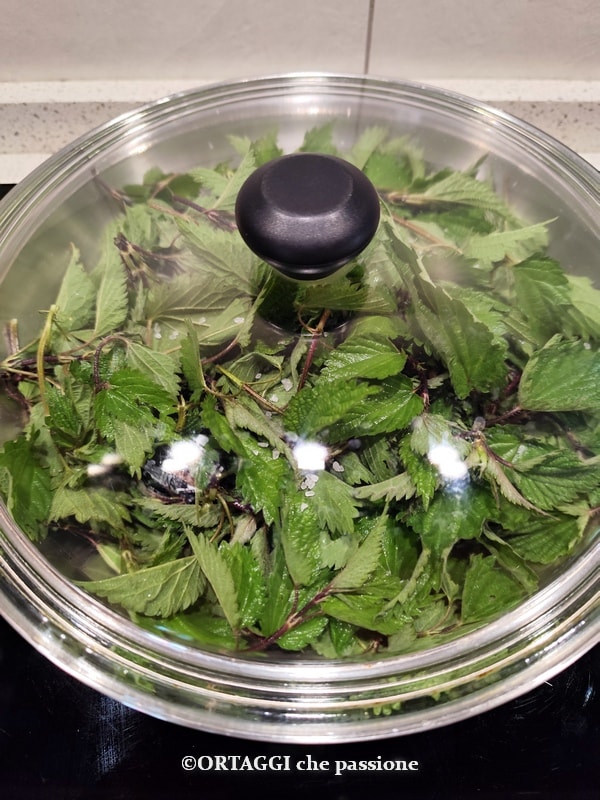
Stir occasionally and cook until they soften; if necessary, add more water or uncover to let them dry.
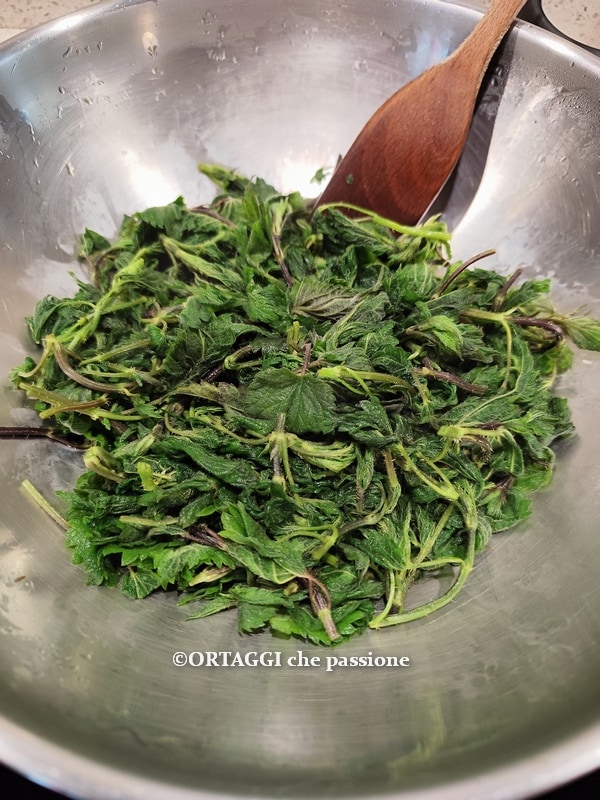
Bring a pot of water to a boil, add the nettles, and cook for about 10 minutes, or until they become soft. Drain them well.
STORE the stinging nettles in the pan
The stinging nettles in the pan can be stored in the fridge for up to 4 days if well packed in an airtight container.
They can also be frozen once cooked and keep for a couple of months, making them ready to use in other preparations.
FAQ (Questions and Answers)
How can you eat stinging nettles in the pan?
They are perfect for preparing soups, risottos, gnocchi, omelettes (or vegan farifrittatas), savory pies, and even fresh green pasta like tagliatelle.
They are also used in fillings (tortellini, ravioli), along with ricotta or tofu, or blended to create creams and sauces. And if you like experimenting, you can try making a pesto.Can I use any type of nettle?
Yes, but it’s important to gather them in clean places, away from busy roads or areas treated with pesticides. The youngest and most tender leaves, especially those at the top, are the best.
Does the sting disappear with cooking?
Once cooked, nettles completely lose their stinging power and become soft and flavorful, similar to spinach but with a bolder taste.
What are the properties of stinging nettles in the pan?
Cooked nettles are rich in vitamins (especially A, C, and K) and minerals like iron, calcium, and magnesium, making them a great ally for bone health, skin, and the immune system. They are also an excellent source of antioxidants and fiber, promoting digestion and intestinal well-being. Additionally, thanks to their anti-inflammatory properties, they can help counteract muscle and joint pains.