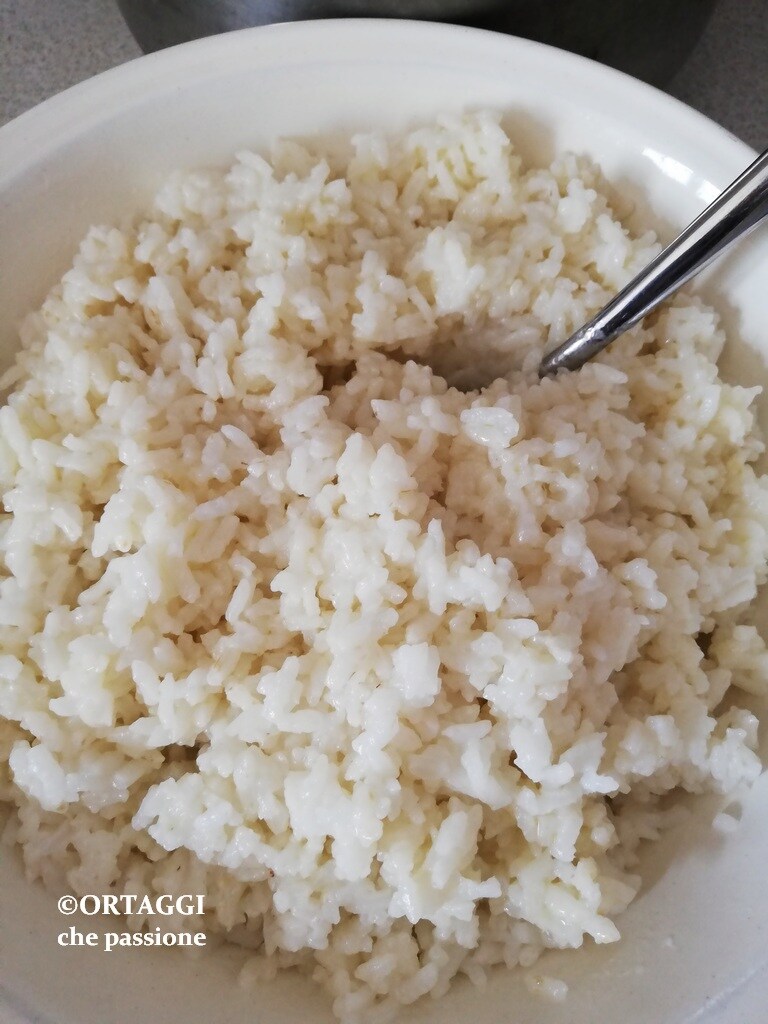
Rice in a pressure cooker cooks in a few minutes and is an excellent substitute for bread and pasta. It doesn’t stick to the bottom and is perfect for accompanying any main course or adding to soup.
#cookinggrains
Quantities and minutes for boiled rice recipes
- Difficulty: Easy
- Cost: Economical
- Rest time: 3 Minutes
- Preparation time: 2 Minutes
- Portions: 4
- Cooking methods: Pressure Cooker
- Cuisine: Healthy
- Seasonality: All Seasons
- Energy 228.13 (Kcal)
- Carbohydrates 49.97 (g) of which sugars 0.08 (g)
- Proteins 4.46 (g)
- Fat 0.41 (g) of which saturated 0.11 (g)of which unsaturated 0.24 (g)
- Fibers 0.81 (g)
- Sodium 201.92 (mg)
Indicative values for a portion of 188 g processed in an automated way starting from the nutritional information available on the CREA* and FoodData Central** databases. It is not food and / or nutritional advice.
* CREATES Food and Nutrition Research Center: https://www.crea.gov.it/alimenti-e-nutrizione https://www.alimentinutrizione.it ** U.S. Department of Agriculture, Agricultural Research Service. FoodData Central, 2019. https://fdc.nal.usda.gov
Rice in Pressure Cooker
QUANTITIES per person
– boiled rice as a side dish: 60-70 grams
– boiled rice for soup about 35 grams
- 8.8 oz rice (Arborio, Baldo, Basmati, Bomba, Carnaroli, Jasmine, Parboiled, Ribe, Roma, Thai, Vialone nano)
- 4 cups water
- to taste salt
How much water?
The double the weight of rice for absorption cooking.
The triple the weight of rice to drain it from the water at the end of cooking.
Tools
- 1 Pressure Cooker Lagostina
In the La Classica 7-liter pressure cooker, I recommend cooking a maximum of half a kilo of rice.
With grains, it’s better not to exceed half the filling capacity of the pressure cooker (external line and groove found on the surface of the pot), as they sometimes produce foam that could clog the steam release valve.
Cooking Rice in Pressure Cooker
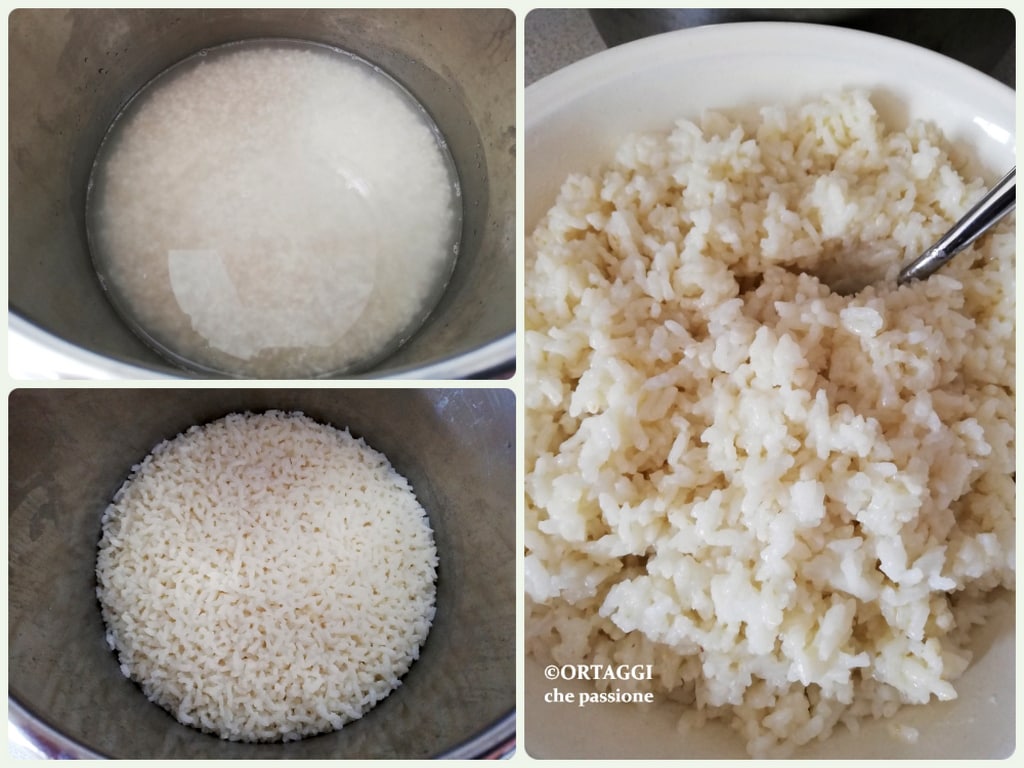
Rinse the rice under running water (for an oriental taste result, soak the rice for about ten minutes, then drain and rinse several times until the water becomes clear and starch-free).
Pour the rice into the pressure cooker and cover it with double its weight in water, salt to taste.
Close the pressure cooker and turn on the heat. At the classic whistle, lower the flame and continue cooking for 5 minutes. Let the pressure cooker vent on its own and open it only when the safety block has lowered, so the absorption cooking of the grain continues even after turning off the heat. This technique also makes using the pressure cooker less dangerous.
Remove the rice from the pressure cooker and, if desired, season the boiled rice with a drizzle of extra virgin olive oil.
How many minutes to cook other types of rice?
As a general rule, divide the classic boiling times in boiling water by 3. In the pressure cooker, count the minutes of cooking from the whistle of the pressure cooker until the heat is turned off, then let the cooker vent on its own, and thus the grain cooking continues by absorption. If instead you vent the pressure cooker immediately after turning off the heat, halve the traditional cooking time.
With red, black, and whole grain rice, to speed up cooking, I recommend soaking it before cooking for at least half an hour.
COOKING TIME
Brown rice – divide the cooking time indicated on the package by three.
RED Rice (Ermes) – classic boiling 35 minutes – pressure cooker boiling 12 minutes.
BLACK Rice (Venere) – classic boiling 40 minutes – pressure cooker boiling 13 minutes.
How much time do you save with a pressure cooker?
Generally, the cooking time in a pressure cooker is halved.
While in the case where, after turning off the heat under the pressure cooker, it is left to vent on its own (thus not being flooded by cooking steam), the times are reduced to a third.