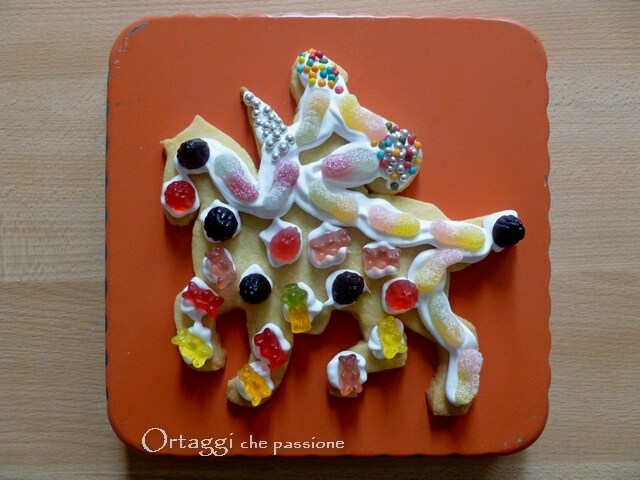
Discover the recipe to prepare the homemade San Martino sweet, with all the steps to create the traditional decorated cookie. In Venice, the San Martino sweet (also called San Martino’s Mantle) is prepared to celebrate November 11th, one of the most traditional popular festivals in the lagoon, to learn more about the history read at the end of the article. In November, you can find it ready-made and decorated for sale in bakeries, pastry shops, and supermarkets in Veneto and some of its provinces like Padua and Treviso.
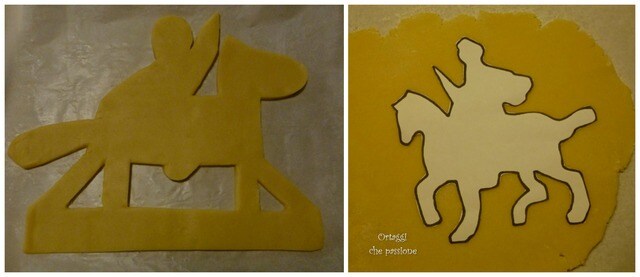
You can choose to print the drawing, the sketch, or the template to prepare your San Martino cookie at home, or you can buy the mold online: small – medium – large.
SHORTCRUST PASTRY RECIPES
- Difficulty: Medium
- Cost: Economical
- Rest time: 10 Minutes
- Preparation time: 45 Minutes
- Portions: yields for 2–3 San Martino sweets
- Cooking methods: Oven
- Cuisine: Italian
- Seasonality: San Martino
- Energy 597.41 (Kcal)
- Carbohydrates 72.76 (g) of which sugars 24.22 (g)
- Proteins 8.63 (g)
- Fat 31.90 (g) of which saturated 20.13 (g)of which unsaturated 11.36 (g)
- Fibers 1.53 (g)
- Sodium 6.74 (mg)
Indicative values for a portion of 100 g processed in an automated way starting from the nutritional information available on the CREA* and FoodData Central** databases. It is not food and / or nutritional advice.
* CREATES Food and Nutrition Research Center: https://www.crea.gov.it/alimenti-e-nutrizione https://www.alimentinutrizione.it ** U.S. Department of Agriculture, Agricultural Research Service. FoodData Central, 2019. https://fdc.nal.usda.gov
San Martino Sweet – the traditional horse
You can use your favorite shortcrust pastry recipe (also vegan or gluten-free or lactose-free), prepare it by hand, with a stand mixer, or with a Thermomix.
I recommend not using baking powder, to avoid that the shortcrust pastry puffs up and loses its nicely defined shape.
For a harder cookie base, bake the shortcrust pastry for longer.
- 4 1/2 oz butter (softened)
- 2 cups all-purpose flour
- 2/3 cup sugar
- 1 egg yolk
Tools
If you don’t have the mold, you can purchase it online small – medium – large.
Or make it at home with the drawing, the sketch, or the template to print.
- 1 A4 sheet of paper
- Marker
- Scissors
- Bowl
- Plastic wrap
- Rolling pin
- Parchment paper
- Knife with a tip (well-sharpened)
San Martino Sweet
Prepare the SHORTCRUST PASTRY
Put in a bowl: the softened butter in pieces (4 1/2 oz), the flour (2 cups), the sugar (2/3 cup), and the egg yolk.
Set aside the egg white; it will be used for the decorating glaze, or it can be frozen.
Work the dough with your fingertips until the mixture becomes uniformly sandy in both texture and color.
If the shortcrust pastry is too soft, add some flour; if too hard, add some cold water.
Create a homogeneous ball and cover it with plastic wrap, place it in the refrigerator for at least 30 minutes or in the freezer for 10 minutes.
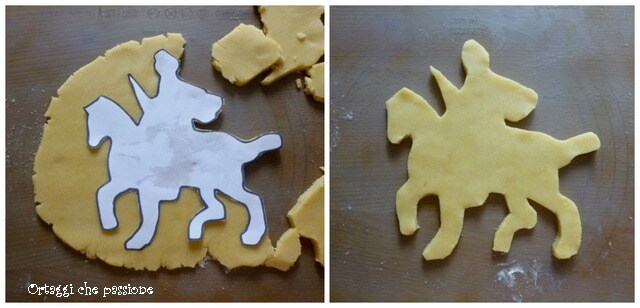
After the time has passed, roll out the shortcrust pastry on a sheet of parchment paper (or a silicone baking mat) to about 1/4 inch thick, place the paper silhouette on top, and cut out the outlines with the tip of a sharp knife.
BAKING
Bake the San Martino base in a preheated static oven at 350°F for 15 – 20 minutes or until the edges of the cookie start to slightly color and the cookie is still soft. Remove immediately from the oven, as it will harden as it cools.
ADVICE to handle the cookie with care both before and after baking, as this type of silhouette is very fragile.
DECORATE AS YOU WISH
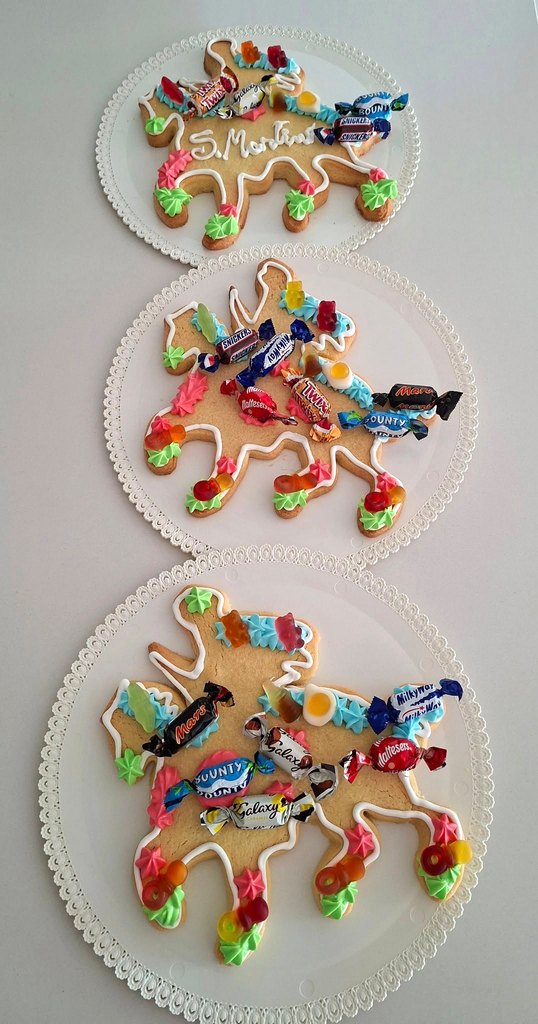
For inspiration, see photos of decorated San Martino sweets.
Homemade San Martino by Susanna Fabbian – Lo scrigno delle bontà
San Martino horses made by grandma Benedetta
How to decorate the San Martino sweet?
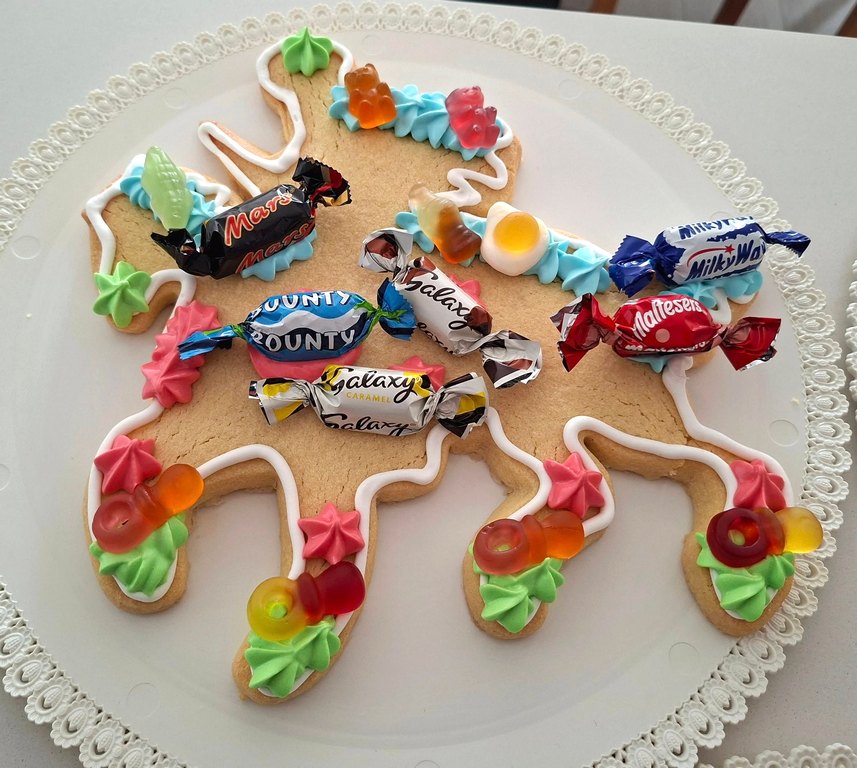
I decorated the cookie with a soft royal icing. Prepared with egg white and sifted powdered sugar (4 times the weight of the egg white). First, I whipped the egg white to stiff peaks and then gradually added the powdered sugar, always mixing at maximum speed with the stand mixer. If desired, the glaze can be colored with powdered food coloring,
So with a piping bag, I decorated the San Martino and placed the candies on top, after a few hours the royal icing had dried.
Alternatively:
– melt chocolate (white, milk, or dark) in a double boiler (or microwave) and pour it over the cookie to use as a “glue” for the candies
– buy ready-to-use cake glaze
List of CANDIES and SWEETS to decorate the San Martino
Amaretti, chocolates, gummy candies, Jelly candies, sugar sprinkles, colored sugared almonds, almond brittle, candied fruit, nuts (almonds, hazelnuts, pine nuts, pistachios), jellies, marshmallows, meringues, silver dragees, licorice wheels, Smarties, colored sugar crystals.
How to decorate the San Martino before baking?
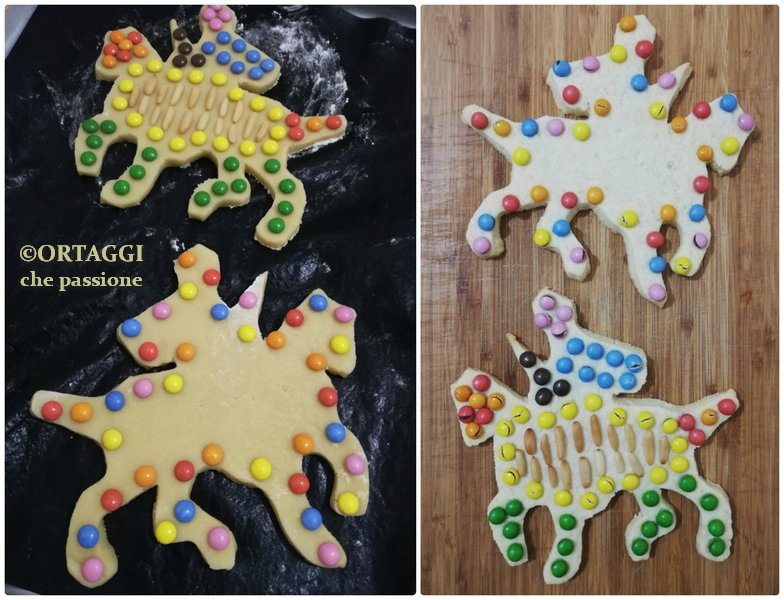
Garnish the raw shortcrust pastry with heat-resistant candies (Smarties) and nuts.
San Martino Festival in Venice
In Venice on November 11th, groups of children (often with a cloak on their shoulders and a paper crown on their heads) bang wooden spoons on pots and lids to make noise and sing this nursery rhyme until they receive sweets as a gift.
San Martin xè andà in sofita
par trovar la so noviza;
so noviza no ghe giera,
San Martin xè andà par tera.
E col nostro sachetin,
ve cantemo el San Martin.
Su ‘sta casa ghe xè do putele
tute risse e tute bele
col viseto delicato
suo papà ghe lo gà stampato.
E col nostro sachetin,
ve cantemo el San Martin.
Siora Cate xè tanto bela
in mezo al peto la gà ‘na stela,
se no la gavesse maritada
so papà no ghe l’avaria dada.
E col nostro sachetin,
ve cantemo el San Martin.
Siora Lussia la fassa presto
ch’el caigo ne vien adosso,
el ne vie adosso sul scarselin,
siora Lussia xè San Martin.
How much does a San Martino cost?
A decorated San Martino can cost from 12 euros upwards, depending on the size and quality of the decoration.
History of San Martino
The story of San Martino is linked to the life of a man named Martin, born around 316 AD in Sabaria, present-day Hungary. Martin became known for his act of generosity and charity, which has been celebrated and passed down through the centuries.
The most famous legend about San Martino tells of his encounter with a beggar while he was still a Roman soldier. The day this episode occurred, according to tradition, is November 11th. As Martin was riding through the city of Amiens, France, he saw a poor and cold man begging for alms. Martin, moved by compassion, cut his cloak in half with his sword and gave a part to the beggar.
The following night, Martin dreamed of Jesus Christ wrapped in the piece of cloak he had given to the beggar. Jesus told him that Martin had done well to help the needy. This dream profoundly marked Martin and influenced his decision to leave his military career to dedicate himself to religious life.
Martin became the bishop of Tours in France and dedicated himself to preaching and charitable work. His life was characterized by acts of kindness and generosity, and his figure became an example of Christian charity.
The day of his death, November 11th, 397, became known as the feast of San Martino. In different regions of Europe, this feast is associated with popular traditions, such as the sharing of food and drinks, especially new wine, symbolizing generosity and sharing. In many cultures, the period around November 11th is considered the beginning of winter, and San Martino celebrations are often accompanied by festivities and events.
The figure of San Martino is venerated in the Catholic Church and other Christian traditions as an example of charity and generosity, and his feast continues to be celebrated in many parts of the world.What is traditionally eaten on San Martino?
The food traditions associated with San Martino vary depending on the regions, but in many parts of the world, especially in Italy, the feast of San Martino is associated with the consumption of specific foods and drinks. Some common culinary traditions include:
Chestnut-based desserts: Chestnuts are often associated with San Martino. Desserts like chestnut cake, a sort of cake made with chestnut flour, nuts, and pine nuts, are prepared.
New wine: Novello wine, obtained from the recent grape harvest, is often consumed on this occasion. In some regions, people organize parties to taste the new wine.
Horse and knight-shaped sweets: In some areas, especially in popular traditions for children, horse and knight-shaped sweets are prepared, referring to the image of San Martino on horseback during his charitable gesture.
Legume soup: In some regions, legume soups are consumed, such as lentil soup, symbolizing the transition period towards winter and the need for more substantial foods.
Fritters and various sweets: In many families, traditional fritters and cookies are prepared to celebrate the feast.Why is goose eaten on San Martino?
The Venetian proverb goes, “Chi no magna oca a San Martin no’l fa el beco de un quatrin” (meaning those who do not eat goose on San Martino do not earn a penny).
In the 19th century, in the Venetian countryside, November marked the end of agricultural contracts and thus the time to assess the productive year’s balance. Being able to eat the goose was thus auspicious: if the sharecropper could afford the goose on San Martino’s day, it meant that the past year had brought earnings.
The custom of consuming goose on San Martino is linked to a popular and culinary tradition that has developed over time. In many regions, especially in parts of Europe such as France, Germany, and Austria, the goose is often associated with the celebrations of San Martino, which falls on November 11th.
The reason behind choosing the goose might be due to the seasonality of ingredients. Traditionally, November was the time when farmers slaughtered animals to prepare preserved food for the winter. The goose, being a migratory bird, was often ready for slaughter during this period.
Additionally, the choice of goose might be linked to dietary habits and traditional festivities. Geese have historically been associated with festive banquets and special occasions, and their meat is considered tasty and rich. Therefore, the goose may have become a traditional dish to celebrate San Martino’s feast in many regions. In Italy, its consumption during the celebrations on November 11th primarily occurs in Friuli-Venezia Giulia, Veneto, Lombardy, and Emilia Romagna.