
Homemade Neapolitan Sfogliatella Riccia
Sure, the true Neapolitan Sfogliatella Riccia is a complex art, with a pastry that requires days of rest and almost legendary mastery.
And who hasn’t been enchanted by its fragrance in the alleys of Spaccanapoli? During my last visit, I was once again captivated and, back home, the nostalgia for the authentic flavor drove me to a true mission.
Unable to dedicate entire days to the typical puff pastry, I wanted to find a homemade method that captured its essence: my trick with phyllo dough.
I experimented for a long time because the most common mistake made at home is getting a shell that is neither curly nor crispy and a filling that releases too much water.
I assure you that the key to my success lies in two details I perfected: 1. The strategic use of phyllo dough (which, if worked like a “sausage” and well-buttered, mimics the crunch of the original pastry), and 2. The meticulous preparation of the filling, where the semolina is cooked before being combined with well-drained ricotta to ensure dryness.
This is not the “basic recipe” you find everywhere; it is my tested and optimized version for home cooking, where time is precious but quality is non-negotiable.
I will guide you step by step through creating the phyllo dough “sausage” and teach you how to manage the filling’s moisture.
Follow my advice, respect the resting times, and I promise you that the result will surprise you, allowing you to savor an authentic corner of Naples, even without leaving your kitchen.
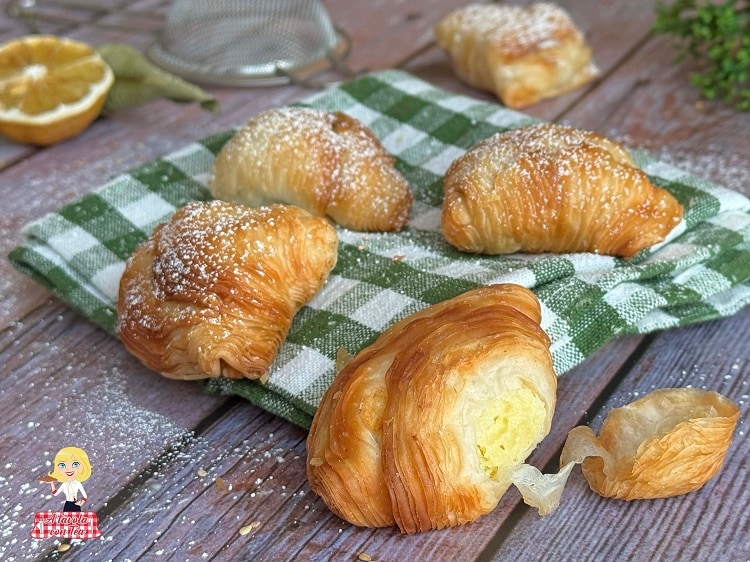
- Difficulty: Medium
- Cost: Cheap
- Rest time: 30 Minutes
- Preparation time: 15 Minutes
- Portions: 8
- Cooking methods: Oven, Stove
- Cuisine: Italian
- Energy 498.66 (Kcal)
- Carbohydrates 67.16 (g) of which sugars 36.89 (g)
- Proteins 13.75 (g)
- Fat 20.04 (g) of which saturated 12.08 (g)of which unsaturated 7.32 (g)
- Fibers 1.29 (g)
- Sodium 270.31 (mg)
Indicative values for a portion of 70 g processed in an automated way starting from the nutritional information available on the CREA* and FoodData Central** databases. It is not food and / or nutritional advice.
* CREATES Food and Nutrition Research Center: https://www.crea.gov.it/alimenti-e-nutrizione https://www.alimentinutrizione.it ** U.S. Department of Agriculture, Agricultural Research Service. FoodData Central, 2019. https://fdc.nal.usda.gov
What You Need to Make Neapolitan Riccia Sfogliatella
- 1 roll phyllo dough (about 10.6 oz)
- 5.3 oz butter (melted)
- 2 egg yolks
- 21.2 oz ricotta (sheep or cow well-drained)
- 4.2 oz semolina
- 1.7 cups water
- 6 oz sugar
- 3.5 oz candied orange peel (optional)
- 1 pinch salt
- orange zest (from 1 fruit)
- lemon zest (from 1 fruit)
- 1 pinch ground cinnamon
- 1 tsp vanilla essence
Tools
- Bowl
- Small Pot
- Baking Tray
Neapolitan Riccia Sfogliatella with Phyllo Dough: Step-by-Step Procedure
The heart of the sfogliatella riccia is its rich and fragrant filling. Follow these steps carefully to prepare it best.
Cook the Semolina: In a pot, bring the water to a boil with a pinch of salt. Lower the heat and gradually sprinkle in the semolina, stirring vigorously with a whisk to prevent lumps from forming.
Thicken the Mixture: Continue stirring without interruption until the semolina has thickened and begins to pull away from the sides of the pot.Sweeten and Let Set: Add the sugar to the cooked semolina, mix well, and let it cook for a few more moments, until the mixture is no longer compact.
Essential Cooling: Transfer the semolina to a bowl and let it cool completely, stirring occasionally to prevent a crust from forming on the surface.
Combine the Fragrant Ingredients: Once the semolina is cold, incorporate the well-drained ricotta (make sure it is dry for a perfect filling), the grated orange and lemon zest for a touch of freshness, a pinch of cinnamon for a warming aroma, the vanilla essence, and the candied fruits cut into very small cubes.Add the Yolks: Finally, add the egg yolks to the filling, gently mixing them into the rest of the ingredients.
Refrigeration Rest: Cover the bowl with plastic wrap and place the filling in the refrigerator for at least the same resting time as the phyllo dough. This step is crucial to firm up the filling and blend all the flavors.The unique crispiness of the sfogliatella riccia is given by the handling of the phyllo dough. Follow these steps carefully:
First Layer and Initial Rolling: Lay a sheet of phyllo dough on a work surface and brush it evenly with melted butter. Place a thin wooden skewer along the base of the sheet and start rolling the phyllo dough tightly around the skewer. This will help you get a very compact roll.
Removing the Skewer: Once the sheet is completely rolled, gently pull out the skewer.Subsequent Layers and Continuous Rolling: Take another sheet of phyllo dough, brush it with melted butter, and place the previously formed roll at the base. Start rolling the new sheet around the existing roll.
Creation of the Final “Sausage”: Continue this way until all 13 sheets of phyllo dough are used, always brushing with melted butter between layers. The goal is to get a compact cylinder, similar to a “sausage”.
Cooling to Firm Up: Wrap the phyllo dough “sausage” in plastic wrap and place it in the refrigerator for at least 2-3 hours to firm up well. Alternatively, you can put it in the freezer for about 30 minutes to speed up the process. A well-chilled dough will be easier to cut and work with.Now it’s time to shape your sfogliatelle and bake them to a golden perfection:
Cutting the Phyllo Dough Cylinder: After the resting time, take the phyllo dough cylinder and, with a very sharp smooth-edged knife, cut it into slices about half an inch thick.
Creating the “Shell”: Take each slice and, with your hands, apply light pressure from the center outward, trying to form a sort of cavity or shell. It’s important to seal the layers well to prevent the filling from leaking out during baking. If you notice any layers separating, gently press them with your thumb from the inside to make them adhere.Generous Filling: Fill each “shell” with about 0.5-0.7 oz of the ricotta filling prepared earlier. You can use a piping bag for more precise filling or simply use a teaspoon.
Placement on the Tray: Arrange the filled sfogliatelle on a baking tray lined with parchment paper.Baking in the Oven: Bake in a preheated static oven at 356°F for about 22-24 minutes, or until the sfogliatelle are well browned and crispy.
Final Touch and Serving: Remove your sfogliatelle ricce from the oven and, once lukewarm, dust them generously with powdered sugar.
Storage Tips
To best enjoy your sfogliatelle ricce. Sfogliatelle are delicious warm or at room temperature, perfect for enjoying right after baking. We recommend baking only the sfogliatelle you plan to consume the same day to best preserve their fragrance.
Freezing: Uncooked sfogliatelle can be frozen and baked directly in a hot oven when needed. In this case, note that cooking times may be slightly longer due to freezing.
How to Create the Perfect “Shell” Shape (The Thumb Trick)
After cutting the “sausage,” the most delicate phase is opening it into a shell. It’s not just about pressing! You need to place your thumb in the center of the slice and gently push outward, rotating. The melted butter between the phyllo dough layers should be cold but not completely solidified, so the layers open up like a fan without breaking. The pressure must be constant but controlled, to create a well-defined cavity that can hold the filling and form the typical “curly” base.
Insight into the Key Ingredients of Sfogliatella Riccia
To fully appreciate the magic of sfogliatella riccia, it is essential to understand the role of its main ingredients, each contributing uniquely to the final result:
The Phyllo Dough: Lightweight and Layered Crunchiness. Phyllo dough, with its ultra-thin and neutral texture, is the element that gives the sfogliatella its unmistakable crunchiness and characteristic “curly” shape. Its layered preparation, interspersed with melted butter, creates an alveolar structure that pleasantly flakes with each bite, contrasting with the softness of the filling. Its versatility makes it perfect for wrapping both sweet and savory fillings, but in the sfogliatella riccia, it best expresses its ability to create a friable and light shell.
The Ricotta: Soft and Creamy Heart. Ricotta, preferably sheep’s for a more intense and traditional flavor, is the creamy soul of the filling. It is essential that it is well-drained to avoid a filling that is too moist. Its velvety texture and delicate flavor perfectly blend with the other ingredients, creating a unique balance of flavors. Ricotta also brings a note of freshness that lightens the richness of the dessert.
The Semolina: Structure and Delicate Binder. Semolina, cooked in milk or water, acts as a binder for the filling, giving it a soft but compact consistency. Its preparation requires attention to avoid lumps, but once cooked and cooled, it blends perfectly with the ricotta and other aromas, creating a homogeneous and pleasant base on the palate. Semolina also helps give “body” to the filling without weighing it down.
The Candied Fruits: A Touch of Sweetness and Color. Candied fruits, generally orange and citron cubes, add a sweet and slightly citrusy note to the filling, along with a touch of vibrant color. Their gummy texture offers a pleasant contrast with the creaminess of the ricotta and the consistency of the semolina. Choosing high-quality candied fruits is essential for a well-balanced aromatic result.
The Aromas: The Fragrant Soul of the Filling. The grated lemon and orange zest, cinnamon, and vanilla essence are the elements that give the sfogliatella riccia filling its unmistakable and enveloping fragrance. Each aroma contributes to creating a complex and inviting bouquet, which anticipates the pleasure of taste. The freshness of the citrus, the warm note of cinnamon, and the sweetness of vanilla blend into a harmony of typically Neapolitan flavors.
Exploring the Delicious Variants of Sfogliatella
Although the sfogliatella riccia with its ricotta, semolina, and candied fruit filling is the most iconic and beloved version, in the Neapolitan pastry scene there are also other equally delicious variants worth discovering:
The Frolla Sfogliatella: A Hug of Crumbliness. Alongside the “riccia,” we find the frolla sfogliatella, characterized by a soft and buttery shortcrust pastry shell that encloses the same delicious ricotta-based filling. Its completely different texture offers a unique sensory experience, more “comforting” and less crunchy, but equally rich in flavor. The frolla is perfect for those who love more traditional and enveloping desserts.
The “Santa Rosa” Sfogliatella: A Tribute to the Origins. As mentioned in history, the “Santa Rosa” sfogliatella represents the oldest version of the recipe. It stands out for its rounder shape and the presence of a characteristic “tail” of dough on top. The filling may slightly vary from the riccia, often including various types of candied fruits and sometimes custard, while still maintaining the base of semolina and ricotta.
Mini Sfogliatelle and Creative Single-Servings: Many pastry shops offer mini sfogliatelle or single-serving sfogliatelle with creative and revisited fillings, while still maintaining the base of puff pastry or shortcrust. You can find variants with chocolate, pistachio, lemon cream, or other delicious fillings, demonstrating the versatility of this timeless dessert. These modern versions are perfect for a taste or a dessert buffet.
A Brief History of Sfogliatella: From the Coast to the Heart of Naples
Sfogliatella traces its roots back to the 17th century in the monastery of Santa Rosa da Lima on the Amalfi Coast. It is said that a nun created this dessert using leftovers of semolina and dried fruit, wrapping them in a dough similar to a “curly” nun.
In the 19th century, the Neapolitan pastry chef Pasquale Pintauro reworked the recipe in his shop in Naples, creating the riccia sfogliatella with its iconic shell shape and a puff pastry more similar to phyllo for its crunchiness. It was Pintauro who consecrated the riccia sfogliatella as a symbol of Neapolitan pastry, an excellence appreciated worldwide.
FAQ (Questions and Answers)
Can I substitute puff pastry for phyllo dough to make riccia sfogliatelle?
No, phyllo dough is essential to achieve the characteristic crispiness and “curly” shape of traditional sfogliatella. Puff pastry, while also layered, has a different consistency and thickness that would result in a completely different outcome, more similar to a classic pastry and less “curly”. For an authentic result, I recommend using phyllo dough.
I don’t really like candied fruits, can I omit them from the riccia sfogliatella filling?
Yes, you can omit the candied fruits if they are not to your liking. However, note that candied fruits contribute to the flavor and texture of the filling, adding a sweet and slightly citrusy note, as well as a touch of color. If you omit them, you might want to add more grated citrus zest or a pinch of soaked raisins to partially compensate for the sweetness and texture.
How long do homemade riccia sfogliatelle last once baked?
Riccia sfogliatelle are best when consumed fresh, ideally on the same day they are made. However, you can store them at room temperature, in an airtight container, for up to 1-2 days. Over time, the crispiness of the phyllo dough will tend to diminish. If you want to store them longer, I recommend freezing them raw, as indicated in the storage section, and baking them directly from the freezer when ready to enjoy.
Why did my ricotta filling turn out too runny and wet the pastry?
The cause is almost always ricotta that is too moist or the semolina not being cooked and cooled properly. Cooked semolina absorbs moisture. If you used cow’s milk ricotta, make sure you drained it for at least 6 hours. If the filling is still runny, add a teaspoon of rice flour or cornstarch and mix well before filling.
The phyllo dough crumbled or cracked during rolling, what did I do wrong?
Phyllo dough is extremely fragile. The most common mistakes are:
1. Not brushing enough butter (butter is the binder that allows the layers to adhere);
2. Working too slowly or the dough dried out in the air. Work quickly and always cover the unused sheets with a damp cloth.Can I use a convection oven instead of a static one? If so, how should I adjust temperature and time?
Yes, you can, but with caution. A convection oven will tend to dry and brown the pastry faster. Set the temperature to 338°F (instead of 356°F) and shorten the baking time to about 18-20 minutes. Make sure the outer edges do not burn.
