
How to Convert Butter to Oil in Cake and Pastry Recipes
If you’ve ever found yourself out of butter while baking a cake or prefer a lighter option, you can easily replace it with oil! This conversion is simple and can even alter the texture and flavor of your desserts. Let’s see how to do it.
Why Replace Butter with Oil?
Butter adds flavor and structure to baked goods, but oil can make the batter softer and moister. Additionally, oil is often a lighter option in terms of saturated fats. It’s perfect for those seeking a healthier alternative or following a lactose-free diet.
The General Conversion Rule
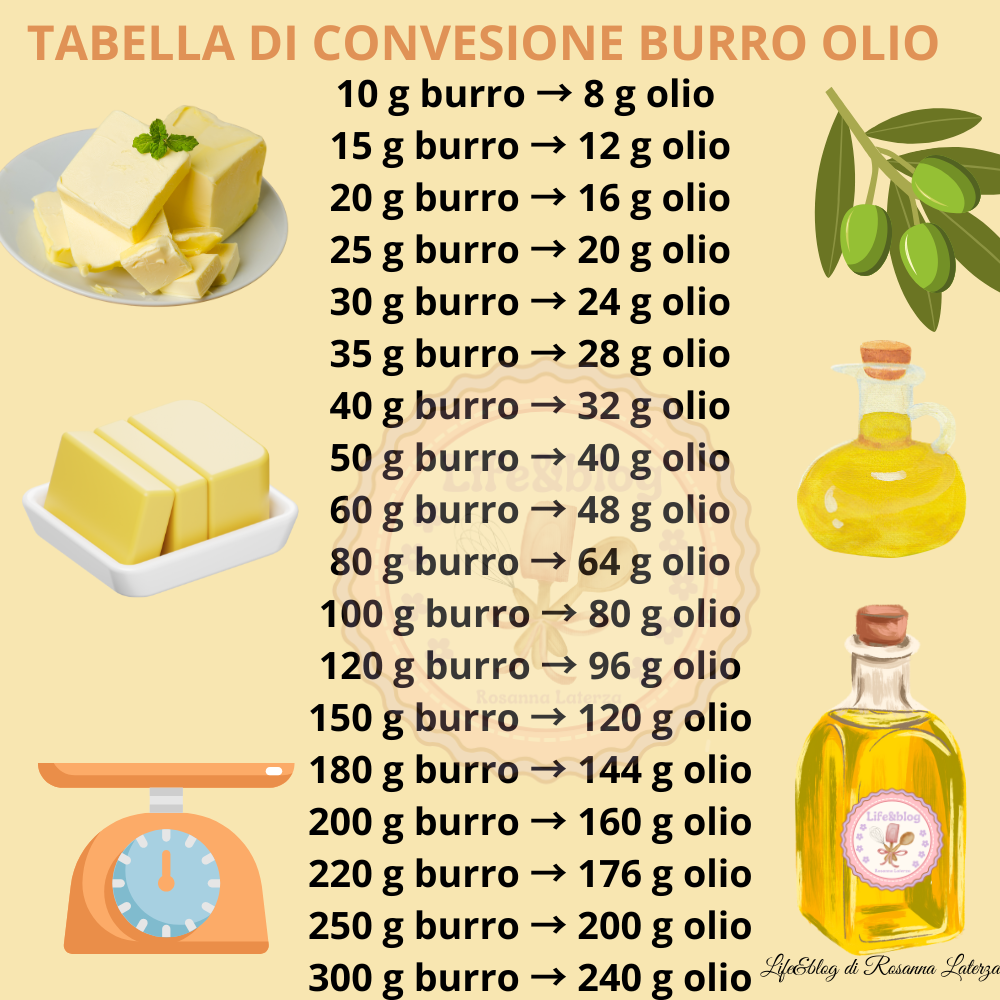
When replacing butter with oil, you don’t need to use the same amount. Oil is more concentrated, so you need less. The general rule is to use about 75% of the amount of butter indicated in the recipe. For example:
If the recipe calls for 100 g of butter, use 80 g of oil.
If 200 g of butter is required, use 160 g of oil.
Which Oil to Choose?
The choice of oil is important to avoid altering the dessert’s flavor. Here are some options:
Sunflower oil: neutral and versatile, perfect for most desserts.
Light olive oil: ideal for rustic or more boldly flavored cakes.
Coconut oil: great for exotic or vegan desserts (remember to melt it if solid).
Corn or peanut oil: suitable for simple cookies and cakes.
Avoid oils with too strong a flavor, like unrefined extra virgin olive oil, unless it complements the recipe.
Practical Tips
Mix well: Oil incorporates easily into the batter, but make sure to mix it evenly to avoid lumps.
Slightly reduce liquids: Oil makes the batter moister, so you may need to slightly reduce milk or other liquids in the recipe.
Replacing butter with oil is a great solution for creating lighter and softer desserts without compromising taste. It’s also a practical way to adapt recipes to your dietary needs or available ingredients. Try this simple conversion and surprise everyone with your delicious treats!
- Difficulty: Very easy
- Cost: Economical
- Cuisine: Italian
Ingredients
- butter
- seed oil
FAQ
Why replace butter with oil in desserts?
Oil makes desserts softer and moister, and is also a lighter choice for those looking to reduce saturated fats.
What type of oil should be used?
Seed oil (sunflower, corn) is neutral and doesn’t alter the taste, while olive oil can provide a more intense flavor, ideal for rustic cakes.
How do you convert butter into oil?
Generally, you use 20% less oil than butter. For example, 100 g of butter corresponds to 80 g of oil.
Can butter be replaced with oil in all recipes?
Yes, but in desserts that require a firmer texture (e.g., shortcrust pastry), it might be necessary to add a binder like yogurt or milk.
Is it better to use oil or butter for cookies?
Butter provides crispness and a richer aroma, while oil makes cookies lighter and softer. If using oil, a bit more flour may be needed to compensate for the texture.
Can coconut oil be used?
Yes, but since it is solid at room temperature, it is more similar to butter and should be used in equal amounts.
Does the flavor change if I use oil instead of butter?
It depends on the type of oil: seed oil is neutral, while extra virgin olive oil can provide a more pronounced taste.
How to store desserts made with oil?
They last longer and stay soft, as oil doesn’t solidify like butter. Store them in an airtight container to maintain freshness.
