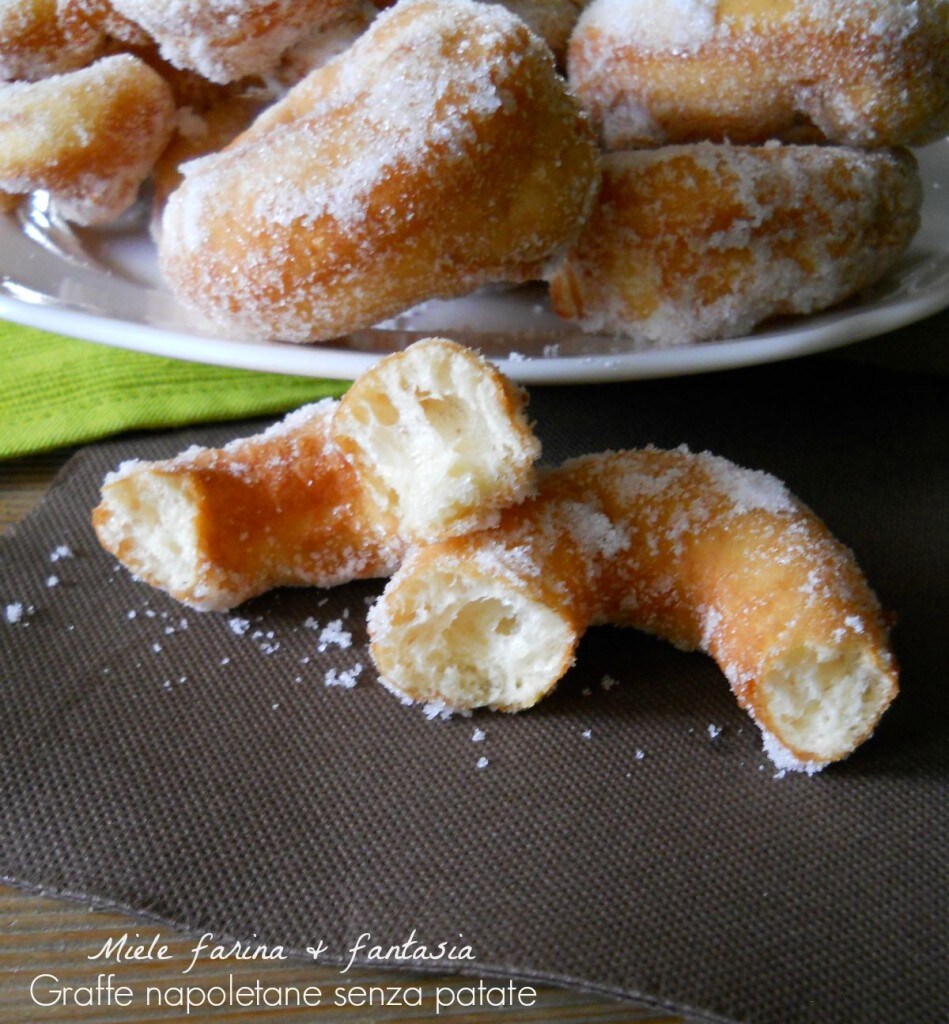
Neapolitan graffe without potatoes are delicious and indulgent fried doughnuts made from leavened dough, perfect for breakfast or special occasions. There are variations to this dessert; some people add potatoes to the dough, and you can find various recipes online. I make them both ways, and they are both delicious, but I prefer this version because the graffe remain soft even after a few hours. With this same recipe, you can also prepare krapfen or bomboloni, or whatever you want to call them. According to Wikipedia, the term “graffa” has its etymological origins in the ancient German “krafo” (from which the term “krapfen” also derives) meaning hook or claw, which became “krappa” in Gothic, eventually leading to “graffa” in the Neapolitan language. Another theory speaks of Caecilie Kraps, a Viennese pastry chef who allegedly invented these sweets. Regardless of who invented them, they are so good that it’s worth tasting them at least once a year, and as the Latins might have said in this case: “Semel in anno licet gustare”.
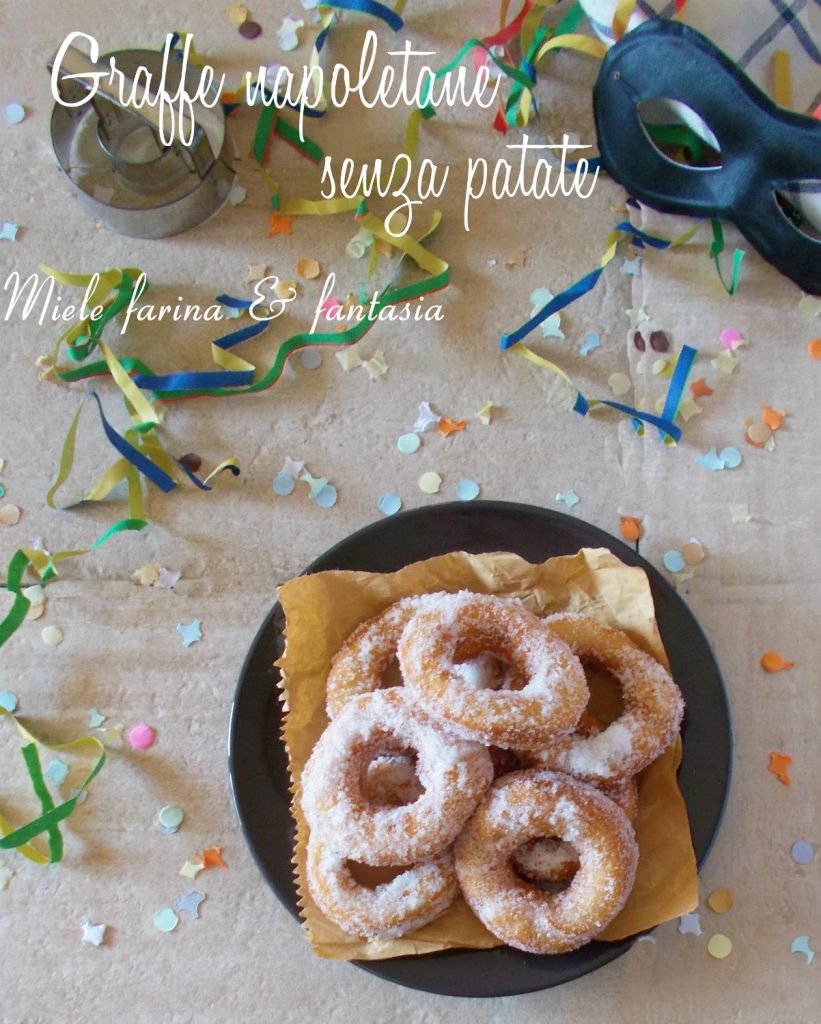
- Difficulty: Easy
- Cost: Economical
- Rest time: 3 Hours
- Preparation time: 15 Minutes
- Portions: 30
- Cooking methods: Frying
- Cuisine: Italian
- Seasonality: Fall, Winter, and Spring, Carnival
Ingredients
- 4 cups All-purpose flour
- 0.35 oz Fresh yeast
- 3/4 cup Water
- 1 tsp Fine salt
- 1 tbsp Granulated sugar
- 2 Large whole eggs
- 3.5 tbsp Butter
- as needed Lemon zest
Preparation
First, sift the flour into a bowl.
Dissolve the yeast in a tablespoon of water (taken from the 190 ml), add half of the flour and another 100 ml of water. Knead until a creamy mixture forms.
Combine the remaining flour, salt, sugar, aromas, eggs, and knead, adding the remaining water little by little (the amount of water may vary slightly based on the flour’s ability to absorb, external temperature, and humidity).
Knead until all ingredients are well combined.
Now it’s time to add the butter, cut into small pieces, little by little; each time the pieces are absorbed, add the next ones until finished. Work the dough to ensure the butter is perfectly incorporated.
Continue kneading by hand (it will take about 10 minutes) or with a mixer (about 5-7 minutes).
You should obtain a smooth, soft dough that is easy to work with and, importantly, doesn’t stick to your hands.
Let it rest in a covered bowl for about 20-30 minutes to make it easier to roll out.
After the resting time, roll out the dough into a rectangular shape using a rolling pin on a lightly floured work surface. The thickness of the sheet, as seen in the photos below, should be about 1 inch.
There are two methods to form the graffe:
1) After rolling out the dough, cut out several disks with a hole in the center (using a donut cutter; or, if not available, glasses of different sizes, a larger one for the doughnut and a smaller one, like a shot glass, for the center hole) and then let them rise. I don’t prefer this method because it creates too many scraps that need to be re-kneaded, left to rest, and then formed into rings unless you let the scraps rise as they are. The taste certainly won’t change.
2nd method) From the obtained rectangle, cut strips of dough about 1 inch high and wide and 6 to 8 inches long, as seen in the picture above. Stretch them slightly at the ends by gently pulling them. Cut the strips into two or more parts (depending on how large you want the graffe to be), work them a bit with your hands to form a sort of rope, and then close them into a horseshoe shape by overlapping the two ends, pressing them together with your fingers. This is my preferred method as it yields more doughnuts with no waste, though it is a little more labor-intensive.
Finally, let them rise until doubled in size on baking trays lined with parchment paper, spacing them at least 1 inch apart.
Cooking the graffe. Prepare a large bowl with granulated sugar. With scissors, cut the parchment paper around the graffe, forming squares; this way, you can lift and fry them one by one without any problem and without them sticking to your hands.
Heat the oil very well in a high-sided pan and start frying the graffe directly on their parchment squares. The paper will detach as soon as it comes into contact with the hot oil. The doughnuts should become golden on both sides (about 2/3 minutes), and you should turn them in the oil several times with two spoons. Do not fry too many graffe at once, as this would lower the oil temperature, ruining the final result.
As soon as they are ready, golden and puffed, drain them well from the oil, immediately pass them in sugar, and then place them on a serving plate. It is important to coat the graffe with sugar immediately after removing them from the oil.
Regarding the sugar.
Granulated sugar will absorb the moisture and surface oil from the fried graffe after a while, so it will no longer stick to our treats. Therefore, I recommend putting only a little sugar in the bowl and adding more bit by bit only when necessary to avoid waste.
Freezing the graffe
You can also freeze the graffe before letting them rise; this way, you can have them ready when needed.
Place the formed graffe side by side on a tray lined with parchment paper. Cover the tray very well with plastic wrap and place it in the freezer. Once they are perfectly frozen, transfer them to a large food bag and keep them in the freezer. When needed, thaw them first in the fridge and then at room temperature to let them rise.