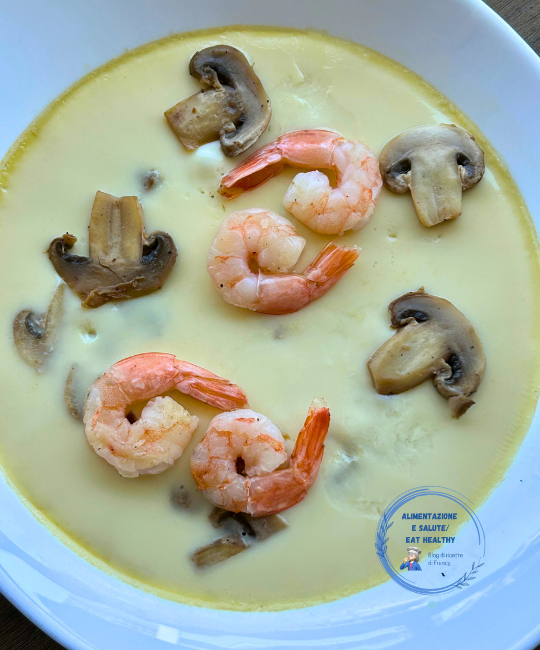
Light and Protein-Rich Japanese-Style Steamed Omelette.
Today I present to you a light and protein-rich steamed omelette, inspired by Japanese cuisine. It is a customized version of chawanmushi, a traditional dish made with steamed eggs, with a silky and light texture.
Chawanmushi is a Japanese savory pudding, usually served in small cups, made with beaten eggs and broth (dashi), to which shrimp, mushrooms, chicken, or vegetables are added. It is a very delicate and refined appetizer, symbolizing Japanese cuisine.
I discovered this recipe thanks to my friend Giulia, who had just returned from Japan. During a dinner, she let me taste the original chawanmushi, and I fell in love with it. So, I decided to reinterpret it in my own way, keeping the ingredients but transforming it into a thin steamed omelette, easier to serve and perfect for a healthy meal.
The result is a light and protein-rich omelette, without fats, soft and velvety, to be enjoyed as an appetizer, main dish, or savory breakfast. It is prepared in a few minutes, with common ingredients and no special tools. An oriental touch that will surprise you with its delicacy and simplicity!
Let’s get started and prepare the light and protein-rich Japanese-style steamed omelette together, eh belin that good!
If you like my recipes, follow me and subscribe on my social channels:
– facebook by clicking HERE
– Instagram by clicking HERE
– Youtube by clicking HERE
– Pinterest by clicking HERE
- Difficulty: Very Easy
- Cost: Inexpensive
- Preparation time: 5 Minutes
- Portions: 2
- Cooking methods: Steam cooking, Bain-marie
- Cuisine: Japanese
- Seasonality: All Seasons
Ingredients: Light and Protein-Rich Japanese-Style Steamed Omelette
- 2 eggs
- 7/8 cup vegetable broth (or water)
- 1 teaspoon soy sauce (you can substitute with a pinch of salt)
- 3 champignon mushrooms (or Shiitake Mushrooms)
- 5 shrimp (or two prawns or tofu or chicken pieces)
- as needed scallion (or chives – for garnish)
Tools: Light and Protein-Rich Japanese-Style Steamed Omelette
The dish inside the pan must remain elevated, I used a Christmas cookie cutter, if like me, you love Christmas in the summer too, here’s the link 🙂
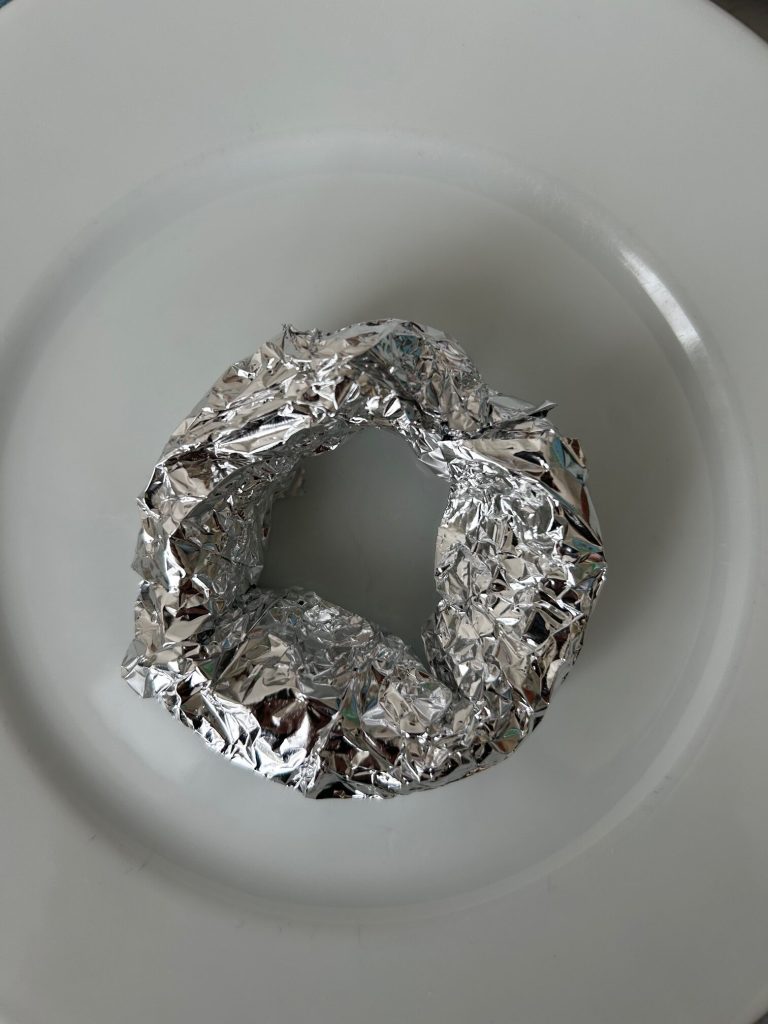
Otherwise, you can make a support with a piece of aluminum foil.
- 1 Pan
- 1 Cookie Cutter to support the dish
- 1 Aluminum
- 1 Small Pot
- 1 Skimmer
Steps
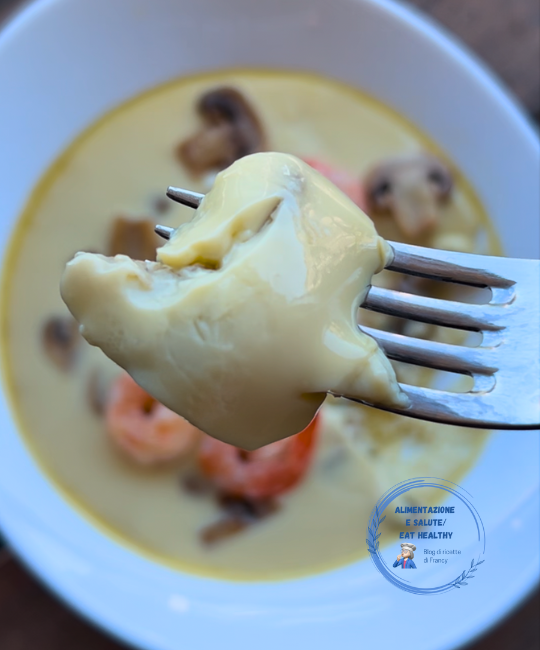
Light and protein-rich Japanese-style steamed omelette with a silky texture, melts in your mouth.
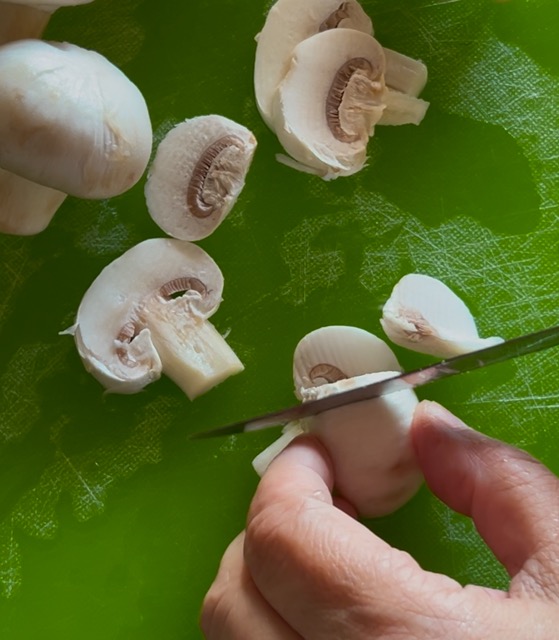
Wash and thinly slice the champignon mushrooms. Sauté them in a non-stick pan for a few minutes with a pinch of salt and add a splash of water for a no-fat cooking.
When the mushrooms start to soften, add the peeled shrimp and continue cooking for another 2-3 minutes, just until they change color. Turn off the heat and set aside.
Meanwhile, prepare the broth in a pot. Let it cool slightly, it should be warm, not boiling.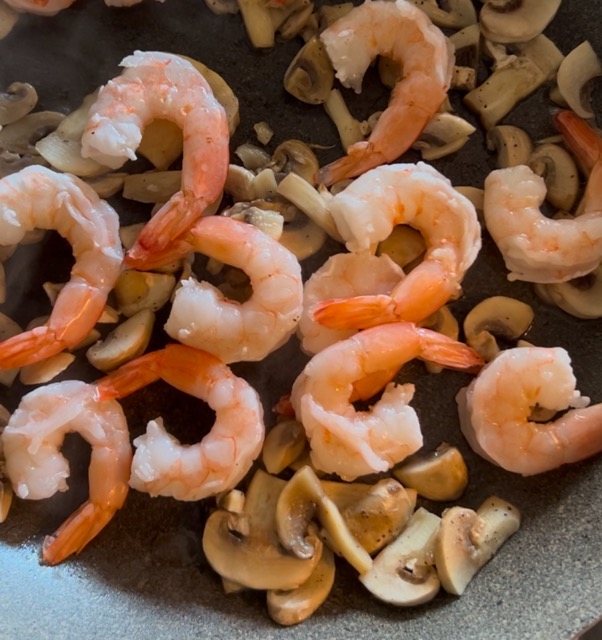
In a plate, gently beat the eggs without incorporating too much air (use a fork, not a whisk).
Slowly pour the broth into the beaten eggs, stirring gently.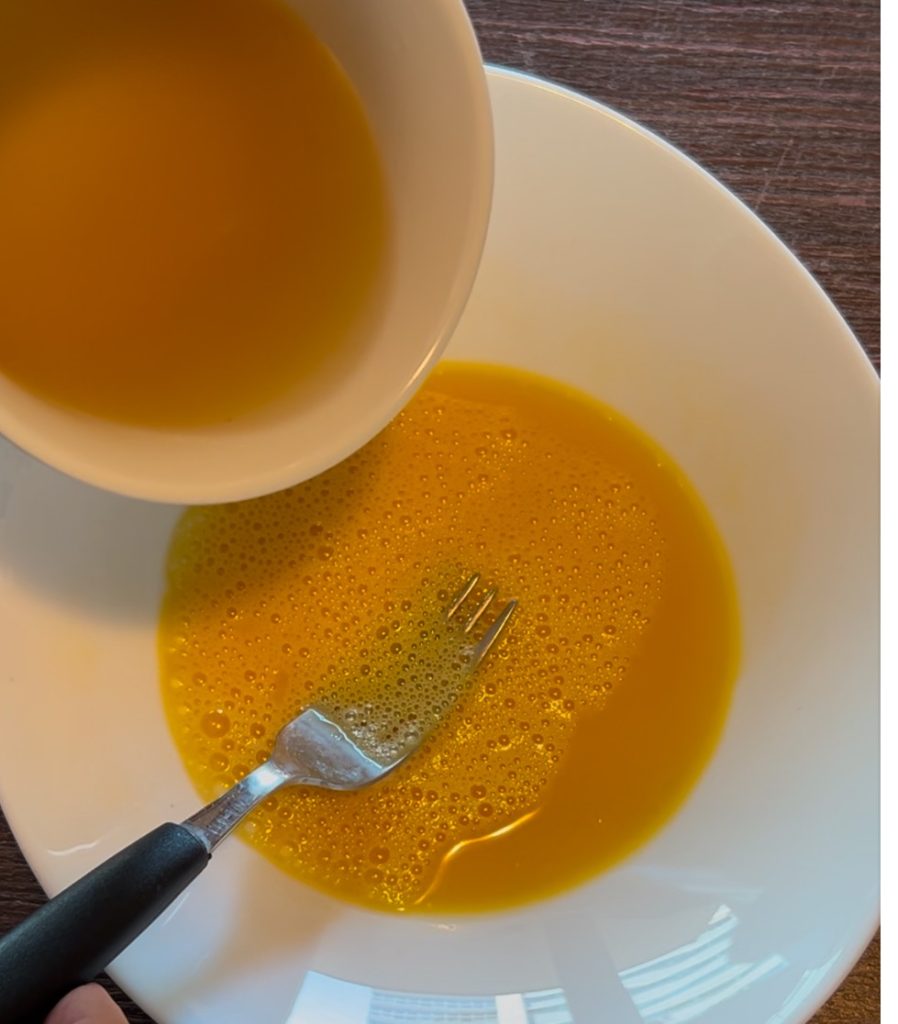
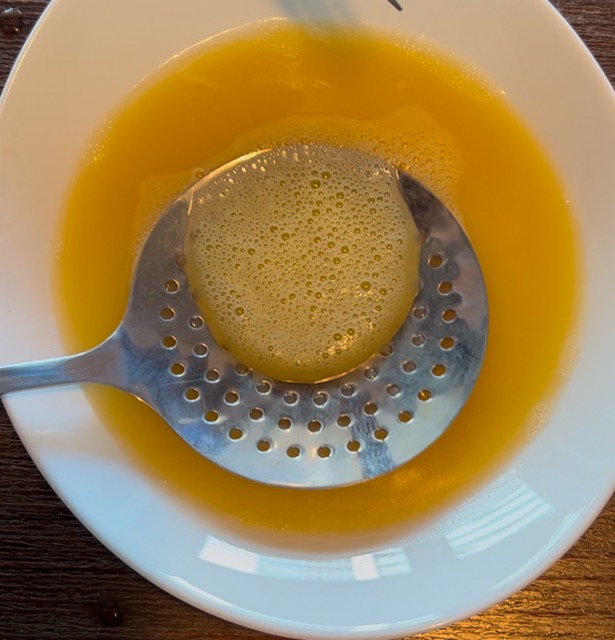
Use the skimmer to remove any foam to achieve a smooth mixture.
Take a pan large enough to hold the dish where you will pour the omelette.
At the bottom of the pot, place a metal cookie cutter (or not-too-tall round mold or a small heat-resistant support, you can use an aluminum foil piece). This will act as a riser to prevent the dish from touching the water directly.
Steam cook for 12-15 minutes on low heat (the water should simmer, not boil hard). Check with a toothpick: when you pull it out, it should be clean.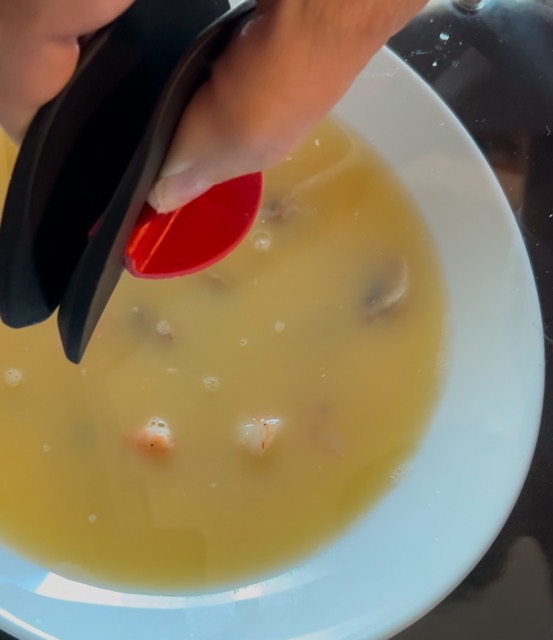
Garnish with mushrooms, shrimp.
Curiosities.
The name chawanmushi literally means “steamed tea cup” — chawan is the bowl used for tea, mushi means “steamed”.
Despite the name, this dish has nothing to do with tea: it is called so because it is served in small bowls similar to those used in the Japanese tea ceremony.
It is one of the most refined appetizers of kaiseki cuisine (traditional Japanese cuisine), precisely for its delicate texture and umami flavor.
FAQ (Frequently Asked Questions)
What is the difference between this omelet and a regular omelet?
This version is not cooked in a pan with oil but steamed, resulting in a lighter, softer, and silkier texture.
What can I substitute the shrimp with?
You can use cooked chicken pieces, smoked tofu, salmon, or keep it vegetarian with only mushrooms, carrots, or spinach. It’s important not to weigh down the preparation.
Do I have to use dashi broth?
Dashi is traditional in Japanese cuisine, but you can substitute it with a very light vegetable broth.
How long can I keep the steamed omelette in the fridge?
You can keep the omelette well covered in the fridge for one day. It’s important to store it in an airtight container.
How do I reheat the steamed omelette without ruining it?
The best method is to reheat it by steaming for a few minutes, to preserve its soft and silky texture. Avoid the microwave, which can make it rubbery or dry.
How can I prevent the dish from touching the bottom of the pan?
You can make an aluminum ring that will raise the dish and allow the steam to gently cook the preparation.
Cut a sheet of aluminum about 16-20 inches long (depending on your pan’s size).
Roll it up lengthwise, until forming a “sausage” about 1-1.2 inches thick.
Join the ends to create a stable ring, like a donut.
Place the ring in the pan and lay the dish or bowl with the mixture on top.
Add water to the pan, filling it up to the ring’s height.
Cover with a lid and cook gently: the steam will cook the omelette delicately, as in a classic bain-marie.