
Polenta dumplings with cabbage and speck are a rich and tasty winter dish to enjoy hot, straight from the oven, with a delicate cheese cream.
Big polenta balls accompanied by a great sauce of cabbage, speck, and cheese make this recipe flavorful and inviting.
It is a dish with a strong taste and given the richness of these ingredients, it can also be considered a single course.
This dish, typical of the winter period, can be considered a recycled preparation because, for its realization, you can also use already cooked and leftover polenta and use a different seasoning suitable to your tastes.
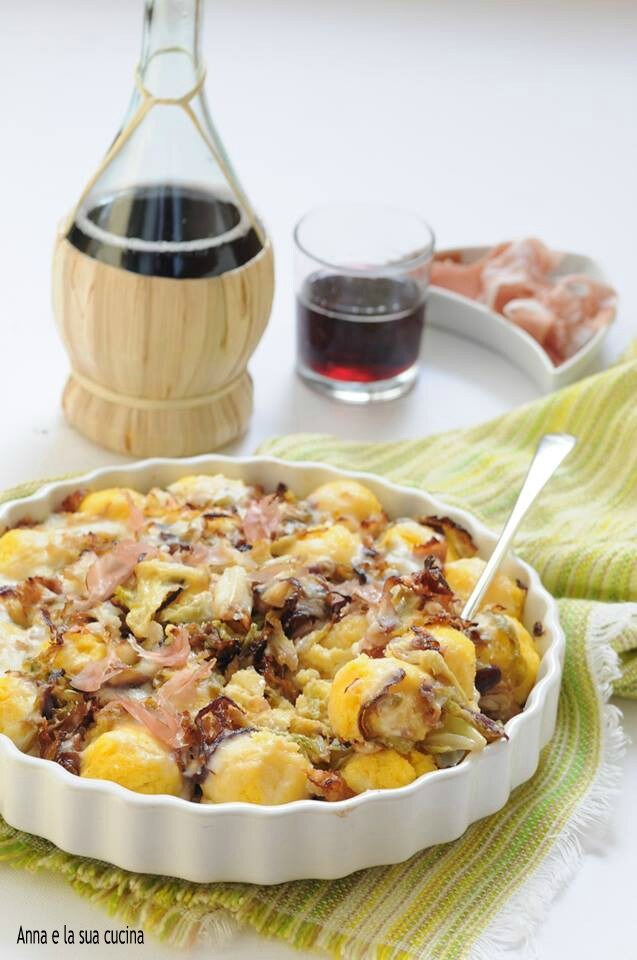
- Difficulty: Easy
- Cost: Economical
- Preparation time: 40 Minutes
- Portions: 4 people
- Cooking methods: Stove, Oven
- Cuisine: Italian
- Seasonality: Autumn, Winter and Spring
Ingredients for Polenta Dumplings
- 8.8 oz Precooked yellow cornmeal
- 1.1 lbs Cabbage
- 3.5 oz Speck
- 2 cups Milk
- to taste Butter flakes
- 2 cups Water
- 1.4 oz Grated Parmigiano Reggiano
- 2.1 oz Butter
- to taste Salt
- to taste Nutmeg
- 1 Onion
- 1/3 cup Milk
- 3 tsp All-purpose flour
- 3 tbsp Grated Parmigiano Reggiano
- to taste Salt
- to taste Nutmeg
- 0.7 oz Butter
Tools
- 1 Pot
- 1 Pan
- 1 Drip Pan
- 1 Parchment Paper
- 1 Baking Dish
- 1 Oven
Polenta Preparation
For the preparation of this recipe, we start with cooking the cabbage.
Clean the cabbage by removing the outer leaves and the central core, then cut it into thin strips and wash it thoroughly in a colander under running water.
In a pot, bring water and salt to a boil and cook the cabbage for about
3 – 4 minutes. Drain it and save the water for cooking the polenta, thoroughly remove the excess water.Peel and cut the onion into thin julienne strips, sauté it in a pan with half the butter (1 oz) and a little oil, add the cabbage, stir and let it flavor, stirring constantly for about 10 minutes, finally add a pinch of salt and the speck cut into strips.
In a saucepan, pour the cabbage cooking water, it should be about 2 cups, if not, add more, also pour in the milk, a pinch of salt, and bring to a boil. Pour in the cornmeal slowly and mix well with a whisk to avoid lumps; if you used precooked cornmeal, it only takes about 5 minutes to cook.
At the end of cooking, add the grated cheese (set aside a few tablespoons for later), the remaining 1 oz of butter, and the nutmeg, mix and blend everything well, and then let it cool slightly.Prepare the cheese cream: in a small saucepan, pour in the milk, flour, nutmeg, butter, grated cheese, and a pinch of salt, mix everything well, turn on the stove and cook for about 2 minutes until it becomes a thick cream.

With your hands or an ice cream scoop, take many polenta balls the size of a large walnut, wet your hands in water and round them well, then place them on a baking sheet with parchment paper; about 27 pieces came out.
Take a ceramic baking dish with a diameter of 11 inches, butter it well, pour two tablespoons of cheese cream, spread it on the bottom, then add a part of the sauce. Now place the polenta balls, sprinkle with the sauce, the cream, butter flakes, and grated cheese.Cook the polenta dumplings with cabbage and speck in a preheated oven at 356°F with traditional cooking for about 15 minutes, then turn on the grill and brown for another 5 minutes.
Remove from the oven and serve the dumplings hot and steaming.
For other polenta recipes click here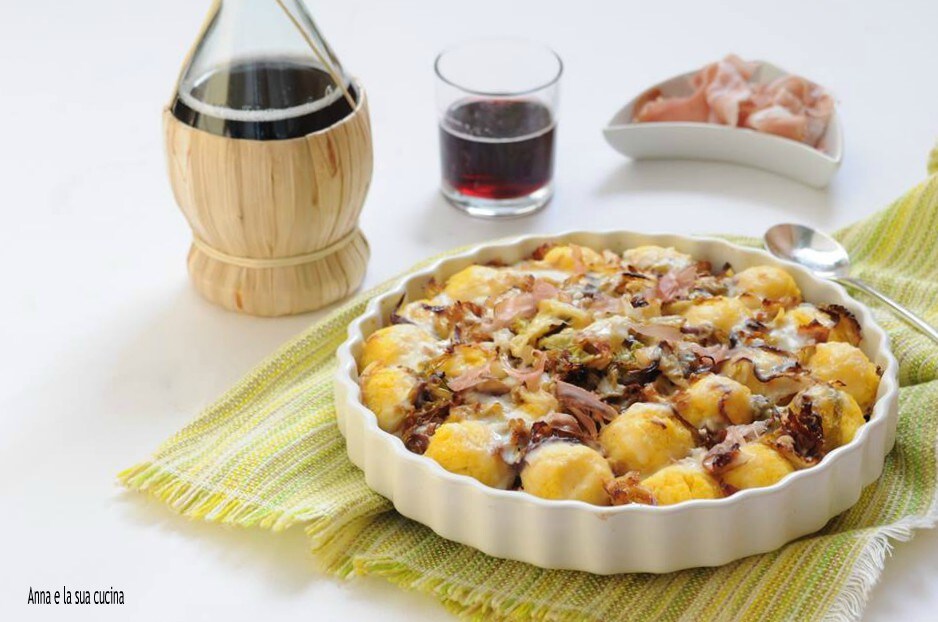
What else can I use to season the polenta dumplings?
You can use a meat ragù, simple tomato and cheese, or something else according to your tastes.
What can I substitute for cabbage?
You can use Swiss chard, spinach, or broccoli.
