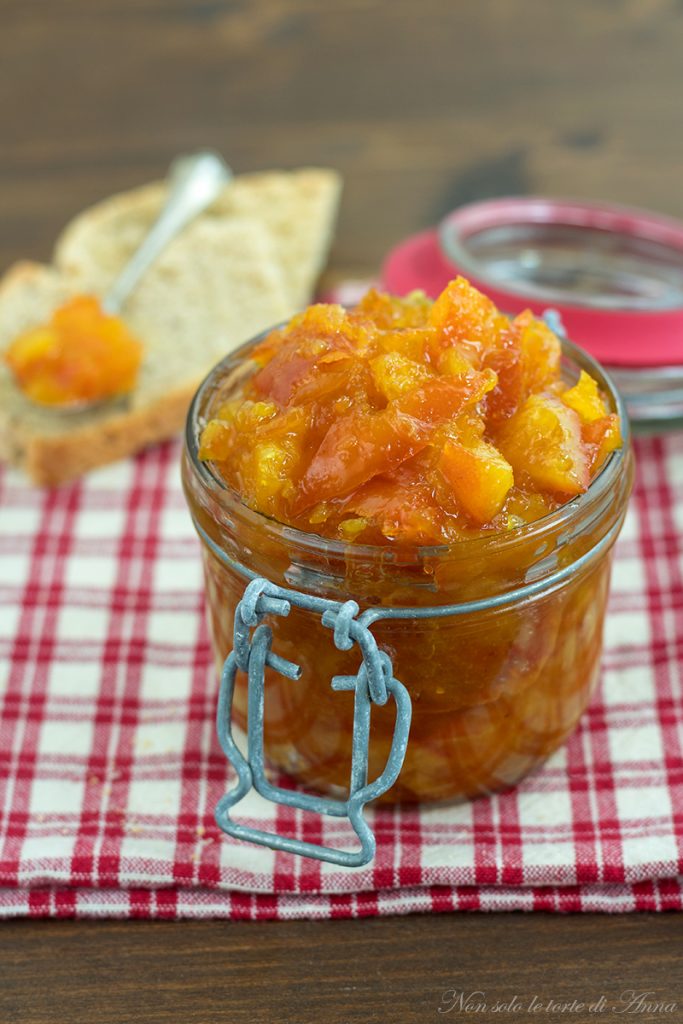
The orange marmalade is a traditional recipe, my grandma’s recipe, not very laborious but very good.
The preparation of the orange marmalade has ancient roots, linked to the rural tradition of preserving the flavors of seasonal fruit all year round.
In the past, when there were no chemical thickeners or packaged pectin, housewives relied on natural ingredients, like the pectin naturally present in citrus peels and seeds, and slow, patient cooking to achieve the right consistency.
The traditional recipe, often passed down from generation to generation, requires only three ingredients: untreated oranges, sugar, and water. The secret to a good marmalade “like it used to be made” lies in choosing organic, untreated oranges and paying attention to every phase of the process, especially soaking the peels to mitigate the bitter aftertaste and cooking until the right point of gelling.
This recipe relies on the natural pectin present in the fruit and requires a bit more patience compared to modern preparations.
By leaving the chunks, almost like candied fruit, you can blend it to have a finer, more spreadable marmalade, as a pairing. It pairs perfectly with savory and hard cheeses like Parmigiano Reggiano, aged Pecorino (including Sardinian), or aged Cheddar.
- Difficulty: Easy
- Cost: Economical
- Rest time: 1 Day 3 Hours
- Preparation time: 30 Minutes
- Portions: 4 Pieces
- Cooking methods: Stove, Slow Fire
- Cuisine: Italian
- Seasonality: All Seasons
Orange Marmalade Ingredients
- 4.4 lbs Valencia oranges, fresh (organic)
- 2.2 lbs sugar
- 1 lemon (juice only)
Tools
- 1 Pot
- Jars
Orange Marmalade Preparation
To make orange marmalade with the peel, you first need to wash and dry the oranges very well, then remove the peel with a knife, taking only the orange part, no white.
Place them in a container full of cold water and let them soak for 3 to 6 hours, changing the water several times, preferably until the next day. This step removes the bitterness from the peels.In the meantime, try to open the oranges by removing the seeds and part of the membrane that covers them, and chop the pulp into pieces.
Once the peels have soaked, drain them and chop them finely, then add them to the pot with oranges and sugar, and add the lemon juice.
In a large, thick-bottomed pot, combine the chopped orange pulp, blanched peels, and sugar. Mix well, cover, and let macerate for at least 2-3 hours, or better yet, overnight, so that the fruit releases its juices and absorbs the sugar.
When the sugar starts to dissolve, you need to stir to prevent the marmalade from sticking to the bottom of the pot.
Cook over low heat for about one and a half to two hours, stirring often to prevent sticking to the bottom. The prolonged cooking helps extract the natural pectin and thickens the mixture.
Then take a teaspoon of marmalade and pour it onto a saucer, by tilting it, the marmalade should slide slowly without falling.
If this happens, your marmalade is ready.At this point, you can blend your marmalade with an immersion blender to make it creamier, or leave it chunky.
Pour the still hot marmalade into previously sterilized glass jars (by boiling the jars and lids). Fill up to about half a centimeter from the edge
Tightly seal with the lids and turn the jars upside down on a clean cloth. Let them cool completely in this position to create a vacuum and ensure long-term preservation.
Once cooled, the jars can be stored in a cool, dry place for about a year. After opening, store in the refrigerator.
Advice
Some make marmalade just with the peels and orange juice, while others use only the orange pulp but add apples for body, and some even make it without sugar. These are all recipes I’ll try soon, considering we’re in the peak orange season. HERE and HERE you can find more marmalades.
If you want to see more recipes RETURN TO HOME