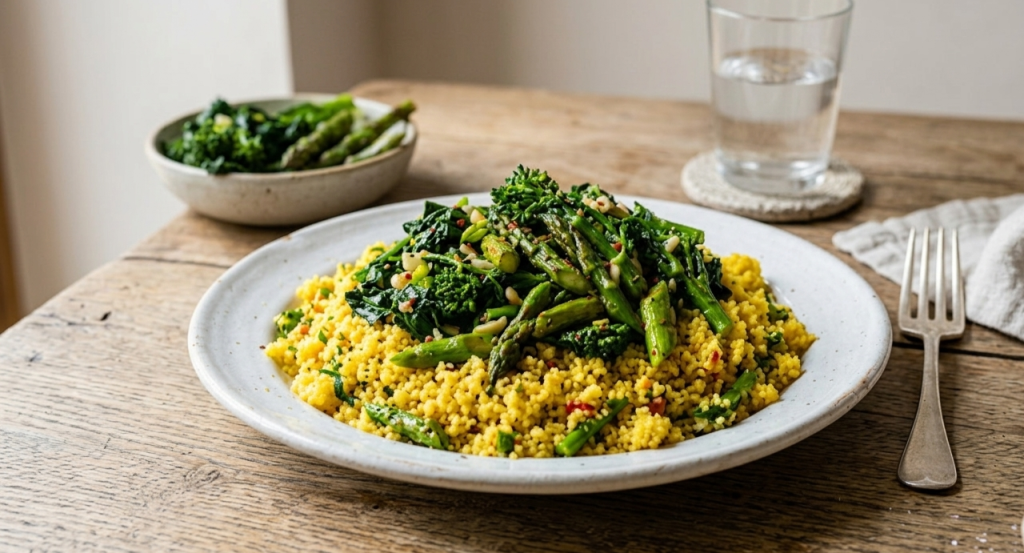
If you’re looking for a dish that combines the convenience of couscous with the bold note of seasonal vegetables, this is the recipe for you. Couscous with Asparagus and Rapini balances the bitterness of the rapini (cime di rapa) perfectly with the sweetness of the asparagus, creating a well-balanced contrast that makes every bite interesting.
It’s an ideal solution for a light but characterful lunch, great to enjoy hot or at room temperature. Preparation is simple: just respect the cooking times of the vegetables to keep them crisp and vibrant, letting the couscous absorb all the aroma of the dressing.
Below, as always, I’ll leave other couscous recipes, and then right below the photo we’ll see how to prepare the Couscous with Asparagus and Rapini 😉
See you soon with the next recipe, Ana Amalia!
- Difficulty: Very easy
- Cost: Very inexpensive
- Rest time: 5 Minutes
- Preparation time: 15 Minutes
- Cooking time: 20 Minutes
- Portions: 3Servings
- Cooking methods: Stovetop
- Cuisine: Italian
- Seasonality: Spring, Summer
Ingredients to make Couscous with Asparagus and Rapini
- 1 1/2 cups cooked couscous
- 1 cup (250 ml) vegetable broth
- 1 packet saffron
- 1 tsp lemon zest (Organic, grated)
- 1 tbsp extra virgin olive oil
- 1 pinch salt
- 9 oz rapini (cime di rapa)
- 6 asparagus spears
- 2 tbsp extra virgin olive oil
- 2 pinches salt
- 1 pinch black pepper
Preparation Couscous with Asparagus and Rapini
1. Cleaning the vegetables: Before starting to cook, spend a few minutes preparing the vegetables:
. Rapini (cime di rapa): Remove the toughest, woodier stems and any yellowed leaves. Keep the tender leaves and the florets (the small “friarielli”). Wash them well under running water and let them drain.
. Asparagus: Wash and pat dry. Remove the bottom end of the stalk—the lighter, woodier part—by snapping it off with your hands (the asparagus will naturally break at the right point).
If the remaining stalk is very thick, you can lightly peel the outer part with a vegetable peeler. Cut them into pieces about 3/4 inch long, keeping the tips whole for the final decoration.
2. Cooking the sauce: Take a large skillet, heat a drizzle of oil and add the rapini. Add a pinch of salt and a small ladle of vegetable broth to help them steam without burning.
Cover with a lid and cook for 8 minutes. After this time, add the asparagus to the pan.
If necessary, add another splash of broth. Continue cooking for another 8 minutes, until the vegetables are tender but still vibrant. Season with pepper at the end of cooking.
3. Preparing the couscous: While the vegetables finish cooking, bring to a boil 1 cup (250 ml) of broth in which you will have dissolved the saffron packet.
In a large bowl, pour the couscous and fluff it with a tablespoon of oil and the grated lemon zest.
Pour the boiling broth over it, cover immediately with a plate or lid and let it rest for about 5 minutes. Once all the liquid is absorbed, fluff the grains well with a fork.
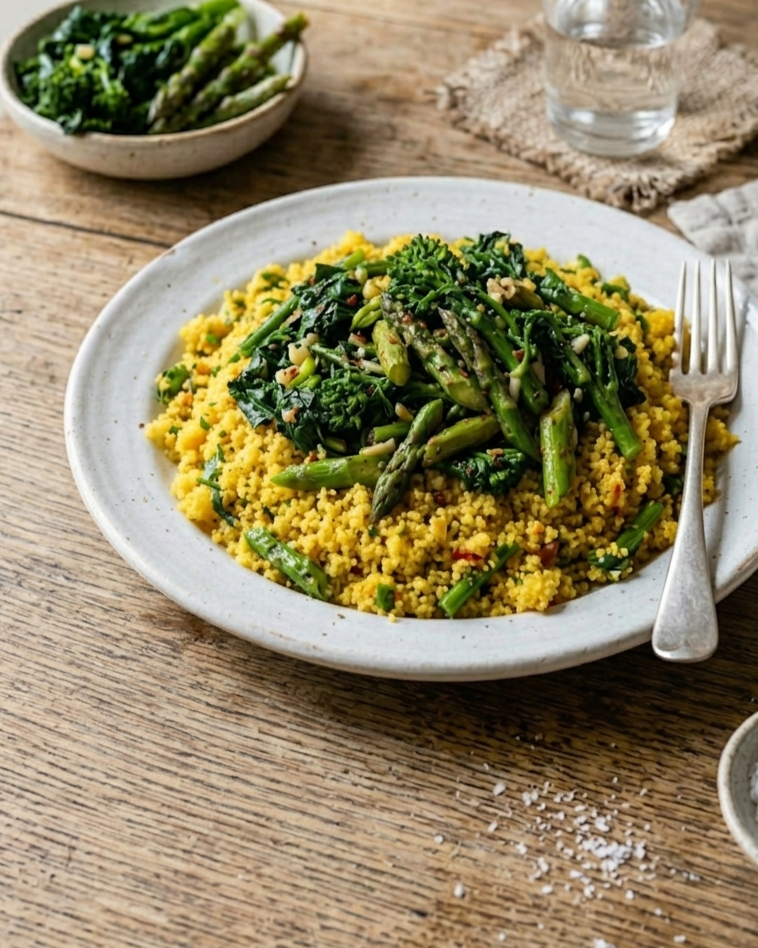
Remove half of the vegetables from the pan (for the final decoration) then add the seasoned couscous to the pan with the vegetables. Stir well off the heat to let the flavors meld, adding a drizzle of raw olive oil if desired.
The extra touch: Tips and Variations
To make the dish even more complete or adapt it to what you have in the pantry, here are some ideas:
Crispy note: To add a contrast of textures, you can add toasted pine nuts or sliced almonds at the end. Nuts pair wonderfully with the citrusy note of the lemon.
Added proteins: If you want to turn it into a more filling main course, you can add pre-cooked chickpeas sautéed in the pan with the rapini, or cubes of feta added cold before serving.
Grain substitute: This same vegetable base works well if you use quinoa or bulgur instead of couscous. Just remember to follow the specific boiling times for those grains.
How to store Couscous with Asparagus and Rapini
Couscous with asparagus and rapini is also great the next day.
In the refrigerator: Store it in an airtight container for up to 2-3 days.
How to reheat: To avoid drying it out, reheat it in a pan with a tablespoon of water or vegetable broth, or use the microwave covering the dish with a suitable lid.
Cold version: You can also eat it cold, like a grain salad, adding a drizzle of raw olive oil and another fresh grating of lemon zest to revive the aromas.
Other recipes
💻If you want to see other recipes you can return to HOME
📲If you don’t want to miss any recipes you can follow me on my Facebook Page, just enable notifications and you’ll see how many new recipes every day.
FAQ (Questions and Answers)
Can I use frozen asparagus?
Yes, you can use them if you can’t find fresh ones. In that case, add them directly to the pan without thawing first.
My couscous turned out too dry or too clumped, how can I fix it?
If it’s too dry, add a drizzle of raw olive oil or a tablespoon of hot broth and carefully fluff with a fork (never a spoon, which squashes the grains). If it’s clumped, you probably used too much liquid: next time respect the 1:1 ratio between the weight of the couscous and the volume of broth.
I can’t find rapini (cime di rapa), what can I substitute?
You can use friarielli or broccoli cut into small pieces (including the tender leaves). The flavor will remain similar, with that hint of bitterness that balances the sweetness of the asparagus and the aroma of saffron.
Can I prepare the dish in advance for a picnic or for work?
Absolutely yes. This couscous is perfect to eat at room temperature.