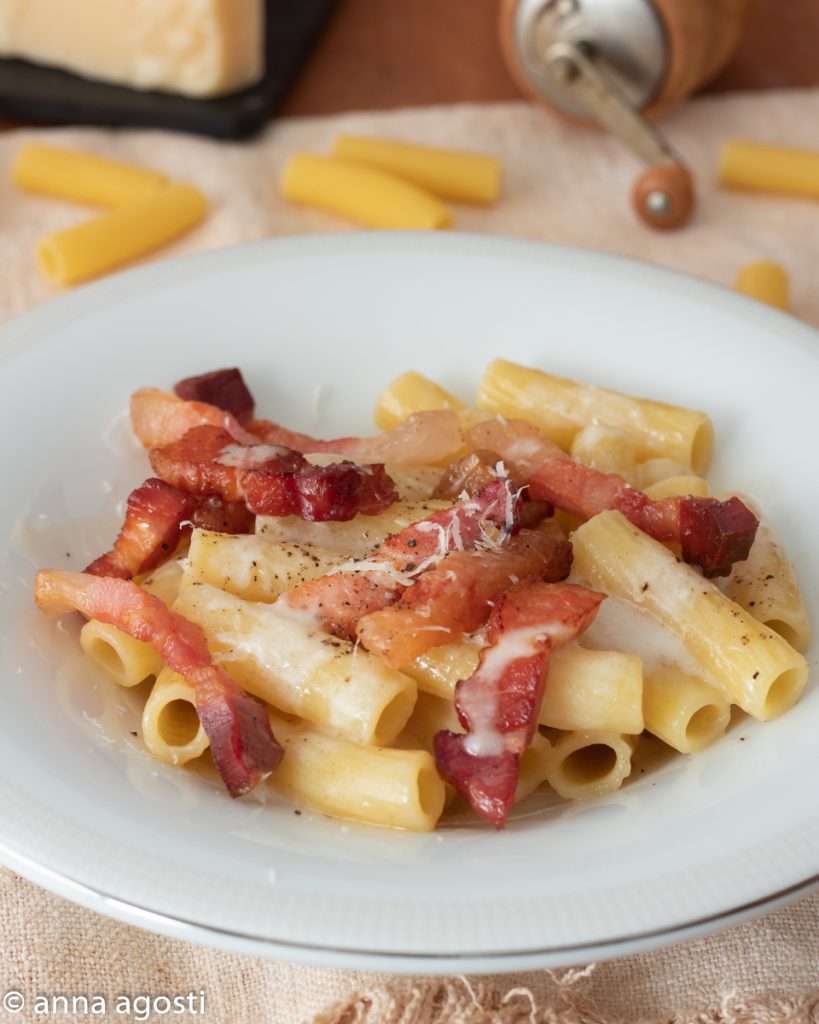
The Pasta alla Gricia is a typical Lazio recipe, the ancestor of Pasta all’Amatriciana. They both contain guanciale and pecorino romano while Amatriciana includes tomato.
Pasta alla Gricia is prepared in the same time it takes to cook the pasta itself, so it’s very quick and equally tasty. Try it if you haven’t made it yet.
Pasta, pecorino, and guanciale are the ingredients you’ll need to make Pasta alla Gricia, and then you just add eggs to obtain a stunning Carbonara.
Instead, with just pecorino, you can make the fabulous Cacio e Pepe.
Let’s discover right after the photo how simple it is to prepare Pasta alla Gricia, but first, check out the other first courses I propose below!!
- Difficulty: Very Easy
- Cost: Economical
- Preparation time: 5 Minutes
- Portions: 4
- Cooking methods: Stovetop
- Cuisine: Italian
- Seasonality: All Seasons
Ingredients for Pasta alla Gricia
- 11 oz rigatoni (or penne)
- 3.5 oz pecorino romano
- 7 oz guanciale
- 1 pinch salt
- to taste black pepper (freshly ground)
Preparation of Pasta alla Gricia
To prepare the Pasta alla Gricia, first bring a pot of lightly salted water to a boil, enough to cook the pasta.
Don’t overdo the salt since pecorino and guanciale are already very savory.
Then, cut thick slices of about 1/4 inch from the guanciale and cut them into irregular strips that are not too thin.
Now, heat a non-stick pan very well, and when it becomes hot, add the guanciale and let it sizzle without burning for about ten minutes.
Meanwhile, cook the pasta, leaving it quite al dente.
Grate the pecorino romano with a fine grater and set aside.
Once the pasta is cooked and al dente, drain it directly into the pan with the guanciale, adding a ladle of the pasta cooking water.
Toss everything in the pan to flavor and create a creamy sauce with the cooking water, finishing cooking the pasta.
If needed, add more water, and half of the grated pecorino off the heat, and mix everything well to incorporate the cheese into the Gricia.
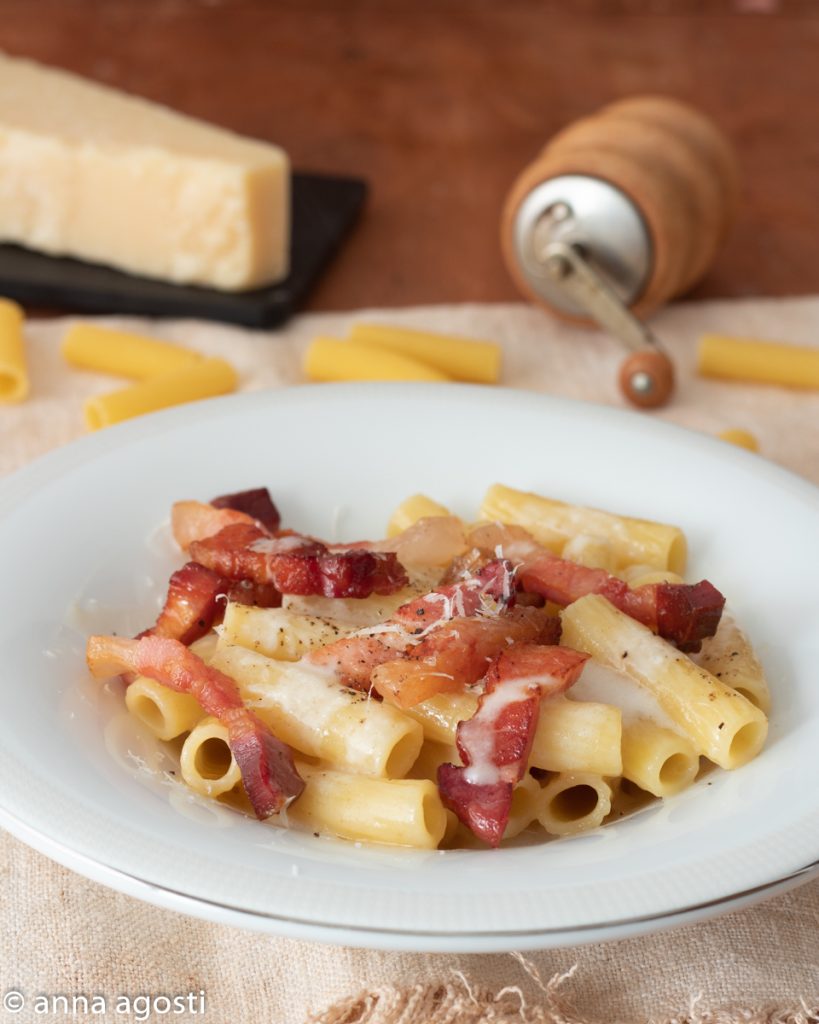
Plate the Gricia by adding the remaining pecorino romano, season each dish with plenty of freshly ground black pepper, and serve it very hot.
Visit my FACEBOOK PAGE if you want to be updated every day with my recipe.
Storage
The pasta should be eaten right after it’s made, as reheating it causes it to lose texture and the cheese to separate.
The pasta should be eaten right after it’s made, as reheating it causes it to lose texture and the cheese to separate.
Other Pasta Recipes
If you want to see other recipes, GO BACK TO HOME