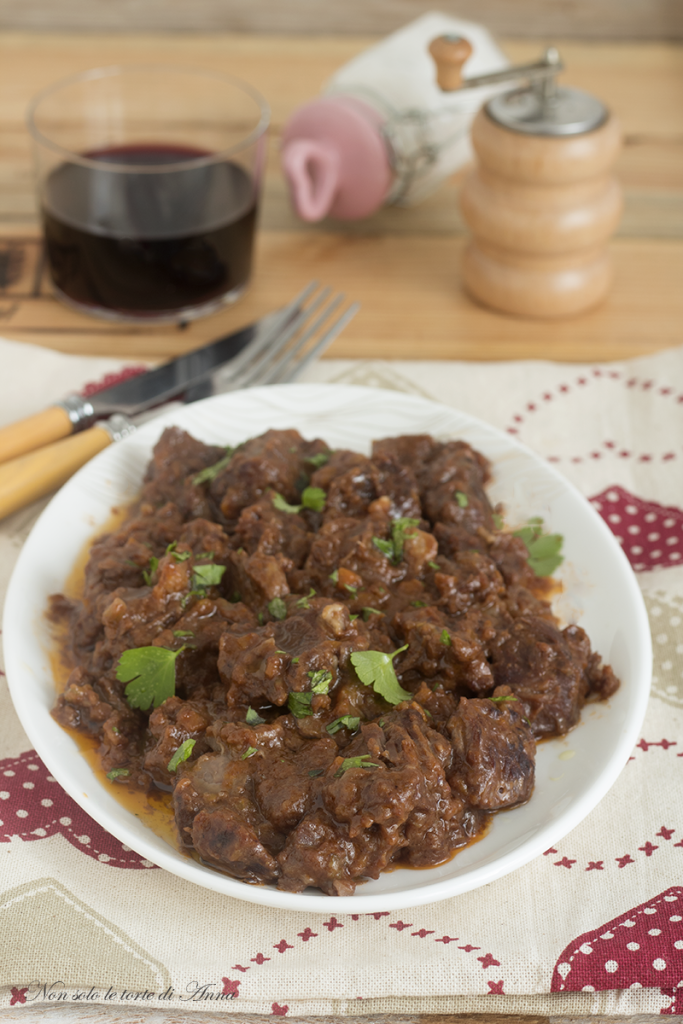
The stew with red wine is a well-loved winter dish full of flavor and tradition.
The term “stew” (or “spezzatino,” depending on the region and meat cut) originates from the old cooking method on wood-burning stove tops, in closed pots, where the meat would simmer slowly for hours. This technique allowed for transforming less prized and cheaper cuts of meat, like shoulder, neck, or flank, into a very tender and flavorful dish.
It is prepared with very few ingredients, and besides the cooking time, which can be long, it does not require much care except for the choice of meat.
The use of red wine is not only to season but also to add complexity and depth to the sauce. In some areas of Tuscany, for example, the typical dish is Peposo, a stew cooked in Chianti with plenty of pepper, originally prepared by the kiln workers of Impruneta. In Piedmont, Barolo is often used for “Brasato al Barolo,” which is a similar dish but with a whole piece of meat instead of cubes.
In fact, to prepare the stew, do not take the ready-made chunks that all butchers have. Instead, choose beef shoulder or neck, which are cuts of meat with a certain amount of fat and suitable for long cooking. Finally, you need a full-bodied red wine like Barolo, and off you go to cook the stew, serving it with some good mashed potatoes.
- Difficulty: Very Easy
- Cost: Economical
- Rest time: 3 Hours
- Preparation time: 15 Minutes
- Cooking methods: Stovetop, Boiling
- Cuisine: Italian
- Seasonality: All Seasons
Stew with Red Wine Ingredients
- 1.76 lbs beef (shoulder)
- 1 glass red wine
- 4 tbsps extra virgin olive oil
- 1 carrot
- 1 onion
- 2 stalks celery
- to taste flour
- 2 pinches salt
- to taste parsley
- 2 pinches black pepper
Tools
- 1 Pot
Preparation of Stew with Red Wine
To prepare the stew with red wine, first finely chop the onion, carrot, and celery into very small pieces like those for the soffritto for the sauce, and set aside.
Cut the beef shoulder into fairly regular pieces a few inches thick, removing excess fat if present, and quickly coat it in flour, then remove the excess.
In a high-sided pan or pot, heat the extra virgin olive oil and sauté the vegetables, stirring often until they become almost transparent, then add the pieces of meat and let them brown on all sides.
At this point, deglaze with the red wine and, still on high heat, let it evaporate. Season everything with salt and freshly ground pepper, lower the flame, and cover the pan, cooking the stew with wine for at least 2 to 3 hours.
However, be careful that your stew doesn’t dry out too much and stick to the pan, so stir it often and, if necessary, add a few tablespoons of hot water or broth.
When the stew with wine is finished cooking, the meat will appear dark, and the sauce that has formed will be thick due to the fat released from the meat and the flour you covered the chunks with.
Adjust the seasoning, sprinkle with chopped parsley, and serve the stew with wine, perhaps with some good mashed potatoes, and…
ENJOY YOUR MEAL
How to Store Stew with Red Wine
The stew can be stored in the refrigerator in an airtight container for 2 days. You can freeze the stew, and before consuming it, let it defrost at room temperature, then heat it by adding a few tablespoons of broth.
Other Recipes
If you want to see other recipes, RETURN TO HOME
If you want to see other recipes, RETURN TO HOME
If you want to see other recipes, RETURN TO HOME
To achieve a stew that melts in your mouth and with a velvety sauce, here are the crucial secrets and precautions:
Choose the Right Meat: Don’t use lean cuts. Choose pieces like the shoulder (cappello del prete), shank, or flank. These cuts, rich in connective tissue and fat, become beautifully tender with slow, prolonged cooking.
Perfect Browning: Before adding liquids, the meat must be evenly browned in oil (and, if desired, butter) over high heat, in several batches if necessary, to avoid overcrowding the pot. This creates the “Maillard reaction,” which develops deep flavors and color. Do not salt the meat before this stage.