Pasta and Beans: The Traditional Creamy and Flavorful Recipe, when days get shorter and the first chill sets in, there’s only one dish that can bring a smile to the table: Pasta and Beans.
This is not just a soup, but a true ritual of Italian peasant cooking, a traditional recipe that captures the authentic flavors of the past.
Why should you try my version? Because after various experiments I’ve found the perfect balance to achieve a creamy pasta and beans, just right in thickness and rich in aromas, just like the ones grandmothers used to make.
Whether you choose fresh or dried borlotti beans, the secret lies in slow cooking and that final touch that makes the difference.
In this article, we’ll explore together the classic steps, the tricks to get the consistency right, and which pasta format to choose to make this dish unforgettable.
Are you ready to rediscover the taste of tradition? Let’s go right under the photo to discover how to make the Traditional Pasta and Beans Recipe but first look below at other tempting proposals for cold days 😉
See you soon with the next recipe, Ana Amalia!
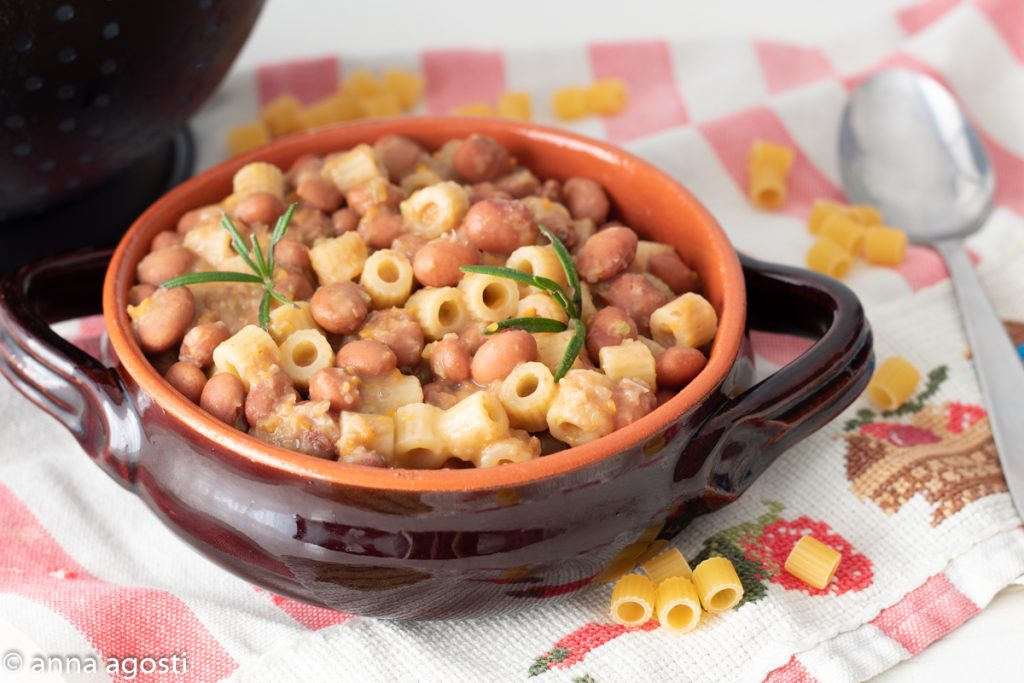
- Difficulty: Easy
- Cost: Very cheap
- Preparation time: 15 Minutes
- Portions: 4People
- Cooking methods: Stovetop
- Cuisine: Italian
- Seasonality: Autumn, Winter
Traditional Pasta and Beans Ingredients
- 7 oz dried borlotti beans (or fresh)
- 10.5 oz ditalini pasta
- 1.75 oz lard
- 1 clove garlic
- 1 sprig rosemary
- 2 leaves bay
- 1 pinch salt
- to taste extra virgin olive oil
- 1 oz onions
- 1 oz carrots
- 1 oz celery
- 3.5 oz tomato puree (or canned tomatoes)
Traditional Pasta and Beans Preparation
1. Preparing the beans Start the night before by soaking the dried borlotti beans in plenty of cold water. The next morning, drain and rinse them well.
Then proceed with cooking: if using a pressure cooker, cover them with cold water and the bay leaves and cook for 20 minutes from the whistle. If you prefer a regular pot, allow about an hour of cooking until they are tender but still intact.
Tip: Don’t discard the cooking water; we’ll use it to cook the pasta!2. The aromatic sauté While the beans are cooking, take a few minutes for the sauté. Finely chop celery, carrot, and onion and slice the lard into thin strips.
In a high-sided pot, heat the extra virgin olive oil and sauté the whole garlic clove with the chopped vegetables for about 5-6 minutes. Add the lard and let it flavor until it becomes transparent.
3. Flavoring the beans Remove the cooked beans with a slotted spoon and add them to the sauté.
Add the tomato puree and cover everything with the reserved cooking water. Let it simmer gently for about 20 minutes to blend the flavors.
4. The secret of creaminess Here’s the crucial step: take a generous ladle of beans and blend them with an immersion blender.
Keep this cream aside; we’ll add it only at the end for a super enveloping result.
5. Cooking the pasta and resting Pour the ditalini directly into the pot with the beans. Add more cooking water (always hot!) as the pasta absorbs it, stirring often as if making a risotto.
Once the pasta is cooked, turn off the heat and incorporate the bean cream, the salt, and chopped rosemary needles.
Cover with the lid and let rest for 2 minutes: this step is the secret of true pasta and beans done right!
Grandma’s Tips for Perfect Pasta and Beans
To make your dish truly special, here are some small secrets that make the difference:
The lard sauté: If you want an extra flavor boost, chop the lard along with a bit of fresh rosemary before putting it in the pot. It will become a fragrant cream that will completely melt.
The Parmesan crust: Don’t throw it away! Clean it well and add it to the pot while the pasta is cooking. It will become soft and flavorful, a true reward for whoever finds it on their plate.
Resting is sacred: Pasta and beans should never be eaten piping hot right off the stove. The 2-5 minutes rest off the heat allows the pasta starches to bind perfectly with the bean cream.
The choice of pasta: If you don’t have ditalini, you can use mixed pasta (the classic “minuzzaglia”). It’s the traditional format that avoids waste and offers different textures in every bite.
Variants and Substitutions
We know time is always short, so here’s how to adapt the recipe without sacrificing taste:
With canned beans: If you’re in a hurry, you can use precooked borlotti beans. In this case, skip the soaking and initial cooking step. Rinse them well from their preserving water and add them directly to the sauté, proceeding as per the recipe.
Vegetarian/Vegan Version: Just omit the lard and replace it with an extra tablespoon of high-quality extra virgin olive oil. The flavor will be more delicate but still delicious thanks to the aromatic mix.
A touch of spice: If you like, add a piece of fresh chili in the initial sauté along with the garlic.
Other Recipes
🖥If you want to see other types of recipes you can return to HOME
📲If you don’t want to miss any recipe, you can follow me on my Facebook Page, just activate the notifications and you’ll see how many new recipes every day.
Frequently Asked Questions about the Traditional Pasta and Beans Recipe
What is the best pasta for pasta and beans?
Tradition calls for ditalini or mixed pasta. The important thing is to choose a small format that pairs well with legumes. If you want a rustic touch, you can also use homemade egg maltagliati.
Can it be prepared in advance?
Absolutely yes! Pasta and beans is one of those dishes that gets even better the next day. If you decide to prepare it in advance, however, I recommend cooking the pasta very al dente, as it will tend to absorb liquids and become slightly overcooked during resting.
How to make pasta and beans creamier?
The secret is twofold: blend a portion of the beans (about a third) before adding the pasta and cook the pasta directly with the legumes. This way, the starch released by the pasta will create a thick and delicious cream.
Can I use cannellini beans instead of borlotti?
Yes, you can use cannellini beans if you prefer a milder flavor and thinner skin. However, the classic traditional recipe calls for borlotti, which have a more intense and robust taste, ideal with the lard sauté.