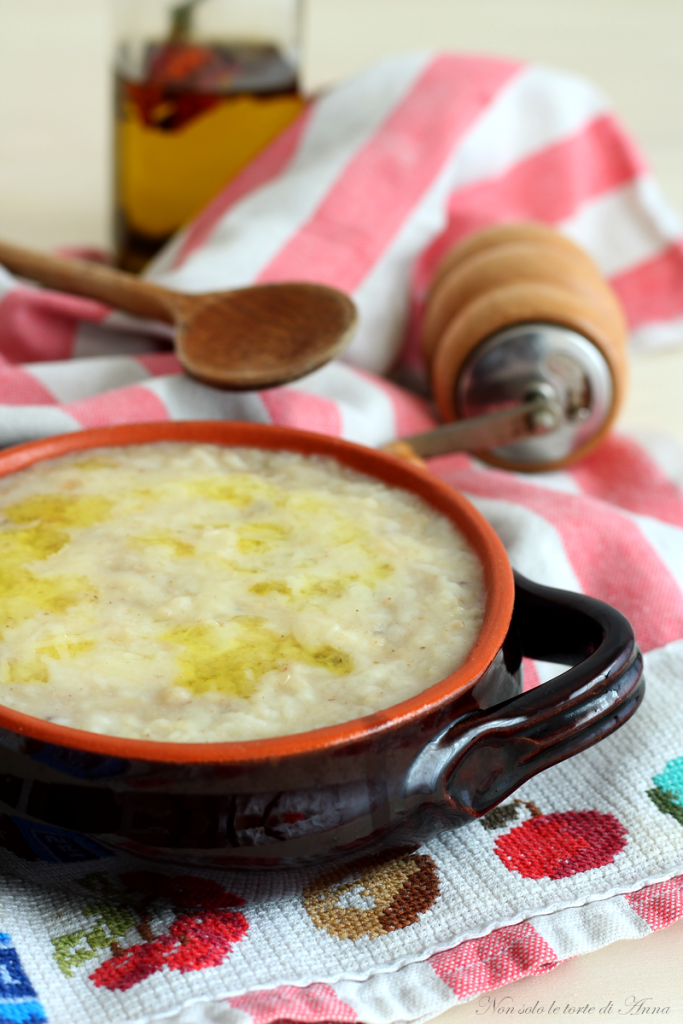
The Venetian panada, or panà in the Venetian dialect, is a very humble first course with which many children were weaned during wartime and beyond. Since nothing is wasted in Veneto, leftover bread is set aside especially to prepare this recipe.
A dish for the Lent period but is now prepared throughout the winter. If you want a treat, try making this dish and then try baking it in a hot oven until a golden crust forms on top, and you’ll have an incredible first course.
The Venetian Panada has been a comfort food for generations, especially during wartime and famine when resources were scarce. Today, it is mainly prepared during winter, offering a warm and savory hug on the coldest days. Its preparation is easy and quick, making it a perfect dish for those looking for an economical but delicious meal.
The Venetian Panada with egg version, but I will talk about this in the tips at the end of the article 😉
Below, I leave you more traditional Venetian recipes, and then, as always, we’ll go right below the photo to discover how Venetian Panada is made!!
- Difficulty: Very Easy
- Cost: Very Economical
- Preparation time: 5 Minutes
- Portions: 4 People
- Cooking methods: Stove
- Cuisine: Regional Italian
- Region: Veneto
- Seasonality: Autumn, Winter
Ingredients to prepare Venetian Panada
- 21.2 oz stale bread (without crust)
- 4 cups beef broth
- 4.2 oz Parmigiano Reggiano PDO (grated)
- to taste extra virgin olive oil
- 3 pinches salt
Tools
- 1 Rough Clay Pot
- 1 Wooden Spoon
Preparation Venetian Panada Recipe
To prepare the Venetian panada recipe panà in dialect, cut the stale bread into thick slices, removing the crust.
Arrange the slices of bread inside a clay pot or any thick-bottomed pot, without leaving empty spaces.
Cover with lukewarm beef broth up to the edge without completely covering the top slices of bread.
Let everything rest for about 40 minutes.
After the resting time, add a ladle of broth and put the panada on the fire.When it starts to boil, stir often to prevent it from sticking to the bottom of the pot and cook for 30 minutes.
There’s a version where you don’t stir at all, shake the pot to prevent it from sticking to the bottom but without stirring.
Doing so keeps the bread pieces intact, very soft and flavorful but intact.
If you see that it dries out too much while cooking and you want it really creamy, add another ladle of broth.
Once cooking is completed, sprinkle with grated cheese, adjust the salt only if your broth is not already salted.
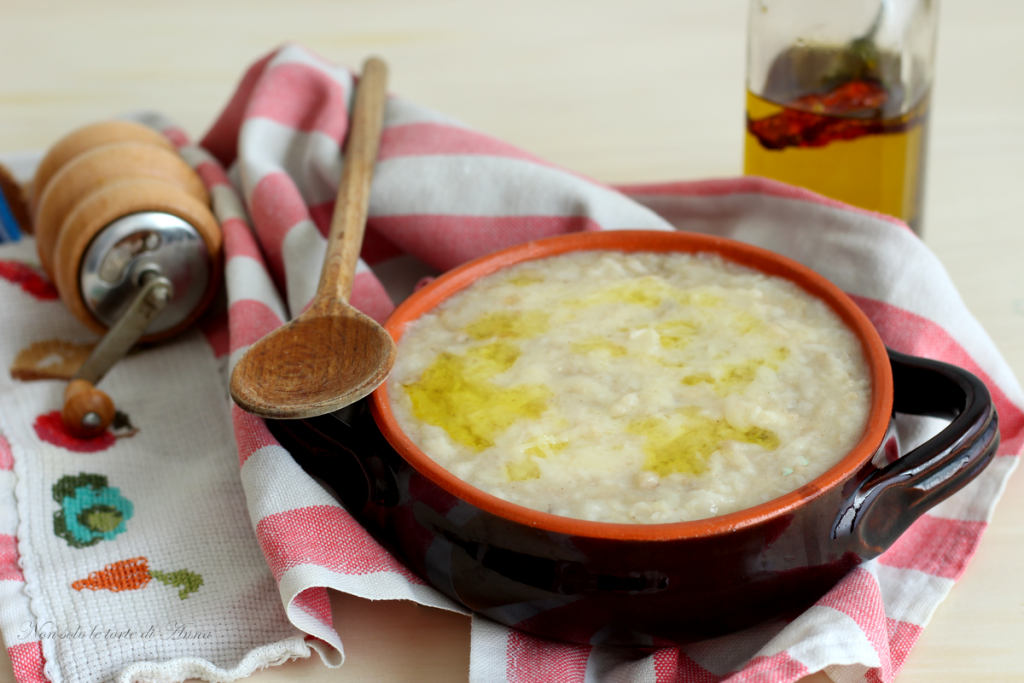
Drizzle with a generous amount of extra virgin olive oil, let rest for 5 minutes and serve still very hot.
How to Store the Venetian Panada Bread Soup Recipe
The Venetian panada or panà in the Treviso dialect or panadea in the Venetian dialect should be eaten freshly made. If you have leftovers, you can bake it in the oven, adding grated cheese at the end without stirring, and wait for a crust to form on top.
Variations
In the version that many define as “rustega” (or “maridàa” in some areas, meaning “married,” enriched), the egg is used to make the soup richer, tastier, and creamier, turning it almost into a single dish.
There are two main ways to incorporate the egg that make it more “substantial”:
Beaten Egg Added at the End of Cooking (The Classic “Maridàa” Method)
This is the most common method to enrich the panada or bread soup:
Preparation: Beat one or more egg yolks (or whole eggs, depending on the richness you want to achieve) in a small bowl. Often a pinch of salt, pepper, and a generous tablespoon of Grana Padano or Parmigiano Reggiano cheese is also added.
When to Add It: Once the Panada has reached its creamy consistency (after cooking the bread in broth/water for a sufficient time), and just before serving it, remove it from the heat.
The Addition: Pour the beaten egg and cheese mixture over the still hot Panada. Stir immediately and vigorously to combine the egg. The residual heat of the Panada will cook it quickly, creating a velvety cream that binds everything together without turning it into an omelet.
Poached or Fried Egg (For Serving)
Another rustic variant, perhaps less common, involves serving the Panada in a more scenic way:
Preparation: In this case, the egg is not mixed in, but cooked separately poached in the broth, or sunny-side up (fried or pan-cooked).
Service: The Panada is placed on the plate, and the cooked egg is placed on top as a garnish. When the yolk is broken, it naturally mixes with the soup, enriching it. Sometimes, this version is also accompanied by mushrooms (e.g., chanterelles) or other vegetables.
Other Recipes
🖥If you want to see other types of recipes, you can return to HOME
📲If you don’t want to miss any recipes, you can follow me on my Facebook Page, just activate notifications and you’ll see how many new recipes every day.
Frequently Asked Questions Venetian Panada or Panà
What kind of bread should I use?
The true Panada requires stale and dry bread, not fresh! The ideal is homemade bread that’s a few days old. If you don’t have old bread, some suggest toasting it lightly in the oven to dry it out, but the principle is always to use bread that wouldn’t be thrown away.
How long should it cook?
The cooking time is often underestimated! For a truly creamy and flavorful Panada, the secret is slow and long cooking.
Many traditional recipes recommend letting it “simmer” (gently simmer) for at least 1 hour and a half or even 2 hours.
Why? The bread must completely disintegrate and release starches to make the soup velvety and homogeneous.
How do I make it richer and tastier?Being a “poor” dish, it’s the seasonings and enrichments that make the magic:
Broth: Use a good meat broth (such as chicken backs) or vegetable instead of water.
Fats: An initial sauté (onion, garlic, lard, or leek depending on the area) or a final knob of butter.
The Egg: As we have seen, the beaten egg with Grana Padano/Parmigiano added when off the heat is the “rustego” enrichment par excellence!
Aromas: Bay leaf, freshly ground black pepper, and, of course, plenty of grated cheese before serving.