
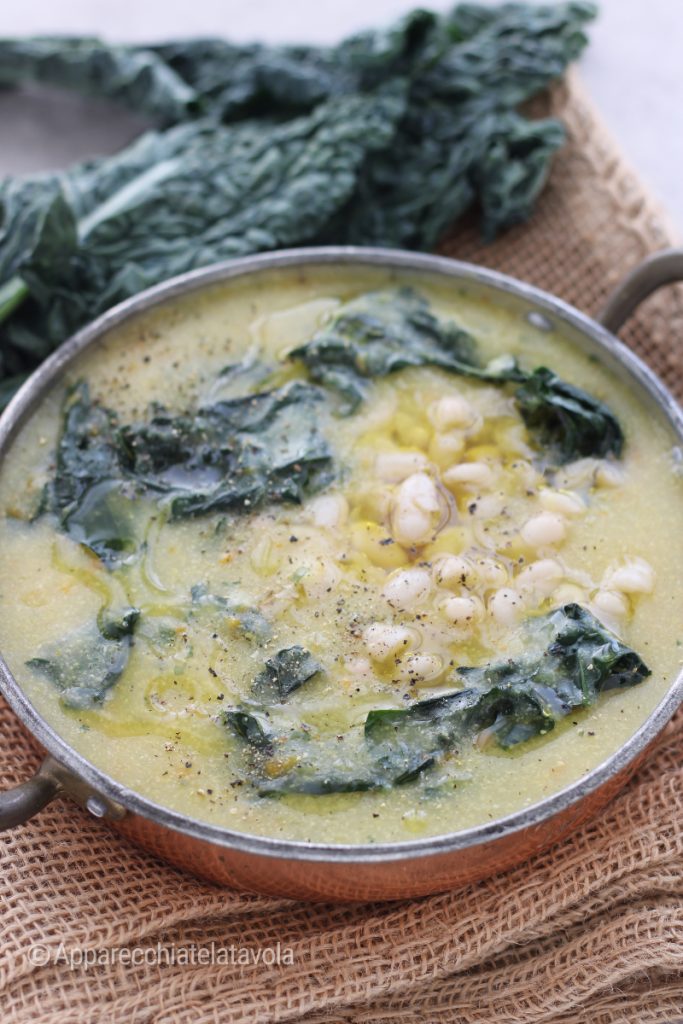
Farinata with kale and beans or polenta with kale, a Tuscan soup from Pistoia that imitates other humble regional dishes like bread soup or ribollita but different from Lombard bean soup despite the legumes used. Made with cornmeal, kale, and cannellini or borlotti beans, the kale farinata can even be prepared with instant polenta.
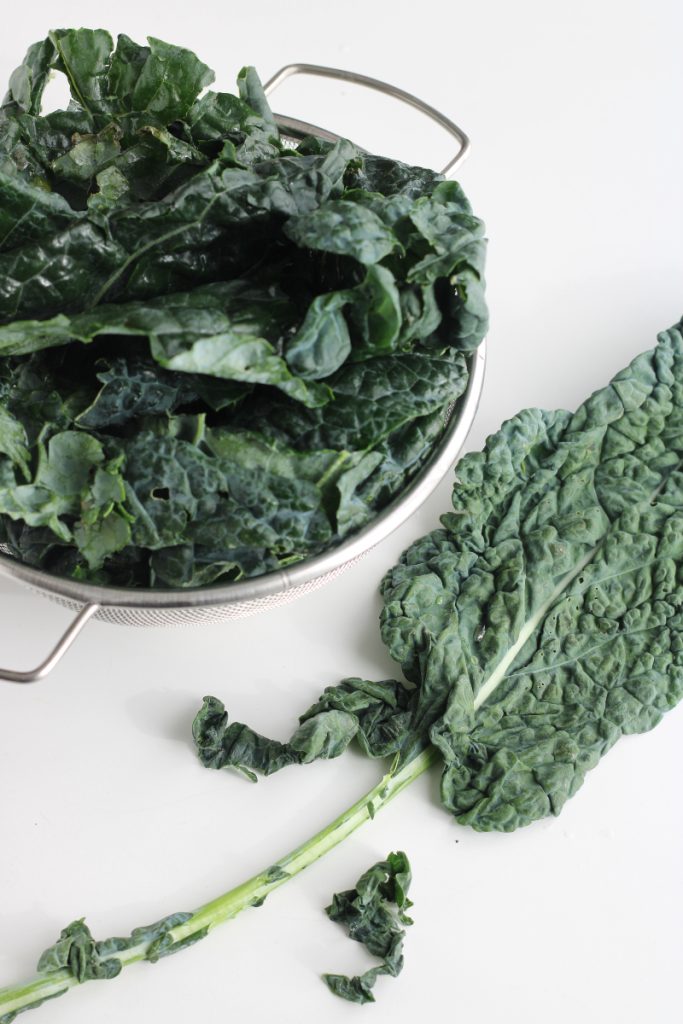
I would also like to talk about this vegetable that is particularly well-known and used in my region: the kale. The harvest begins in autumn and continues throughout the winter and beyond; during this period, it is not difficult to pass through the Tuscan countryside and find fields full of kale. It features elongated, bumpy leaves of dark green color, and the smaller leaves are more tender than the large ones, making them preferable for cooking. Another traditional recipe with this vegetable is kale crostoni, which you must try.
The procedure I will show you below is how my relatives in Pistoia, who are now experts in this delicacy, prepare the dish. So let’s look step by step at how to cook polenta farinata with kale and beans.
TRY ALSO:
- Difficulty: Easy
- Cost: Very inexpensive
- Preparation time: 15 Minutes
- Portions: 4
- Cooking methods: Stove
- Cuisine: Italian
- Seasonality: Autumn, Winter
- Energy 400.56 (Kcal)
- Carbohydrates 67.92 (g) of which sugars 6.18 (g)
- Proteins 12.93 (g)
- Fat 9.41 (g) of which saturated 1.28 (g)of which unsaturated 1.53 (g)
- Fibers 11.04 (g)
- Sodium 1,005.93 (mg)
Indicative values for a portion of 500 g processed in an automated way starting from the nutritional information available on the CREA* and FoodData Central** databases. It is not food and / or nutritional advice.
* CREATES Food and Nutrition Research Center: https://www.crea.gov.it/alimenti-e-nutrizione https://www.alimentinutrizione.it ** U.S. Department of Agriculture, Agricultural Research Service. FoodData Central, 2019. https://fdc.nal.usda.gov
Ingredients
- 10 oz kale
- 10 oz cooked beans (cannellini or borlotti)
- 1 cup cornmeal
- 3 tbsps extra virgin olive oil
- 1 carrot
- 1 onion
- 1 stalk celery
- to taste salt
- to taste pepper
Tools
- Casserole
- Food Mill
Recipe
You can use cooked cannellini or borlotti beans or if you want to boil them yourself, you can follow my advice on how to cook dried and fresh beans.
Clean the kale by removing the central stalk. To easily remove it, hold the base with one hand and slide your thumb and index finger along the stalk, pulling upwards. Once you have removed the central stalks from all the leaves, roughly chop the kale and wash it.
Clean and finely chop the carrot, celery, and onion, then place them in a pot large enough to also contain the kale and the polenta. Sauté for a few minutes with 3 tablespoons of olive oil.Add the kale leaves and half of the beans passed through a food mill or blended with a mixer, then stir and cover with water. Bring to a boil and cook for about 20-30 minutes depending on the consistency of the leaves.
Now add the cornmeal in a stream, stirring very well immediately to avoid lumps. If necessary, add more boiling water (cornmeal absorbs a lot).
Season with salt and continue cooking for about 45 minutes, remembering to add the other half of the whole beans in the last ten minutes of cooking.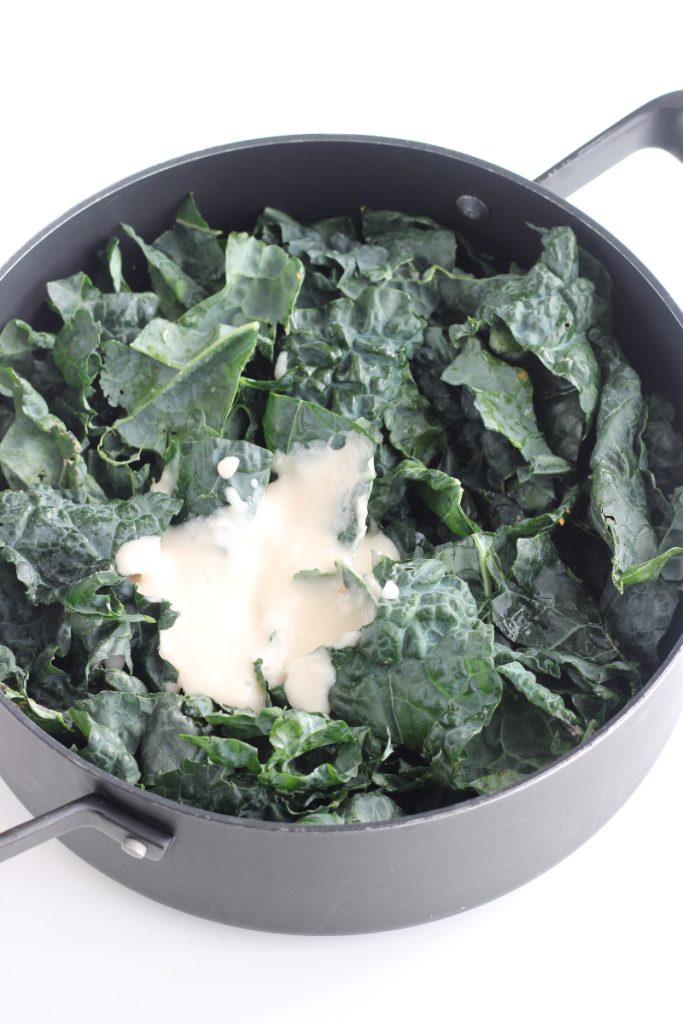
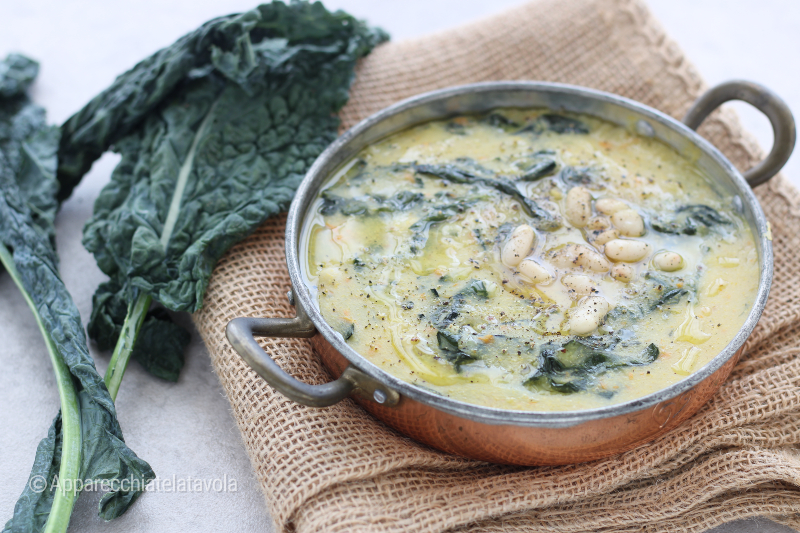
Polenta farinata should be cooked slowly so it can be easily eaten with a spoon. Once the farinata with kale and beans is ready, serve it to each diner on a plate, garnished with a drizzle of raw olive oil and a grind of pepper. A delicious polenta for flavor and for the stomach, in conclusion a real treat.
Storage and Tips
Storage: farinata is best consumed hot or warm. Leftovers can be stored in the fridge for 2-3 days.
Tips: spread leftover polenta on a cutting board and let it cool. The next day, it’s good reheated in a pan or grilled.
The original Tuscan recipe uses classic polenta, but you can also use instant polenta with an 8-minute cooking time; however, cook the kale longer to avoid toughness.
You can use cannellini or borlotti beans, or you can choose not to include any legumes.
To make the dish richer, you can add a sausage.
You can use broth instead of water.
