
Pea and almond pesto is a fresh, quick recipe perfect for seasoning not only pasta but also grains like spelt, barley, or quinoa.
I love making pestos because I can prepare them in advance and keep them ready in the fridge: a true lunchtime saver!
Have you already tried my spinach and almond pesto? It was a hit, delicious and greatly appreciated by everyone. With the arrival of fresh seasonal peas, I decided to switch vegetables but keep the winning base: almonds and parmesan. The result? Just as I hoped: creamy, delicate, and irresistible.
Spring peas are a natural wonder: sweet, tender, and richly colored. If you find them fresh at the market or your trusted greengrocer, seize the opportunity! Just shell them and blanch for a couple of minutes to achieve a pesto with a truly special flavor. Alternatively, high-quality frozen peas work just as well.
Try my pea pesto, you’ll see you won’t be able to do without it!
See you in the next recipe!!!
ALSO TRY:
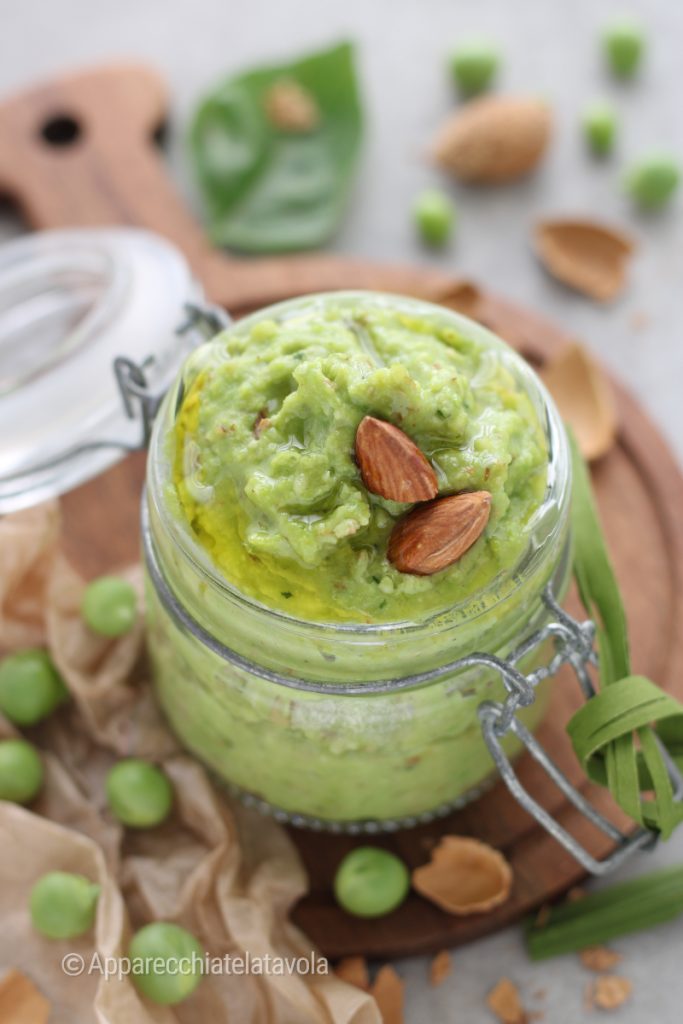
- Difficulty: Very easy
- Cost: Very cheap
- Preparation time: 5 Minutes
- Portions: 4People
- Cooking methods: Boiling
- Cuisine: Italian
- Seasonality: Spring
- Energy 215.65 (Kcal)
- Carbohydrates 9.55 (g) of which sugars 3.22 (g)
- Proteins 8.48 (g)
- Fat 16.93 (g) of which saturated 4.09 (g)of which unsaturated 4.67 (g)
- Fibers 4.00 (g)
- Sodium 751.88 (mg)
Indicative values for a portion of 87 g processed in an automated way starting from the nutritional information available on the CREA* and FoodData Central** databases. It is not food and / or nutritional advice.
* CREATES Food and Nutrition Research Center: https://www.crea.gov.it/alimenti-e-nutrizione https://www.alimentinutrizione.it ** U.S. Department of Agriculture, Agricultural Research Service. FoodData Central, 2019. https://fdc.nal.usda.gov
Ingredients
- 1.5 cups peas (freshly shelled)
- 0.5 cup grated parmesan (or pecorino)
- 0.25 cup almonds (or pine nuts and walnuts)
- 3 tbsps extra virgin olive oil
- 1 clove garlic
- 1 tbsp lemon juice
- A few leaves basil
- to taste salt
- to taste pepper
Tools: pea pesto
- Saucepan
- Mixer
Recipe: pea pesto
A fresh, tasty spring pesto!
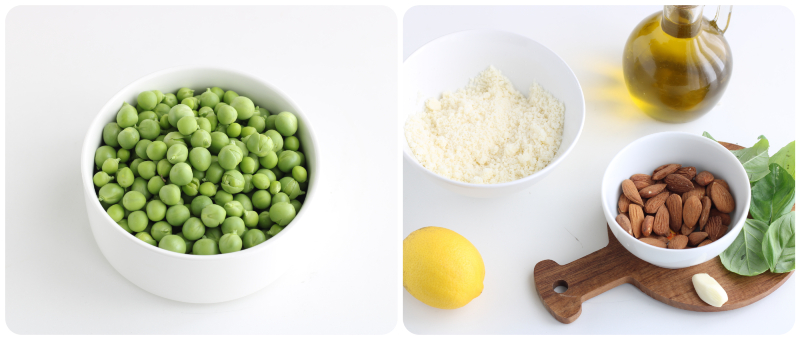
To prepare a fresh and spring-flavored pesto, start by gathering all the necessary ingredients, especially the fresh seasonal peas, which you will carefully shell from their pods to preserve their natural sweetness.
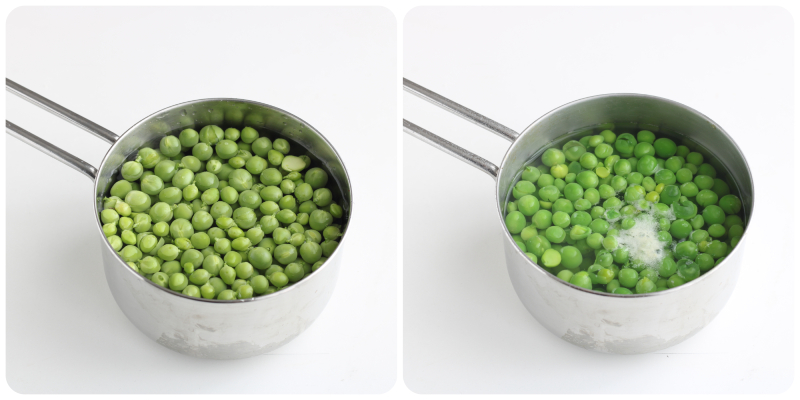
Place the peas in a saucepan of lightly salted water and blanch them for about 4-5 minutes, or until they become tender.
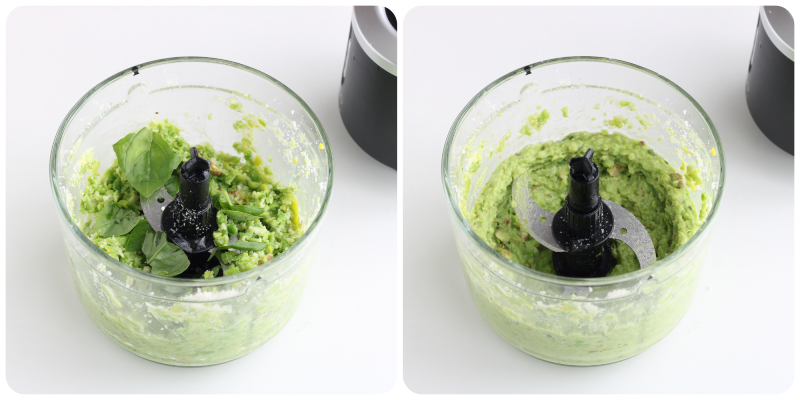
In a mixer (or an immersion blender), place the cooked peas, almonds, garlic clove, grated parmesan, lemon juice, salt, and pepper. Start blending, adding the oil gradually until the desired consistency is achieved.
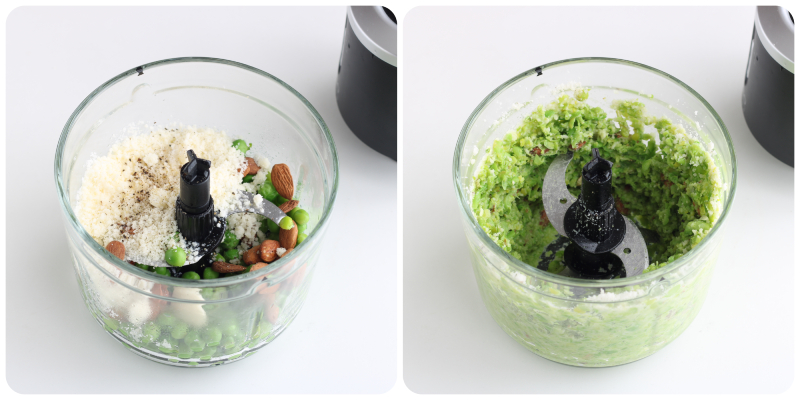
Add the basil leaves, blend again, and if necessary, add a bit more oil. Remember, the pesto should be creamy but not too liquid.
The pea pesto is a true gem in the kitchen: delicate, fresh, and perfect for adding a spring touch to your dishes. You can use it to season pasta—preferably short types like fusilli, penne, or orecchiette—or spread it on crostini and bruschetta for a tasty appetizer. It also goes well on canapés, perhaps paired with some fresh cheese and prosciutto.
It’s also ideal in the preparation of savory pies, and why not, even in spelt or couscous salads: an original way to bring flavor and color to the table!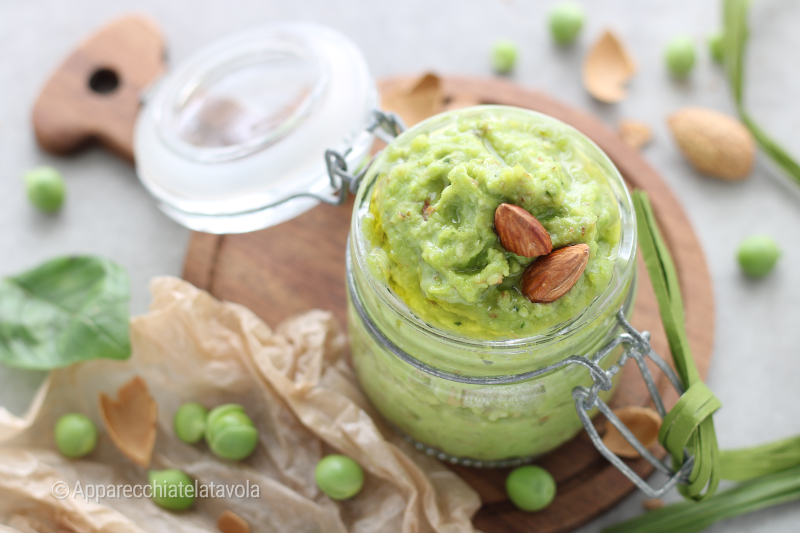
Storage and tips
Storage: Pea pesto can be kept in the refrigerator for about 2-3 days if stored in an airtight container. To preserve its freshness, color, and flavor, I recommend covering the surface with a thin layer of extra virgin olive oil to protect it from oxidation.
For longer storage, you can freeze it in small containers: it stays perfect in the freezer for up to 3 months. This way, you’ll always have a portion ready to use!
Tips: In spring, use tender, fresh peas. In their absence, you can substitute with good quality frozen peas. If you use the pesto immediately to season pasta, you can add a tablespoon of pasta cooking water to make it even creamier.
FAQ
What can I substitute for almonds?
You can use walnuts, pine nuts, cashews, or pistachios based on your taste or what you have in your pantry.
Can I use it for cold dishes?
Absolutely yes! It’s great for seasoning pasta salads, bruschetta, grains like spelt or barley, or simply spread on crostini.
The pesto is too thick, what should I do?
Add a bit of extra virgin olive oil or a spoonful of pasta cooking water to soften it. Blend again at low speed until the desired consistency is reached.
