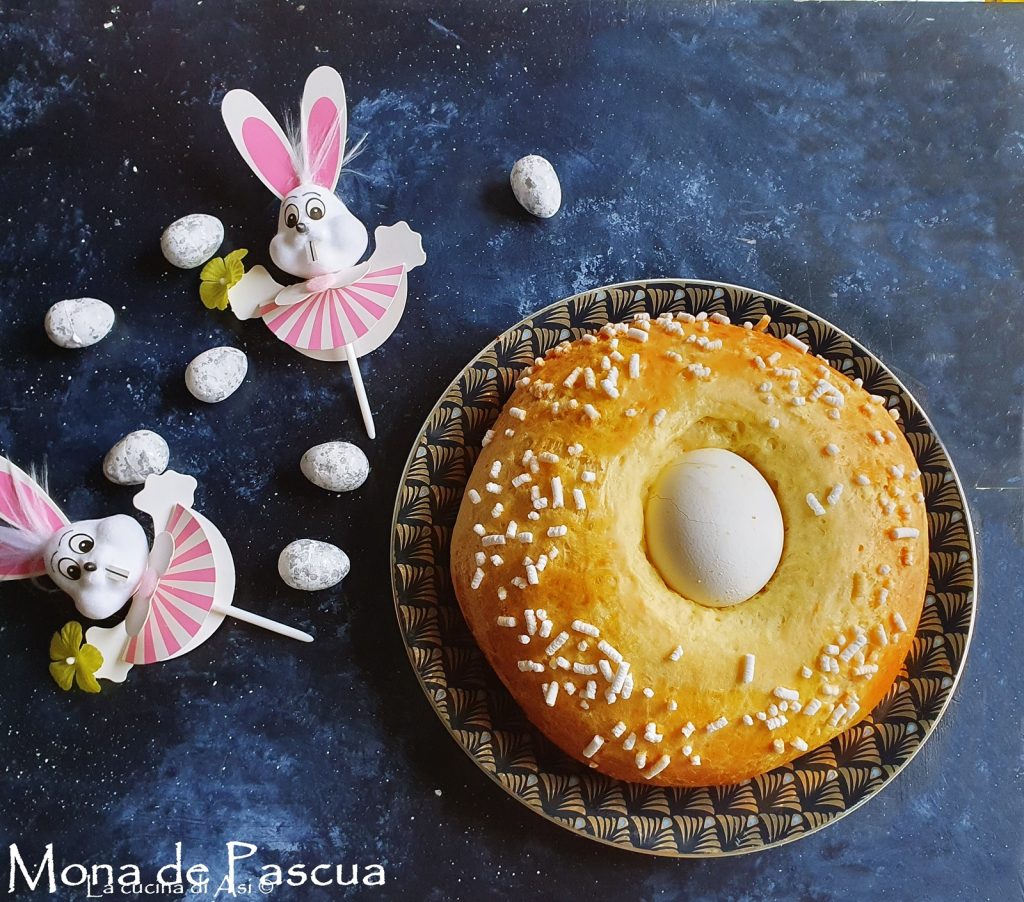
The Mona de Pascua recipe is a Holy Week preparation in Spain but particularly typical of Valencia, Murcia, Alicante and Aragon.
I read that there are two different versions with the same name: one is the leavened bread I prepared today, the other is a sponge cake made with flour and almond flour, filled with buttercream and jam, covered in buttercream and topped with lightly toasted almond flakes.
The term Mona de Pascua has Arabic origins and literally means Easter gift: in fact this not-too-sweet cake, similar to a soft bread, is traditionally gifted by the godfather to the godchild on Easter Monday.
The recipe doesn’t require particular skills other than time for proofing, which starts from a small sponge and leads to this soft ring topped with pearl sugar and a hard-boiled egg.
The Mona de Pascua is similar to Roscón de Reyes, the typical Epiphany ring, although that dough contains butter while here we use seed oil and flavor with lemon zest, citrus and orange blossom water.
To be precise about geographical origin, the leavened Mona de Pascua can be considered part of Spanish cuisine but is mainly prepared in the Levant region of the country.
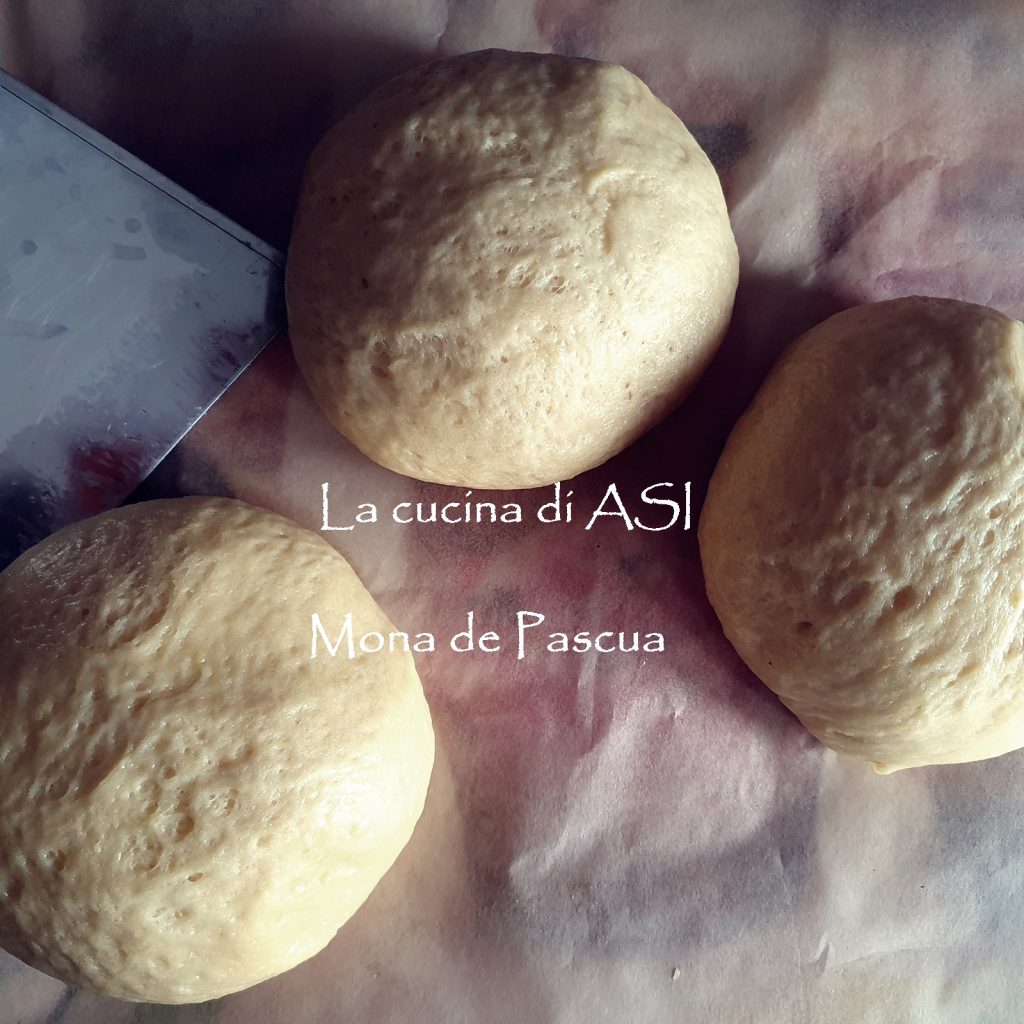
I ALMOST FORGOT… with these quantities you can make 3 MONA DE PASCUA as you can see in the photo!
I opened a recipes channel on WhatsApp, free and open to everyone, no notifications and no sound. You can subscribe by clicking this link https://whatsapp.com/channel/0029VaHbGIn9cDDig7Cw2x0F and every day you will receive one sweet and one savory recipe!
Unfortunately I have never been to Spain yet, but I don’t lose hope — however you can find some of my special dishes on the blog and here are the recipes for:
- Difficulty: Medium
- Cost: Very low cost
- Rest time: 3 Hours 30 Minutes
- Preparation time: 25 Minutes
- Cooking time: 35 Minutes
- Portions: 10
- Cooking methods: Oven
- Cuisine: Spanish
- Seasonality: Easter
- Energy 317.92 (Kcal)
- Carbohydrates 50.65 (g) of which sugars 14.93 (g)
- Proteins 9.51 (g)
- Fat 9.85 (g) of which saturated 1.94 (g)of which unsaturated 7.29 (g)
- Fibers 1.63 (g)
- Sodium 156.92 (mg)
Indicative values for a portion of 100 g processed in an automated way starting from the nutritional information available on the CREA* and FoodData Central** databases. It is not food and / or nutritional advice.
* CREATES Food and Nutrition Research Center: https://www.crea.gov.it/alimenti-e-nutrizione https://www.alimentinutrizione.it ** U.S. Department of Agriculture, Agricultural Research Service. FoodData Central, 2019. https://fdc.nal.usda.gov
Ingredients for MONA DE PASCUA recipe, typical of the Spanish Levant
- 3/4 cup (≈3.5 oz) all-purpose flour
- 0.4 oz (fresh yeast) fresh yeast
- 1/4 cup (2 fl oz) water (indicative quantity; as always it depends on flour absorption)
- 3 2/3 cups (≈16 oz / 1 lb) all-purpose flour
- 3 eggs (medium)
- 5/8 cup (≈4.4 oz) granulated sugar
- 1 vial orange blossom water
- 1 lemon zest
- 6 tbsp (≈3 fl oz / 80 g) vegetable oil (I used corn oil)
- 1 pinch salt
- 3 hard-boiled eggs (you can insert raw eggs too; I preferred to cook them)
- 0.4 oz (fresh yeast) fresh yeast
- 1 egg
- 2 tbsp pearl sugar (for garnish)
Tools for MONA DE PASCUA recipe, typical of the Spanish Levant
- 2 Bowls
- Stand mixers
- Brushes
- Glasses
- Parchment paper
- Spoons
- Plastic wrap
TO PREPARE THE MONA DE PASCUA recipe, typical of the Spanish Levant
In a bowl I put the flour, crumble the fresh yeast and add the water, kneading to form a small dough which I cover with plastic wrap and leave to rest until doubled.
In Bologna it was quite cool so I had already almost turned off the radiator in the kitchen, but I turned it up a bit to avoid waiting for hours… In about 30–40 minutes the small dough doubled in volume and I moved on to the main dough.
In the stand mixer — although you can of course knead by hand, which will just take more time — I place the flour, salt and sugar and mix well with a spoon.
I add the vegetable oil, the orange blossom water, the eggs and mix just enough with the dough hook for a brief turn.
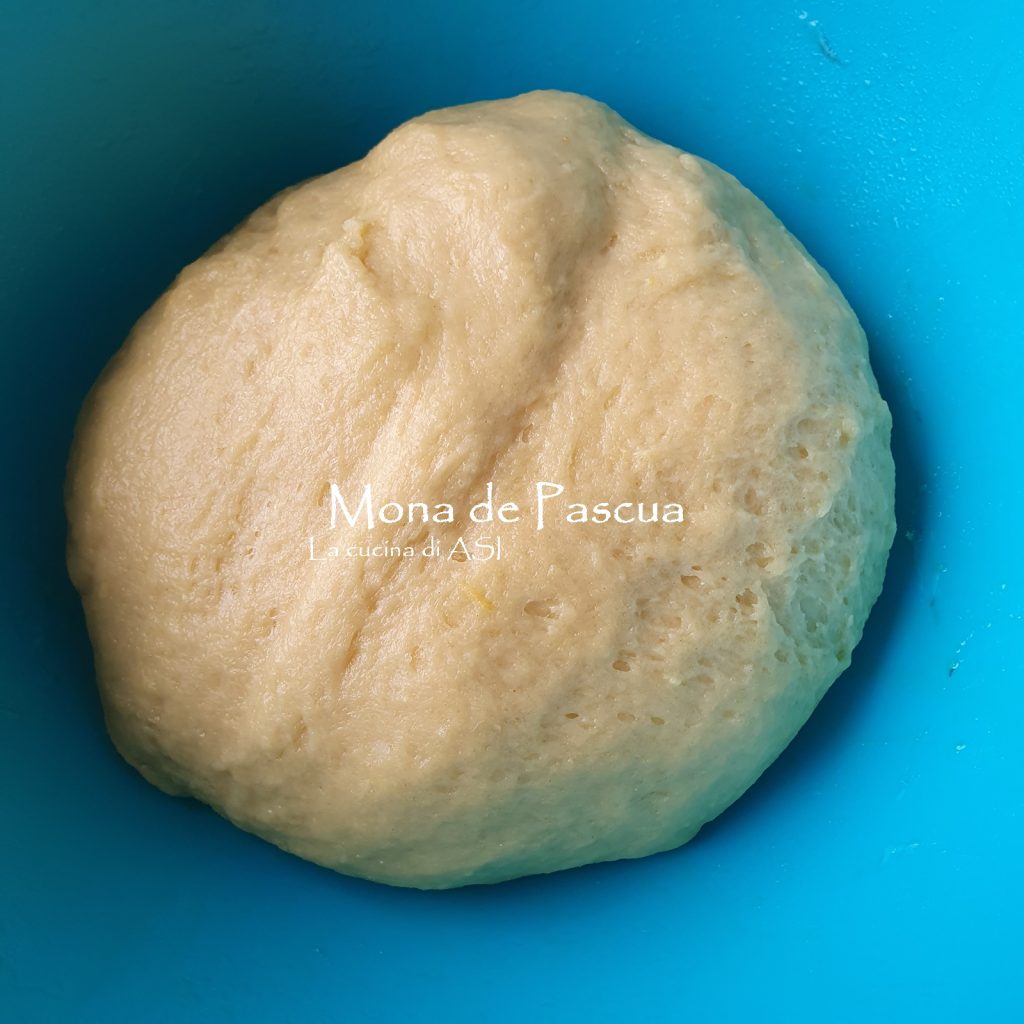
Now I add the fresh yeast and the sponge, which has doubled in volume.
I begin kneading, also adding the zest of a organic or unwaxed lemon, and continue for about 15 minutes, stopping the mixer occasionally to gather the dough with my hands.
I cover with plastic wrap and let it double in volume — about 2 hours for me.
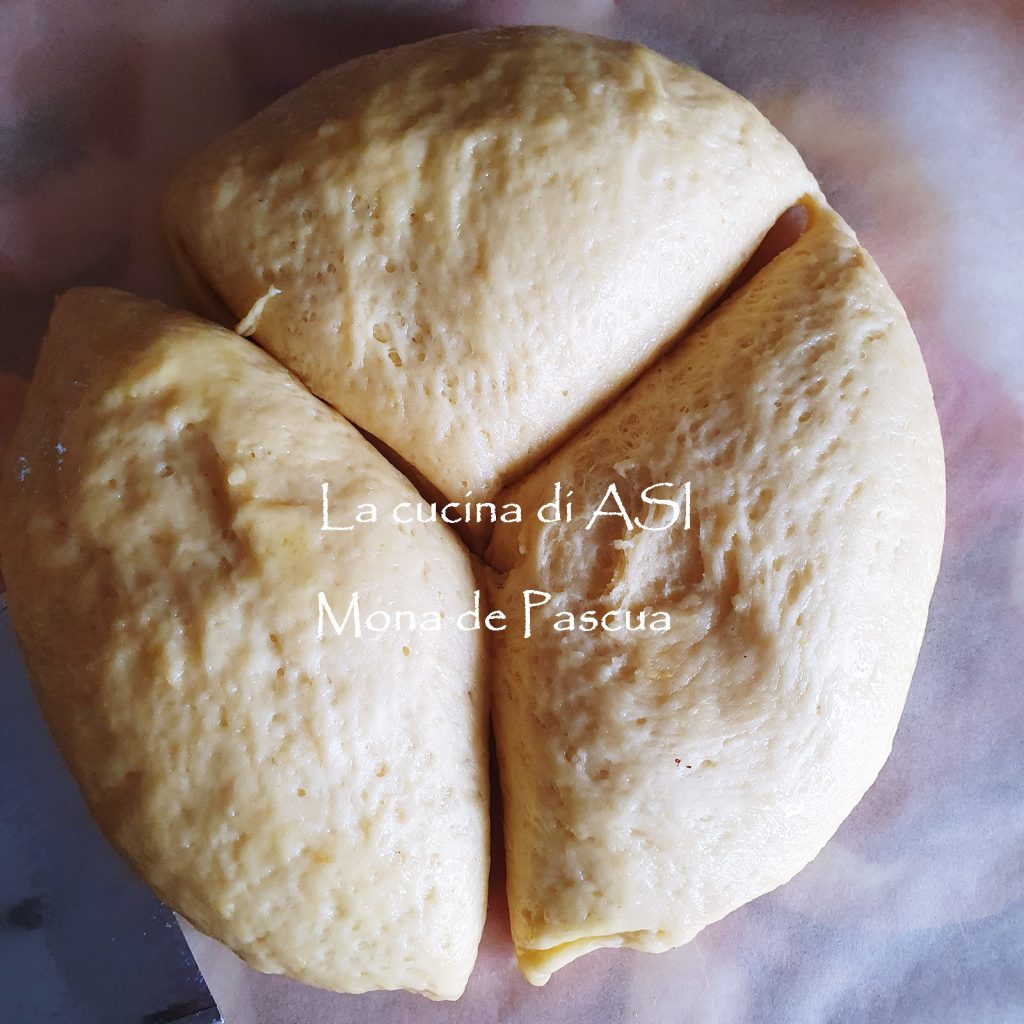
I turn the dough out onto the work surface and divide it into 3 similar pieces. I chose to make 3 small Mona de Pascua, but of course you can make one large one, which would require different proofing and baking times.
I don’t work the dough much and form 3 balls.
I push a finger through the center to create a little ring and place a hard-boiled egg in the center of each one.
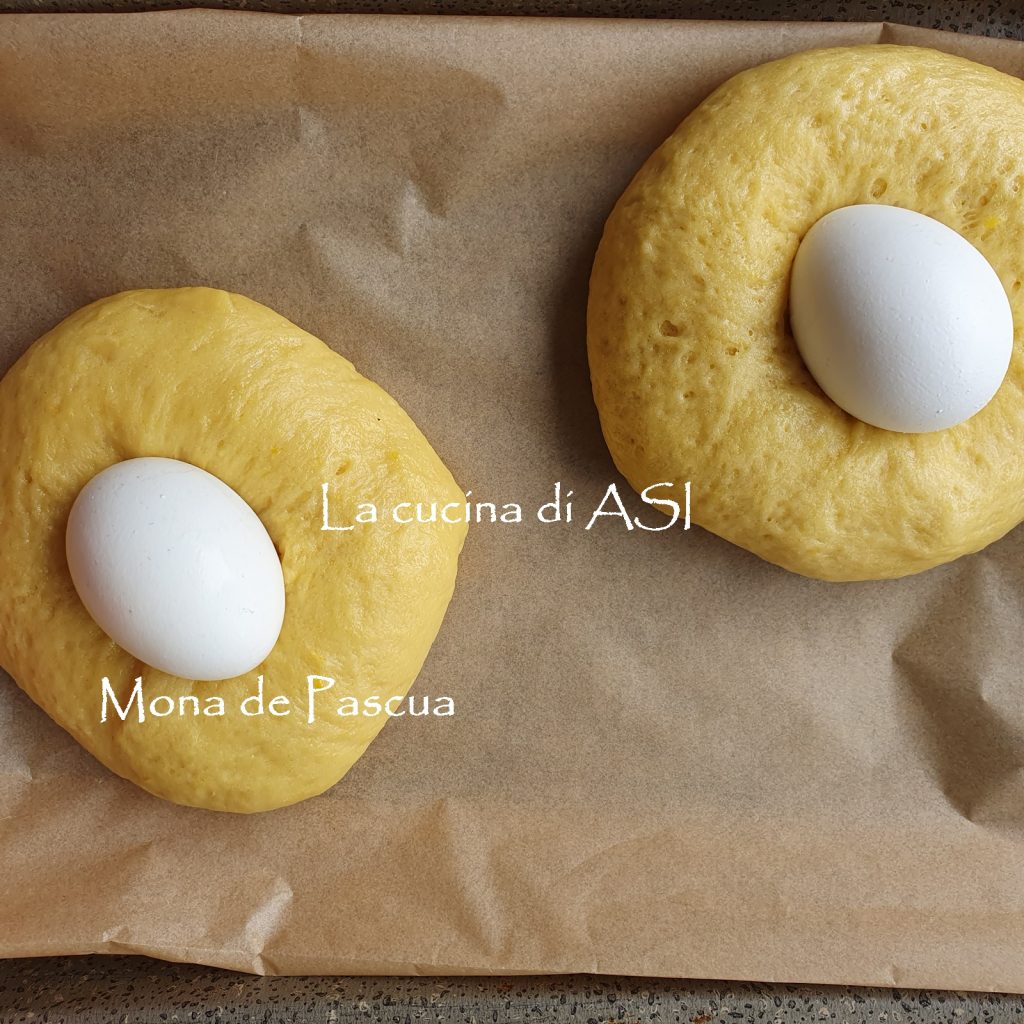
I cover with plastic wrap without pressing or flattening the rings and let them rest again for about 1 hour or a little more.
After this time I beat an egg and gently brush the whole cake, then sprinkle with pearl sugar.
Now I bake at 347°F (175°C) for about 30–35 minutes, depending on your home oven.
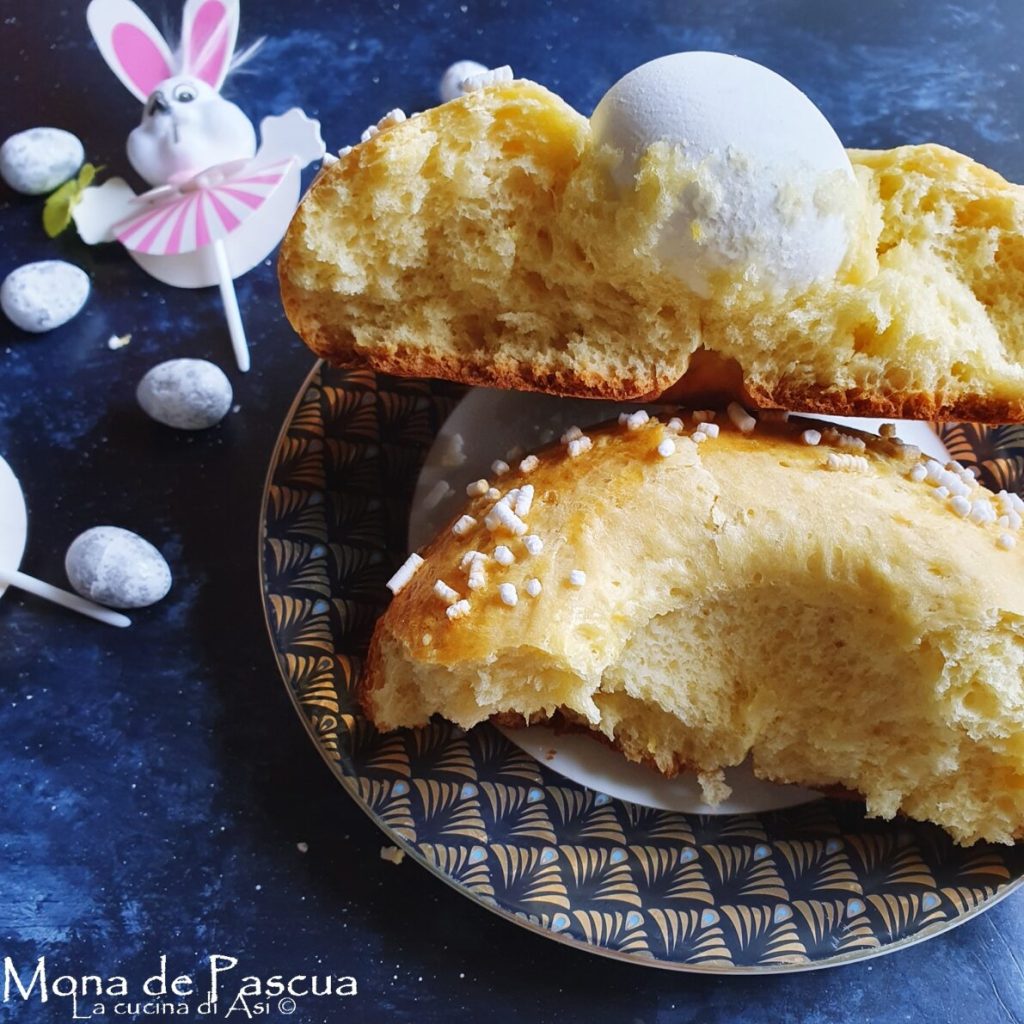
They seem nicely baked and soft — these Spanish Mona de Pascua…
I will serve them with a sweet cream like crème anglaise!
Enjoy your meal and Happy Easter!!!!!!!!!!!
Annalisa
This is the original name of the recipe and frankly it seemed silly to change it because in some parts of Italy it has another meaning… I think we are much smarter and more capable! Thank you very much for your understanding — ciao! Annalisa
SOURCE here