
Authentic Neapolitan Pastiera Recipe: Secrets and Tips from the Tradition
Immerse yourself in the heart of Neapolitan Easter tradition with this authentic pastiera recipe, a masterpiece of flavors and aromas carefully and passionately handed down by a true keeper of Neapolitan culinary secrets.
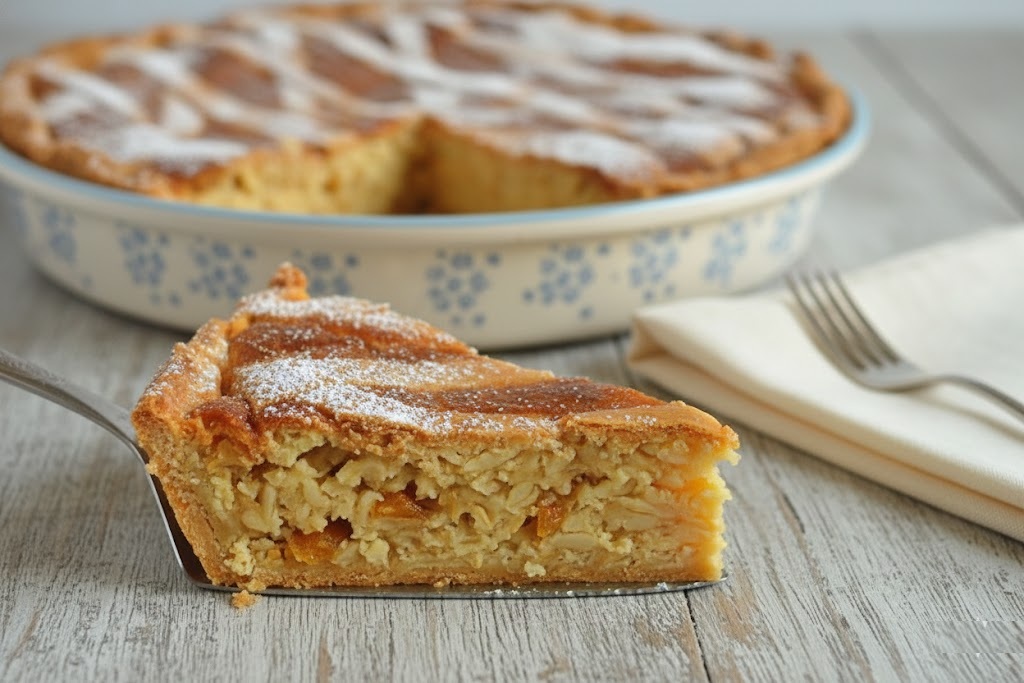
A sensory journey that will guide you step by step in creating an iconic dessert, loved for its buttery, fragrant shortcrust pastry that encloses a creamy, velvety filling, a unique combination of fresh ricotta, pre-cooked wheat simmered in milk, eggs, sugar and the unmistakable aromas of orange blossom and vanilla.
Making pastiera at home is an act of love, an ode to the richness of Campanian cuisine and its ancient roots. In this recipe I will reveal every detail and tip that makes the difference, because I was fortunate to be in the kitchen of a wonderful Neapolitan lady who shared her precious secrets with me.
I will guide you through choosing the best ingredients, from the different types of ricotta to the ideal pre-cooked wheat, up to the perfect balance of aromas that make pastiera an unforgettable tasting experience.
Whether you are already experienced in making traditional desserts or approaching pastry for the first time, I will take you from preparing the perfect shortcrust pastry, the slow and gentle cooking of the wheat in milk, to creating the rich, fragrant filling that releases an explosion of unique flavors with every bite.
And if you, like I once was, are not the biggest fan of pastiera, get ready to change your mind: this recipe will win you over with its harmony of textures and balance of sweetness and aromas. Let tradition guide you and prepare to bring a piece of Neapolitan history and culture to the table.
- Difficulty: Medium
- Cost: Moderate
- Preparation time: 40 Minutes
- Cooking time: 50 Minutes
- Portions: springform pan 11 in
- Cooking methods: Oven, Stovetop
- Cuisine: Italian
- Seasonality: Easter Monday, Easter
- Energy 464.65 (Kcal)
- Carbohydrates 62.81 (g) of which sugars 38.28 (g)
- Proteins 9.98 (g)
- Fat 20.63 (g) of which saturated 12.89 (g)of which unsaturated 7.34 (g)
- Fibers 2.30 (g)
- Sodium 107.80 (mg)
Indicative values for a portion of 80 g processed in an automated way starting from the nutritional information available on the CREA* and FoodData Central** databases. It is not food and / or nutritional advice.
* CREATES Food and Nutrition Research Center: https://www.crea.gov.it/alimenti-e-nutrizione https://www.alimentinutrizione.it ** U.S. Department of Agriculture, Agricultural Research Service. FoodData Central, 2019. https://fdc.nal.usda.gov
Ingredients for the Perfect Pastiera
- 2 cups 00 flour
- 1/2 cup butter
- 1/2 cup granulated sugar
- 1 egg (whole + 1 yolk)
- vanilla (seeds of 1 pod)
- 1 1/4 cups pre-cooked wheat for pastiera
- 1 1/2 cups ricotta (mixed sheep and cow)
- 1 1/4 cups granulated sugar
- 2 eggs (whole + 2 yolks)
- 2/3 cup candied orange peel (or candied citron or a mix)
- 1 teaspoon ground cinnamon
- 1 lemon zest
- 1/4 cup butter
- 3/4 cup whole milk
- 1 pod vanilla bean
- 1 2/3 tbsp orange blossom water
- 1 egg
Tools
- Mixer
- 2 Bowls
- Saucepan
- Wooden spoon
- Lemon zester
- Springform pan
- Rolling pin
- Pastry wheel
How to Prepare Traditional Neapolitan Pastiera: Step-by-Step Procedure
Let’s start by making the fragrant base of our pastiera:
Sift the flour into a mixer.
Add the cold butter cut into pieces, a pinch of salt and the sugar (you can use powdered sugar for a finer shortcrust).
Turn the mixer on for a few seconds until you obtain a sandy mixture.
Transfer the mixture to a work surface and form a classic well.
Add the seeds from the vanilla pod (or a sachet of vanillin).
Add the whole egg and the yolk.
Work the dough quickly.
Wrap the shortcrust dough ball in plastic wrap and let it rest in the refrigerator for about 1 hour.Meanwhile, prepare the soft, characteristic heart of the pastiera.
Pour the milk into a saucepan.
Add the pre-cooked wheat and the butter.
Grate the zest of an untreated lemon directly into the saucepan.
Stir the ingredients with a wooden spoon.
Bring to a gentle boil over low heat, stirring constantly until you obtain a thick, set cream (for a smoother filling, blend the wheat skins with an immersion blender).
Once ready, pour the wheat cream into a large bowl and let it cool completely.Now create the creamy, aromatic heart of the pastiera.
In a mixer, blend the eggs with the ricotta, the sugar, the cinnamon, the orange blossom water and the seeds of a vanilla pod.
Whip until you obtain a smooth, lump-free cream.Now prepare the pan to receive the delicious filling.
Take the shortcrust dough ball from the refrigerator.
Reserve a small portion for the decorative strips.
Roll out the rest of the shortcrust to a thickness of about 1/5 inch (about 0.5 cm).
Butter a springform pan (11 in) and line it with the shortcrust disk.
Trim the excess pastry from the edges.Shape and flavor our Easter cake.
When the wheat cream has cooled to lukewarm, combine it with the ricotta cream.
Mix the two mixtures well.
Add the orange zest cut into very small dice (alternatively, you can use half candied citron and half candied orange peel).
Pour the filling into the lined pan, leveling it to the edges.
With the pastry scraps and the portion set aside, roll a sheet not too thin.
Using a fluted pastry wheel, cut strips about 1/2 to 3/4 inch (1.5-2 cm) thick.
Decorate the pastiera with the strips arranged in a lattice, crossing them diagonally to form diamonds.
Lightly brush the strips with a beaten egg.Slow baking and resting are essential to bring out the flavors.
Bake the pastiera in a preheated conventional oven at 392°F for 60 minutes (or in a convection oven at 356°F for 50 minutes).
After about an hour, when the surface is golden, remove the pastiera from the oven.
Let the pastiera cool completely in the pan.
Once cold, carefully remove it from the pan, transfer it to a serving plate and dust with powdered sugar before serving.
Storage
One last tip to best appreciate your pastiera.
Pastiera is definitely better the day after it is made. Ideally make it the day before serving. Store the pastiera in the refrigerator, covered with plastic wrap, for up to 3-4 days.
Notes on Ingredients:
Ricotta: The ratio between sheep and cow ricotta can vary according to personal taste and tradition; some recipes use only sheep ricotta for a stronger flavor, others a mix.
Sugar: The quantity can range between 250 and 300 g for this amount of ricotta. You can reduce or increase based on sweetness preference.
Eggs (2 whole + 2 yolks): This amount is typical and contributes to the creamy consistency of the filling.
Candied citron or orange peel: The choice between the two (or a mix) depends on personal taste.
Cinnamon (1 teaspoon): The amount is standard, but can be adjusted to taste.
Grated zest of 1 lemon: A common ingredient that gives a characteristic aroma.
Butter: The amount indicated in the recipe is standard but you can increase up to 70 g for extra creaminess.
Vanilla (1 pod): Using the pod provides a better flavor than vanilla extract.
Orange blossom water: Do not omit this ingredient; it is essential to achieve the distinctive aroma of pastiera.
Pre-cooked wheat (250 g): Common quantity for an 11 in pan.
Tips and Suggestions for an Unforgettable Neapolitan Pastiera:
Quality of Ingredients: Use fresh sheep and cow ricotta of excellent quality. The freshness and goodness of the basic ingredients make a big difference in the final result.
Resting the Dough: Do not skip refrigerating the shortcrust dough. This step is crucial for obtaining a crumbly dough that is easy to roll.
Slow Cooking of the Wheat: Cook the wheat in milk over low heat, stirring patiently until you obtain a dense cream. This will give the filling its typical creamy texture.
Balanced Aromas: Carefully dose the orange blossom water, cinnamon and vanilla so as not to overpower the other flavors. Balance is fundamental in this dessert.
Cool the Filling: Make sure the wheat cream has cooled before combining it with the ricotta and eggs. This will prevent the eggs from cooking prematurely.
Decorative Strips: The pastry strips are not only decorative but also help release steam during baking. Arrange them evenly.
Optimal Baking: Respect the baking times and temperatures, taking into account your oven’s characteristics. The surface should brown without burning.
The Next Day Is Better: Pastiera reaches its optimal flavor the day after preparation. Flavors meld and the texture settles.
Variations: Experiment with small variations, for example adding a little grated orange zest to the filling for a more citrusy aroma.
History and Origins of the Neapolitan Pastiera:
The Neapolitan pastiera is a dessert with ancient roots, probably linked to pagan festivals in honor of the goddess Ceres, where sweets with wheat and ricotta were offered as symbols of fertility. With Christianity it became the quintessential Easter dessert. A legend says that the nuns of San Gregorio Armeno in Naples refined the recipe by adding orange blossom water. Another story connects it to the siren Parthenope and a basket of natural gifts offered to the gods which, when mixed, created the pastiera. Today, pastiera is a symbol of Neapolitan Easter, prepared in families as a ritual of tradition and with a unique flavor.
