
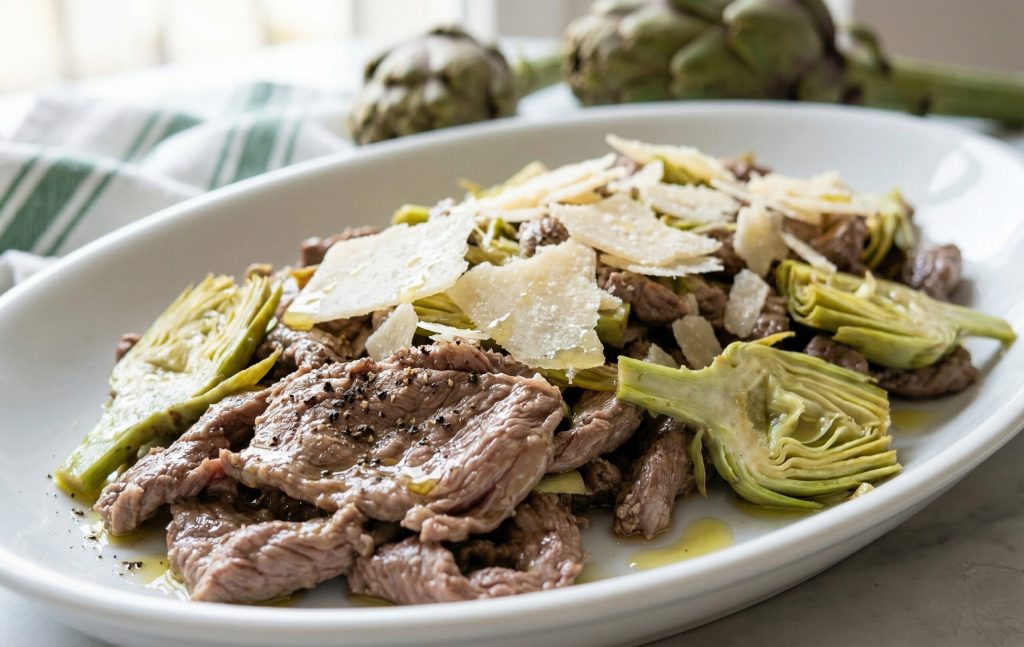
Beef strips in a pan with carpaccio of artichokes: the dinner-saver recipe ready in 10 minutes
The secret to tender beef strips that don’t become rubbery
The main issue when preparing strips in a pan is the texture: one minute too many on the heat and the meat that is silky and melting turns into something rubbery and hard to chew.
This often happens because the pan is overcrowded or the heat is too low, causing the meat’s juices to escape so it “boils” instead of searing.
In this recipe we solve the problem with a very simple trick: a quick sear over high heat and the addition of a cold-marinated artichoke carpaccio.
While the meat keeps its colloidal and tender structure thanks to a fast deglaze with white wine, the raw artichoke brings a turgid, herbal and fibrous note that balances the dish.
The final touch of Parmigiano shavings adds a crystalline saltiness that turns a quick main into a dish for a special occasion. Here’s how to serve it perfectly.
- Difficulty: Easy
- Cost: Medium
- Rest time: 20 Minutes
- Preparation time: 10 Minutes
- Cooking time: 10 Minutes
- Portions: 4
- Cooking methods: Stovetop
- Cuisine: Italian
Ingredients: Beef strips in a pan
- 1 3/4 lb beef (cut into thin strips)
- 1 glass dry white wine (about 5 fl oz)
- 1 clove garlic
- to taste extra virgin olive oil
- 1 pinch black pepper
- to taste fine salt
- 2 artichokes
- 3 oz Parmigiano Reggiano PDO (in shavings)
- to taste lemon juice
- to taste balsamic vinegar (optional)
Tools
- Bowl
- Mandoline
- Pan
Procedure
Start by cleaning the artichokes: remove the tougher outer leaves until you reach the tender heart. Trim the stem by about three-quarters of its length, remove the tips and the internal “choke.” Slice them very thinly (carpaccio style). Immediately place them in a bowl with lemon juice, a drizzle of oil, salt and pepper. Let them marinate for 20 minutes: this step will make the artichoke’s fiber sleeker and velvety, while still keeping a crunchy bite.
In a large pan, heat the oil with the crushed garlic clove. When the oil is very hot, add the hand-shredded meat. The secret is high heat: sear for only 20 seconds, turning quickly. Deglaze with the white wine, let the alcohol evaporate and continue cooking for at most one more minute. The meat should remain moist and silky inside. Salt only at the end and turn off the heat immediately.
Arrange the hot strips on a serving plate. Drain the artichoke carpaccio well and lay it on top of the meat. Finish with shavings of Parmigiano Reggiano; with the residual heat from the meat they will become slightly melting but remain granular and firm. For a more pronounced contrast, finish with a few drops of balsamic vinegar.
Notes on ingredients and substitutions
The Meat: Ask your butcher for a tender cut such as rump (scamone) or top round (fesa). If you prefer, you can also use veal strips for an even more delicate and melting texture.
The Artichokes: If you can’t find fresh artichokes, you can replace them with raw sliced button mushrooms (champignons), following the same marinating procedure.
Storage
This dish should be eaten immediately to enjoy the temperature contrast between hot meat and cold artichokes. It is not suitable for refrigeration or reheating, as the meat would become tough.
Tips
Pro tip: To make the meat even shinier and the sauce more colloidal, you can lightly flour the strips before tossing them into the pan; they will create a delicious little creamy sauce with the white wine.
FAQ (Questions and Answers)
Can I use artichokes preserved in oil?
I don’t recommend it for this recipe, because you would lose the turgid and fresh note of the raw artichoke that is the soul of the dish.
How do I prevent the meat from releasing too much water?
Cook a few strips at a time if your pan isn’t large enough. If the temperature drops, the meat releases liquids and loses its silkiness.
Does the wine have to be white?
Yes, a dry and acidic white is ideal to cleanse the palate and balance the richness of the Parmigiano.
