
Bicolored Pinwheel Cookies: An Easy Recipe for a Decadent Christmas Treat
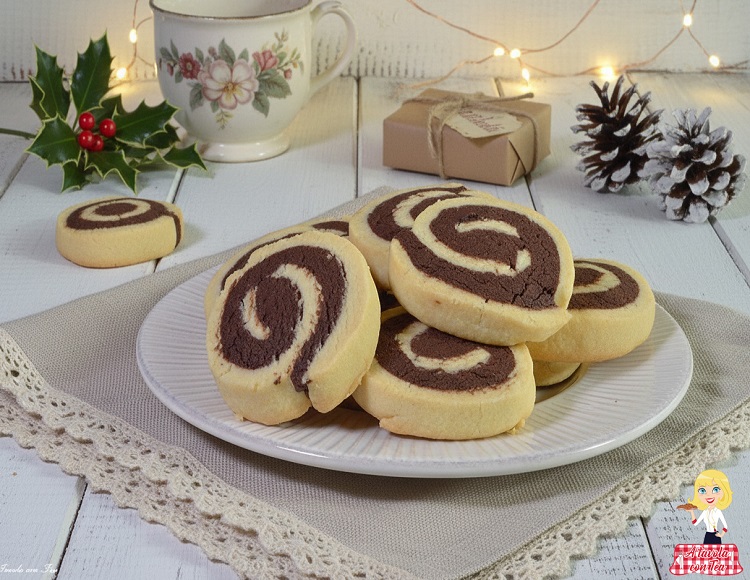
There’s something magical about homemade cookies, especially when they take on fun shapes and colors like our bicolored pinwheels!
These shortbread cookies, with the irresistible contrast between the neutral flavor of classic shortcrust and the intensity of cocoa, are a real indulgence for the palate.
Perfect to accompany a cup of milk at breakfast or an afternoon tea, they’re also a delightful gift idea for the Christmas holidays — a tasty, lovingly made treat that will surely be appreciated.
The beauty of this recipe is its simplicity: no cookie cutters or complex decorations are required.
It uses the handy “slice and bake” technique, which makes the preparation fun and accessible to everyone, even the little ones.
Join the two doughs, roll, slice and you’re done! The final result will be crumbly, crispy cookies with an attractive spiral effect that will amaze everyone.
- Difficulty: Very easy
- Cost: Very inexpensive
- Preparation time: 20 Minutes
- Cooking time: 30 Minutes
- Portions: about 20 cookies
- Cooking methods: Oven
- Cuisine: Italian
Ingredients (for about 20–25 cookies)
- 2 cups All-purpose flour (≈250 g)
- 6.3 oz Unsalted butter (≈180 g, about 3/4 cup)
- 1/2 cup Granulated sugar (≈100 g)
- 1 Egg
- as needed Water
- 1/3 cup All-purpose flour (≈50 g)
- 6 tbsp Unsweetened cocoa powder (≈30 g, about 3/8 cup)
Procedure — BICOLORED PINWHEEL COOKIES
In a bowl, combine the softened room-temperature butter and the sugar. Beat them with an electric mixer until the mixture is pale, fluffy, and aerated. Add the egg and continue beating until it is completely incorporated. Now add the 2 cups of all-purpose flour and mix by hand quickly until you form a homogeneous dough, which will be rather soft.
Weigh the basic dough and divide it into two equal parts. Transfer each part into a separate bowl.
1 – For the White Shortcrust: In the first bowl add 1/3 cup of flour and quickly knead by hand until fully absorbed.
2 – For the Cocoa Shortcrust: In the second bowl add the unsweetened cocoa powder and also work this dough quickly with your hands. If the dough seems too dry, you can add a teaspoon of water.On two separate sheets of parchment paper, roll out the two doughs (one plain and one cocoa) so as to obtain two rectangles as equal as possible, about 3/16 inch thick.
Lightly brush the plain dough rectangle with a bit of water (this will act as a “glue”). Place the cocoa rectangle on top, aligning the edges perfectly. Gently press with a rolling pin so the two layers adhere well. At this point, roll the two doughs together starting from the long side, creating a compact cylinder. Wrap the roll in parchment paper, then in plastic wrap, and chill in the refrigerator for about 10 minutes to firm up.
Remove the bicolored roll and cut discs about 1/4 inch thick. Arrange the cookies on a baking sheet lined with parchment paper, spaced well apart. Bake in a preheated static oven at 320°F (160°C) for about 30 minutes. They should not be too browned on the surface, but remain fairly light. Once baked, remove and let them cool completely on the baking sheet before handling, otherwise they could break.
Notes on Ingredients
Butter: Use good-quality butter, at room temperature, for a softer shortcrust that’s easier to work with.
Flour: All-purpose flour is best suited for these cookies, but for a more rustic variation you can try substituting part of it with ‘0’ type flour.
Unsweetened Cocoa: Make sure it’s high quality for intense flavor and a deep color.
Storage
Bicolored cookies keep perfectly in a tin or airtight container at room temperature for 5–7 days, retaining their crispness. They’re great to make ahead and store for the holidays.
Alternatives and Variations
With Flavoring: You can add the grated zest of one lemon or a pinch of vanilla to the plain dough. To the cocoa dough you can add a teaspoon of instant coffee to intensify the flavor.
Glazed Cookies: After baking and once cooled, you can dip half of each cookie in melted dark chocolate to make them even more indulgent.
Mini Cookies: For a miniature version, make thinner rolls and cut smaller discs.
Usage and Pairings
These cookies are ideal for breakfast, dipped in milk or coffee. They’re also perfect for an afternoon snack with a cup of tea or hot chocolate. During the holiday season, they’re a homemade and delicious gift to wrap with ribbons and colorful paper for friends and family.
Origins and History of Bicolored Cookies
“Pinwheel” or bicolored cookies, with their distinctive spiral shape, are very popular in Anglo-Saxon and American baking. The “slice and bake” technique became widespread for its practicality, allowing dough to be prepared in advance and cookies baked as needed, keeping them always fresh. Although the idea of combining two doughs is very old, the spiral version has become a modern classic, appreciated for its attractive look and versatility. They’ve become part of many families’ Christmas traditions because of their beauty and ease of preparation.
Fun Fact: “Homemade Cookies: A Gift that Warms the Heart”
Did you know that gifting homemade cookies is a gesture full of meaning? It combines the pleasure of food with a demonstration of affection and care. Preparing these bicolored cookies and packaging them thoughtfully means giving not only a sweet treat, but also time and dedication. It’s a wonderful way to share the festive spirit and spread a little sweetness around you.
1. Can I prepare the dough in advance?
Absolutely yes! You can prepare the bicolored dough roll and keep it wrapped in plastic in the refrigerator for 2–3 days. You can also freeze it for up to one month: simply thaw it in the fridge before slicing and baking.
2. My cookies broke/crumbled, what did I do wrong?
It could be a butter issue. Make sure the butter is at room temperature but not too soft. If the dough is too dry, add a teaspoon of water or milk. Another tip is to let the cookies cool completely on the baking sheet after baking before moving them.
3. Can I use other types of flour?
For the shortcrust, all-purpose flour is the most recommended to obtain a crumbly result. If you want to experiment, you can try replacing a small part with rice flour (for increased crispness) or fine whole wheat flour, but the texture and flavor may vary slightly.
