
Cima alla Genovese: A Journey to the Heart of Ligurian Tradition
Cima alla Genovese is not just a dish, but a great recipe from the Ligurian culinary tradition.
This preparation, which blends bolder and delicate flavors in excellent balance, tells stories of family, holidays and gatherings around the table.
For us, the Cima is the family’s signature dish, always present on special occasions such as Christmas and Easter, precisely because it requires patience and precision.
Forget haste. Making Cima is a ritual, but the problem that often arises is twofold:
Dry Filling: If the filling is too dry, the Cima will be tough and not cohesive.
Collapsing Shape: If the stitching isn’t perfect or the meat isn’t pressed well, the Cima can deform or open during cooking.
The secret to success lies in the final stage. After stuffing the meat pocket, you must sew the closure precisely to prevent the filling from escaping. But the final trick is cooling: leave the Cima to steep in its broth after cooking, and above all, press it (for example with a weight on top) while it cools. This ensures it stays compact, keeps its shape perfectly once sliced and that the filling binds.
The filling, a savory mix of meats, vegetables and cheese, is the heart of this recipe. Expect an experience that rewards you with a result that delights both the palate and the eye. Served cold, in thin slices, Cima is an unforgettable appetizer or main course.
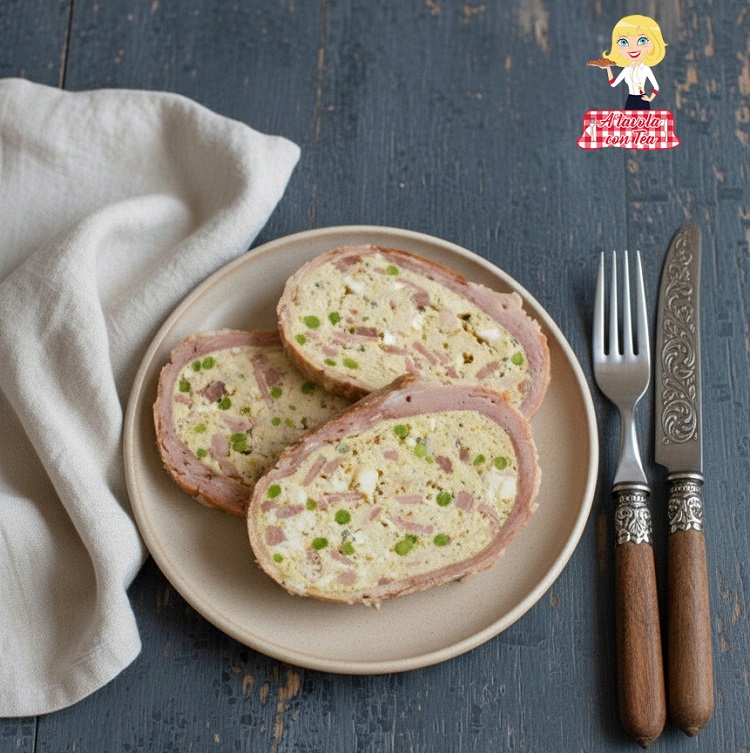
- Difficulty: Medium
- Cost: Moderate
- Preparation time: 40 Minutes
- Cooking time: 3 Hours
- Portions: 8
- Cooking methods: Stovetop
- Cuisine: Italian
Ingredients CIMA ALLA GENOVESE
- veal (whole veal breast 2 kg (4.4 lb) or a pocket of about 1–1.5 kg (2.2–3.3 lb))
- 3.5 oz veal (meat)
- 1.8 oz veal brains (alternatively, mortadella or bone marrow)
- 3 tbsp butter
- 6 eggs
- 2 tbsp pine nuts
- 3 oz grated Parmesan cheese
- dried mushrooms (a handful)
- 1 bunch marjoram
- 1 clove garlic
- 2/3 cup peas (precooked)
- 2 onions
- 1 carrot
- to taste extra virgin olive oil
- 1/2 cup bread crumbs (from bread)
- 1/2 cup milk
- to taste salt
- 1/2 cup dry white wine
Tools
- Pan
- Pot
- Bowl
- Knife
- Ladle
- Butcher's twine
- Sieve
Procedure CIMA ALLA GENOVESE
Begin by soaking the dried mushrooms in lukewarm water for about 20 minutes. Meanwhile, in a pan, melt the butter with a little oil and sauté a finely chopped mix of onion and carrot. Add the veal meat and the chopped brains, browning them well. Add the peas and the drained, chopped mushrooms.
Turn off the heat. In a large bowl, mix the browned meat with the bread crumbs previously softened in the milk and squeezed, the pine nuts, finely chopped garlic and plenty of marjoram. Season with salt and add the white wine, mixing well to combine. Let the filling cook over low heat until the wine has completely evaporated.
Place the filling in a bowl, let it cool slightly and add the beaten eggs and the Parmesan. Mix to obtain a homogeneous mixture. Take the veal pocket and fill it with the filling, but do not fill it more than halfway. This is the fundamental secret to avoid the Cima bursting during cooking. Sew the opening with kitchen twine, making sure it is well closed.
In a large pot, bring salted water to a boil. Immerse the Cima and add a whole onion, a carrot and a celery stalk. Cook over medium-low heat for about two hours. During cooking, pierce the pocket with a pin or a long toothpick every 15–20 minutes to let out air and prevent it from swelling and breaking.
Once cooked, drain the Cima and let it cool completely. It is essential to place it under a weight (for example, a cutting board with a couple of heavy jars on top) to help it keep its shape and expel any excess broth. Only when it is completely cold, slice it into pieces about 3/8 inch thick.
Notes on Ingredients
For the Cima, it’s important to ask the butcher for a veal breast with the “pocket” already formed. If you can’t find it, you can ask the butcher to prepare it for you, ensuring the meat is of excellent quality. Veal brains, once a key ingredient, are now hard to find. If you can’t get them, you can substitute with 1.8 oz (about 50 g) of quality mortadella, which will add flavor and softness, or with bone marrow or peeled sausage. For marjoram, fresh is essential for its unmistakable aroma: do not use dried marjoram.
Storage
Cima alla Genovese keeps in the refrigerator for 3–4 days, wrapped in plastic wrap or in an airtight container. As this is a dish served cold, it’s perfect for preparing in advance. It can also be frozen already sliced, to have it ready whenever you like.
Variations and Pairings
Richer filling: You can enrich the filling with other ingredients, such as sweetbreads or calf testicles, following the oldest traditional recipes. Or, for a stronger flavor, add 1.8 oz (50 g) of peeled and crumbled sausage.
Vegetarian version: Replace the meat with a mix of finely chopped vegetables (zucchini, carrots, celery), boiled and mashed potatoes and porcini mushrooms. For an extra touch, add smoked tofu cut into cubes.
Pairings: Cima is delicious on its own, but its traditional accompaniment is green sauce. It also pairs well with fresh vegetables like salad, tomatoes and olives, or with a yogurt-and-herb based sauce.
Origins and History
Cima alla Genovese has its roots in the peasant and seafaring tradition of Genoa and Liguria. Born as a way to reuse less noble parts of the veal and other leftovers, it was transformed into a rich and substantial dish. Its characteristic shape, that of a stuffed “pocket,” recalls the bags sailors carried with them during long voyages. Over time, it became a celebratory dish, indispensable on holiday tables and for family Sunday lunches.
For a Complete Experience
Cima is a true delight to bring to the table. If you want to impress your guests even more, try adding a photo or video showing the moment the Cima is sliced, revealing the colorful and inviting interior. Invite your readers to enjoy it as they would in Genoa: with a slice of crusty bread and a glass of good Ligurian white wine, such as Vermentino.
FAQ (Questions and Answers)
1. Why did my Cima burst during cooking?
The most common reason is that it was overfilled. Remember to fill the pocket only up to halfway to leave room for the filling to expand. Cooking at too high a heat can also cause tearing.
2. Can I use other types of meat?
Traditionally veal breast is used, but you can also use leaner veal cuts or a mixture of veal and pork for a more intense flavor.
3. How do I know when the Cima is cooked?
Cima is cooked when, pierced with a skewer or fork, it is tender and soft. Timing may vary depending on the size of the pocket, but generally two hours are sufficient.
