
Creamy Chickpea Soup: the Simple, Velvety Recipe that Warms the Heart
When days get shorter and the air turns cooler, there’s only one craving on everyone’s mind: a comforting hug.
And what better than a velvety soup? Chickpea soup, in particular, is a true embrace for the palate. It’s a dish that tastes like home and simplicity, but if prepared with a small trick it can become incredibly refined and tasty.
This recipe is designed for those seeking healthy comfort food that’s quick and uncomplicated to prepare, without sacrificing authentic flavor and perfect texture.
I chose to use hulled chickpeas for a specific reason: they drastically reduce soaking and cooking times, making the soup incredibly creamy without needing to pass the mixture through a sieve.
This way, you can put a healthy, nourishing dinner on the table in less than an hour. The magic of this dish is its versatility: it’s an ideal first course but also a great solution for a light and filling lunch.
By following my tips, you’ll discover how to best enhance the flavors of these legumes with an aromatic touch that makes the difference. Get ready to fall in love with this soup — it will be your ace for autumn evenings!
- Difficulty: Very easy
- Cost: Very inexpensive
- Cooking time: 40 Minutes
- Portions: 4
- Cooking methods: Stovetop
- Cuisine: Italian
Ingredients — CREAMY CHICKPEA SOUP
You can prepare this soup with hulled dried chickpeas for superior creaminess, or with canned chickpeas for an ultra-quick preparation with no soaking.
- 1 cup chickpeas (hulled)
- 6 1/3 cups vegetable broth
- 1 clove garlic (optional)
- 1 sprig rosemary
- to taste extra virgin olive oil
- to taste salt
- 1 pinch pepper
Tools
- Pot
- Immersion blender
- Cutting board
- Ladle
- Colander
Preparation — CREAMY CHICKPEA SOUP
First, soak the hulled dried chickpeas in water for 8–12 hours. Once rehydrated, drain them well and rinse under running water. In a pot, heat a generous splash of oil with the garlic clove and a sprig of rosemary. To prevent the needles from dispersing, I recommend tying the sprig with kitchen twine.
When the oil starts to sizzle, add the drained chickpeas and the vegetable broth. Bring everything to a boil, then lower the heat, cover with a lid and simmer gently for about 40 minutes, or until the chickpeas are tender.
At the end of cooking, remove the rosemary sprig and the garlic. Use an immersion blender to obtain a smooth, velvety mixture. If the soup is too thick, add a little hot broth until you reach the desired consistency. Season with salt to taste.
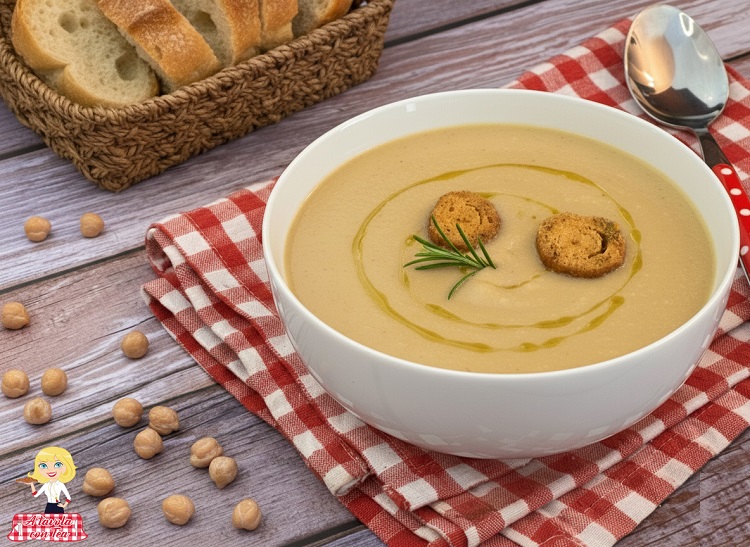
Divide the creamy chickpea soup among bowls. To finish, drizzle with raw olive oil, sprinkle with pepper, add some finely chopped fresh rosemary needles and a handful of croutons for crunch. Serve immediately and enjoy this delight.
Last-Minute Chickpea Soup: Quick Canned-Chickpea Version
If hunger calls and time is short, this canned-chickpea version is the perfect answer. Forget soaking and long cooking: it will only take a few minutes to bring a hot, creamy and irresistibly comforting dish to the table. Canned chickpeas are your ace for a healthy and tasty dinner without sacrificing authentic flavor.
Notes on ingredients
I specified hulled chickpeas to speed up the process and obtain a super creamy soup. If you prefer, you can use whole dried chickpeas, but in that case soaking times will be about 12–24 hours and cooking times may reach up to 1½ hours. Make sure to blend very well or pass the mixture through a sieve to remove the skins.
Substitutions:
Vegetable broth: You can substitute with a light meat broth or simply hot water and a good vegetable bouillon cube (preferably organic).
Garlic: If you don’t love it, omit it or replace it with a bit of finely chopped onion or shallot sautéed until soft.
Storage
The chickpea soup keeps in an airtight container in the refrigerator for 2–3 days. You can also freeze it: once cooled, transfer to a container or food bags and store in the freezer for up to 3 months. To thaw, leave in the refrigerator for several hours or gently reheat on the stovetop.
Variations and alternatives
Chickpea and potato soup: To make it even creamier and more filling, add a medium potato, cut into cubes, together with the chickpeas during cooking.
Chickpeas and pumpkin: Add about 1 3/4 cups of diced pumpkin to the broth with the chickpeas. The flavor will be sweeter and the color more vibrant.
Chickpea and curry: For an exotic, spicy twist, add 1 teaspoon of curry powder to the garlic and rosemary sautée before adding the chickpeas and broth.
Chickpeas and shrimp: For an elegant touch, serve the soup with shrimp sautéed with garlic and parsley.
Pairings and uses
This soup is perfect as a first course for a winter dinner, but also as a light, nutritious lunch. You can serve it with:
A drizzle of high-quality extra virgin olive oil.
Croutons, bruschetta or slices of toasted bread.
A touch of fresh rosemary, chili flakes or chopped parsley.
A sprinkle of grated Parmesan for those who are not following a vegan diet.
Origins of the recipe
Chickpeas are one of the oldest foods cultivated by humans, with traces dating back more than 7,500 years in the Middle East. Their spread throughout the Mediterranean, and particularly in Italy, made them protagonists of many regional recipes, from soups to one-dish meals. The velouté is a modern preparation that highlights their texture and flavor, transforming a rustic legume into a refined, enveloping dish.
FAQ (Questions and Answers)
1. Can I use canned chickpeas?
Of course! If you’re short on time, you can use two cans of precooked chickpeas of 250 g each (about 8.8 oz each), draining and rinsing them well. In this case, reduce the broth to about 4 1/4 cups and cut the cooking time in half to 15–20 minutes, just enough for the flavors to meld.
2. How can I make my soup thicker or thinner?
For a thicker soup, continue cooking until the liquid has reduced, or add a small boiled and mashed potato before blending. If you want it thinner, add a little hot vegetable broth, one tablespoon at a time, until you reach the desired consistency.
3. What type of rosemary should I use?
It’s preferable to use a fresh sprig of rosemary for a more intense aroma. If you don’t have fresh rosemary, you can use dried rosemary in smaller quantity (about 1 teaspoon) and be careful not to burn it.
