
Crispy, Bubble-Filled Mother-in-Law’s Tongues: The Secret of a Quick Dough and Double Baking
If it has happened to you too — you’ve tried making Mother-in-Law’s Tongues at home but they turned out gummy, too thick or without those lovely crispy bubbles that make them special — I know exactly what the problem is.
Often the dough is overworked or, worse, the oven isn’t handled properly. This product relies entirely on extreme crispness, achievable only with an ultra-thin sheet and a strong thermal shock.
I’ve tested this recipe many times and, after repeated trials, I discovered that the real secret isn’t a special yeast but a perfect balance of flour, oil and water, combined with a very quick double bake.
The method is simple: you don’t need long kneading. The short rest we give the dough is enough to make it elastic and easy to roll out.
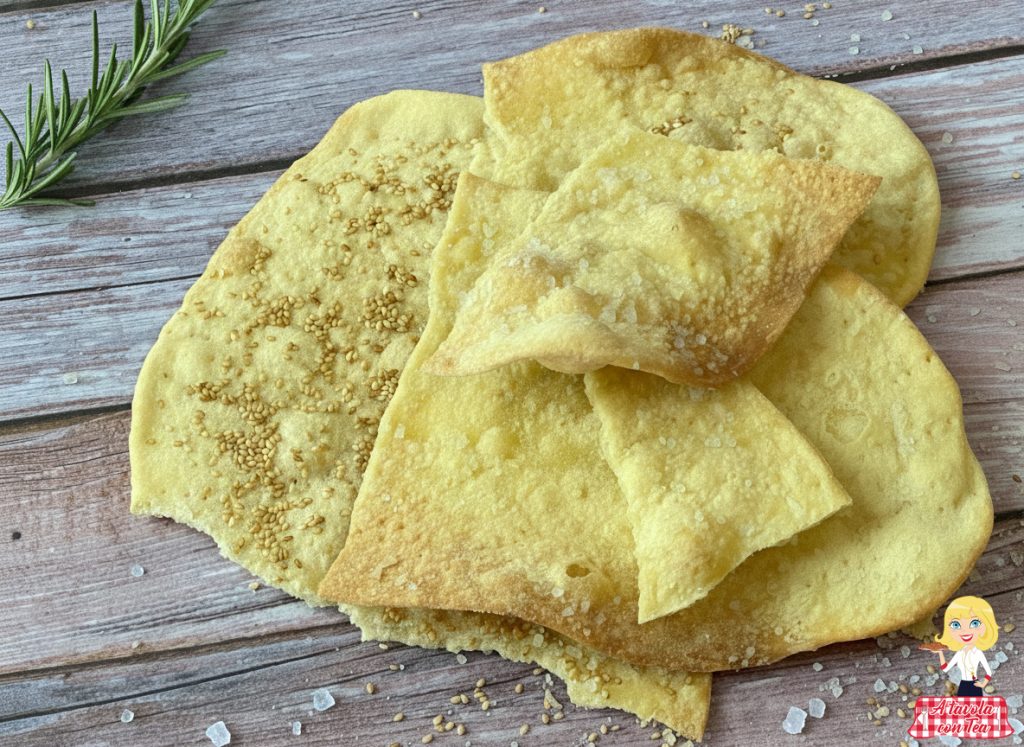
Today we’ll make super-crispy Schiacciatine or Mother-in-Law’s Tongues together — a very easy recipe that requires attention to two small but crucial points.
The first is the rolling: the thickness must be almost transparent. The second is the baking: we must use the oven’s maximum heat (482°F) and the trick of the double rack.
Start on the lower rack for an immediate thermal shock that makes the steam explode (and so the bubbles!) and then move up to dry the surface.
I guarantee that after many attempts and a few experiments with tongues more like bricks, this is the method that has always given me the best results.
You’ll get light, fragrant Mother-in-Law’s Tongues so crispy they’ll make the bakery ones jealous.
- Difficulty: Very easy
- Cost: Very inexpensive
- Rest time: 20 Minutes
- Preparation time: 10 Minutes
- Cooking time: 10 Minutes
- Portions: 4
- Cooking methods: Oven
- Cuisine: Italian
Ingredients for Mother-in-Law’s Tongues (about 2 baking sheets)
- 2 1/2 cups type 0 flour (or 00 (about 300 g))
- 2/3 cup water (At room temperature (about 150 ml))
- 5 1/3 tbsp extra virgin olive oil (Plus extra for brushing (about 80 ml))
- 1 tsp salt (level)
- fresh rosemary
- sesame seeds
- coarse salt
Tools
- Kitchen Scale
- Bowl
- Rolling Pin
- Parchment Paper
- Baking Tray
Procedure for Crispy Mother-in-Law’s Tongues (Schiacciate)
Combine the dry ingredients: Sift the flour into a bowl, add the salt and mix.
Add the liquids: Make a well in the center and add the water and about 5 1/3 tbsp of extra virgin olive oil.
Quick mixing: Mix quickly with a spoon, then transfer the dough to the work surface. Knead vigorously by hand until you obtain a smooth, homogeneous dough without lumps. Don’t overwork it.
Short rest: Shape into a ball, cover with the bowl and let rest for 30 minutes. Meanwhile, preheat the oven to 482°F (static) and let it heat thoroughly.Divide the dough: From the ball, form small pieces weighing about 1–1.4 oz each (roughly 30–40 g) — about 8–10 pieces depending on size.
Roll paper-thin: Lightly flour the work surface and roll each piece with the rolling pin. The thickness should be about 1/16–1/8 inch (roughly 1–2 mm), almost transparent. Add flour only if the dough sticks.
Flavor them: Transfer the sheets to a baking sheet lined with parchment paper.Prepare the surface: Lightly brush each sheet with a bit of extra virgin olive oil. If desired, sprinkle with chopped rosemary, sesame seeds or coarse salt.
Thermal shock (base): Bake in a very hot oven at 482°F, placing the tray on the lowest part of the oven (direct contact) for about 4 minutes. In this time the intense heat will immediately cause the bubbles to appear.
Top drying: As soon as you see the bubbles forming, immediately move the tray to the upper rack and bake for another about 1½ minutes, until lightly golden.
Cooling: Remove from the oven and immediately transfer the Tongues to a rack or work surface to cool completely and ensure maximum crispness. Bake a few pieces at a time until the dough is used up.
Ingredients Notes and Substitutions
Flour: Type 0 flour gives a slightly more “rustic” result, but 00 is perfect for crispness.
Extra virgin olive oil: Don’t substitute with other oils. EVOO is not just a fat but the distinctive aroma of this kind of bread.
Flavors: You can vary by adding spices like sweet paprika or chili powder to the dough for a spicy touch.
Storage
Mother-in-Law’s Tongues keep for many days in a paper bag or an airtight tin box while retaining their crispness.
Attention: They must be completely cool before storing, otherwise residual moisture will make them soft.
Recipe Alternatives and Variations
Wholemeal Tongues: Substitute about 3/4 cup (100 g) of type 0/00 flour with wholemeal flour. You may need to add an extra 2–4 tbsp (10–20 ml) of water.
Cheese Tongues: Finely grate about 1/4 cup of Parmesan (roughly 20 g) and sprinkle on the sheets before baking.
Recommended Uses and Pairings
Great for: Apéritifs, starters, or to accompany cured meats and cheeses.
Perfect pairing: Excellent for dipping in hummus or yogurt-based sauces, or simply with a slice of Parma ham.
Origins and History of the Recipe
Mother-in-Law’s Tongues are a typical product of Piedmontese bakery, born as a variation of the better-known Grissino (also from Piedmont). They received their ironic name due to the elongated, pointed shape and their “talkative” crunch. They were meant to accompany rich regional appetizers.
Why a Rolling Pin and a Very Hot Oven Are Essential
The perfect crispness of the Tongues isn’t luck but pure physics. The key is that the dough is without yeast (or almost), so it doesn’t puff up. The extreme thinness (about 1/16–1/8 inch) and the very high temperature (482°F) cause the water in the dough to evaporate instantly. This rapid release of steam creates the bubbles and leaves the sheet completely dry and brittle, guaranteeing a crispness that lasts. The double bake maximizes this effect.
FAQ (Questions and Answers)
1. Why didn’t my Tongues form bubbles?
There are two reasons: 1) Oven not hot enough: it must be at 482°F and well preheated. 2) Sheet not thin enough: if it’s thicker than about 1/8 inch, the steam can’t expand and bubbles won’t form.
2. My Tongues came out a bit gummy. Why?
Probably you overworked the dough (developing too much gluten) or they were baked at too low a temperature for too long, drying slowly instead of “popping”.
3. Can I use Manitoba flour?
No, it’s not ideal. Manitoba flour is strong and develops too much gluten, making the sheet elastic and hard to roll out very thin. For Tongues, a weak flour (0 or 00) is better.
