
THE FRESH EGG PASTA: a foolproof recipe with all GRANDMA’S tips to prepare a perfect sheet!
Tagliatelle, lasagna, ravioli, orecchiette or macaroni — when homemade they are far more flavorful, and making them is not that difficult! It takes only a few ingredients to obtain a good egg pasta: flour, eggs, salt — things you probably already have in your pantry.
The ideal ratio between eggs and flour is always 1 egg per 100 g (about 3.5 oz) of flour.
As the expert “sfogline” (sheet-makers) say, usually the egg determines how much flour it needs: the dough absorbs as much flour as is necessary to become firm and elastic and rejects any excess.
There are also some seemingly trivial but important precautions necessary for good pasta.
For example, wash your hands well after incorporating the flour into the eggs and before starting to work the dough. This prevents dry residues on your hands from mixing into the pasta.
Also keep the work surface lightly floured during handling. You should work the dough in a cool, well-ventilated environment but without drafts that can dry the pasta too quickly.
Finally, don’t forget to use some force by occasionally slamming the dough on the work surface to make it more elastic.
Do not give up too quickly while working the ingredients, because the intensity and duration of the kneading determine the dough’s compactness.
Keep in mind that the ideal kneading time is around 10 minutes.
As you can see, making fresh pasta requires time, attention and patience — it is an art to obtain dough with the right consistency, a pleasant roughness and perfect cooking. These are the essential features that distinguish a good homemade fresh pasta: tasty and satisfying. Below you will find the quantities and instructions to prepare the basic dough you will use to create your desired format. Don’t be afraid: for the lazier ones or fans of technology, I will also explain how to proceed if you use a stand mixer and then a pasta roller machine.
Put on your aprons and have fun making delicious homemade fresh egg pasta to amaze your family and guests!
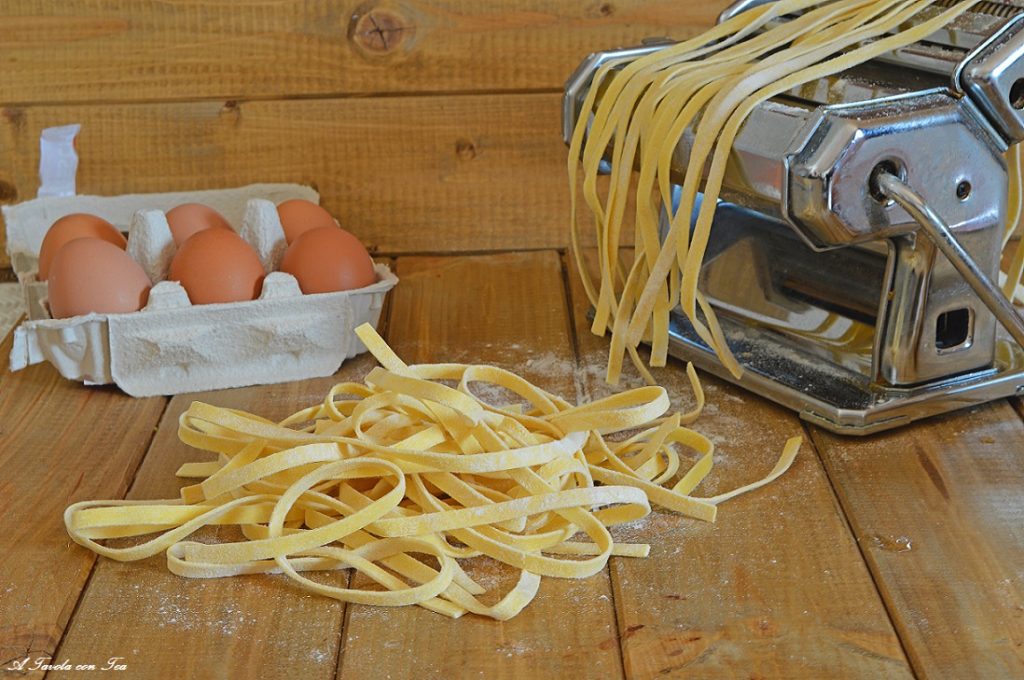
- Difficulty: Medium
- Cost: Very inexpensive
- Preparation time: 1 Hour
- Portions: 4 people
- Cooking methods: No cooking
- Cuisine: Italian
- Energy 361.40 (Kcal)
- Carbohydrates 71.60 (g) of which sugars 1.70 (g)
- Proteins 14.72 (g)
- Fat 3.31 (g) of which saturated 1.19 (g)of which unsaturated 1.44 (g)
- Fibers 2.20 (g)
- Sodium 44.10 (mg)
Indicative values for a portion of 100 g processed in an automated way starting from the nutritional information available on the CREA* and FoodData Central** databases. It is not food and / or nutritional advice.
* CREATES Food and Nutrition Research Center: https://www.crea.gov.it/alimenti-e-nutrizione https://www.alimentinutrizione.it ** U.S. Department of Agriculture, Agricultural Research Service. FoodData Central, 2019. https://fdc.nal.usda.gov
The importance of high-quality ingredients
For optimal results, it is essential to use high-quality ingredients. Choosing fresh eggs and premium durum wheat semolina makes a difference in taste and texture. Also pay attention to the seasonings that can further enhance the dish.
- 3 1/3 cups (about 14.1 oz) all-purpose flour (type 00)
- 4 eggs (about 3 oz each)
Tools
- Bowl
- Rolling Pin
- Pastry Wheel
Step by step: how to make fresh egg pasta at home
Tradition says fresh pasta is made by hand and then rolled with a rolling pin, but of course nothing prevents you from using a stand mixer if you have one. In this recipe I will explain how to proceed both by hand and using machines for the preparation of egg pasta.
On a work surface pour the flour (reserve a little to add later if needed) and make a well, creating space in the center to hold the eggs. Crack the eggs into the well, mix them with a fork and begin to incorporate the flour gradually starting from the edge of the well, continuing to stir in a circular motion.
When most of the flour has been incorporated, start working with your hands. Knead the dough on the work surface for about 10 minutes, using the heel of your hand vigorously, until you obtain a homogeneous dough with a smooth, elastic consistency. Shape the dough into a ball, wrap it with plastic wrap and let it rest at room temperature for at least 30 minutes.
Once rested, take the dough, cut off a piece — keeping the remainder wrapped in plastic so it doesn’t dry out — flour it and begin to roll it out. Shape the piece into a smooth ball, flatten it slightly with your hands into a disk. Lightly flour the work surface and start rolling the dough with a rolling pin: to get an evenly thick sheet always start from the center and roll outward in all directions.
As soon as the sheet begins to widen, rotate it 90° and continue rolling until you reach the desired thickness — for a classic cut like tagliatelle the ideal thickness would be 0.02 in (0.5 mm) — then roll the sheet starting from the bottom edge without pressing. At this point, using a long, sharp knife, cut the pasta into strips about 1 cm (approximately 3/8 in) wide. Your homemade fresh egg tagliatelle are ready to be cooked and served as you like! Before cooking and after cutting, collect them on a tray dusted with a little semolina until cooking time.
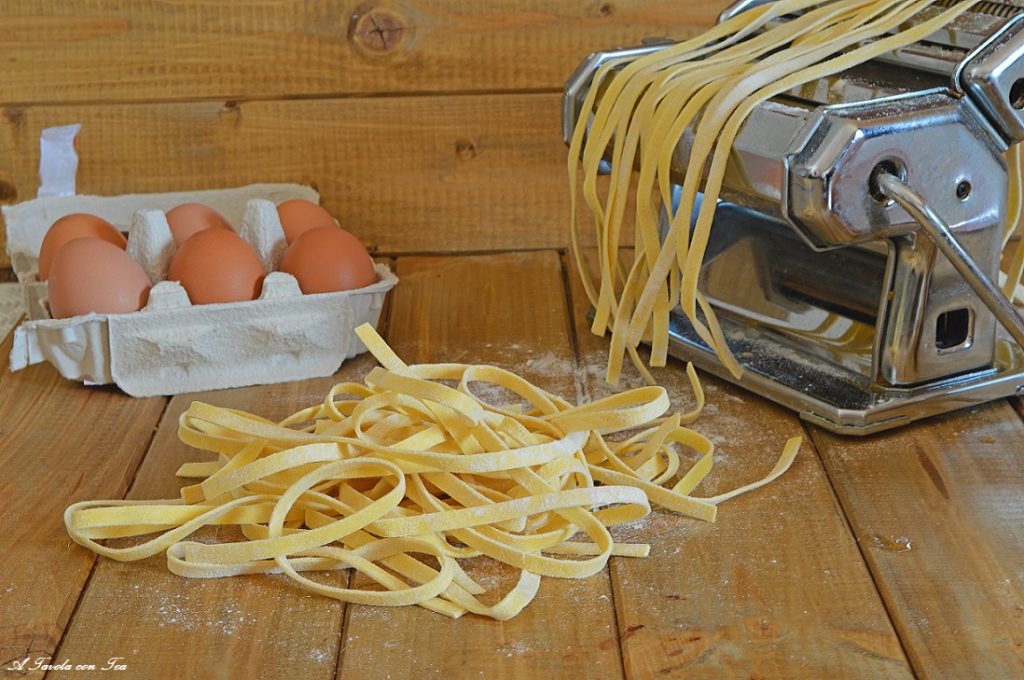
Tradition prefers rolling the dough by hand using a rolling pin and arm strength, but of course you can obtain excellent sheets quickly using a stand mixer for kneading and a roller machine (the so-called “nonna papera”).
If you opt for the machine, it’s best to replace a small portion of all-purpose flour with re-milled durum wheat semolina to obtain the same porosity you get when working by hand with a rolling pin. As a rule, the ratio between soft wheat flour and durum semolina should be about 3:1 — so, for example, instead of 400 g of all-purpose flour use 300 g all-purpose plus 100 g durum semolina.
Returning to the basic instructions (which are really simple): put the flour and eggs in the bowl of the stand mixer (I recommend using the K-beater) and mix at medium speed until the dough is homogeneous. Then take the dough, form a ball, cover it with plastic wrap and let it rest for at least 30 minutes at room temperature.
To roll the sheet with the “nonna papera”, take a portion of the pasta (always remembering to keep the rest wrapped), flatten it with your hands, lightly flour it and pass it through the machine starting from the thickest setting.
Once the dough is rolled, fold both edges toward the center and press lightly, then pass the sheet through the machine again at the same thickness. Fold again and move to the next thinner setting. Continue until you reach the desired thickness — as mentioned above for tagliatelle this is 0.02 in (0.5 mm). For other formats and thicknesses see the suggestions below.
At this point pass the sheets through the dedicated tagliatelle cutter and you’ll have perfect tagliatelle in no time! Before cooking and after cutting, gather them on a tray dusted with a little semolina until cooking.
7 TRICKS FOR A PERFECT PASTA SHEET
To summarize, the golden rules for getting perfect egg pasta are:
1) Use a wooden work surface — the roughness of wood is ideal for kneading.
2) The ideal ratio of eggs to flour is 1 egg per 100 g (about 3.5 oz) of flour.
3) Avoid working in drafts: they dry out the pasta quickly.
4) Knead the dough vigorously for at least 10 minutes, occasionally banging it on the work surface so it becomes elastic.
5) According to some Emilian traditions, salt should not be added to the dough;
6) Keep covered the portion of dough you are not working with to prevent it from drying out.
7) Always flour the work surface to prevent the pasta from sticking.
DIFFERENT THICKNESSES AND SIZES FOR FRESH PASTA FORMATS
Recommended thicknesses and sizes:
Tagliatelle: width from about 3/16 to 9/32 in (5–7 mm)
Tagliolini: width about 1/16 to 1/8 in (2–3 mm)
Pappardelle: width about 5/8 to 3/4 in (1.5–2 cm)
Quadrucci (soup squares): about 3/8 in per side (1 cm)
Lasagna, Cannelloni: sheets as large as the baking pan (about 8 x 5.5 in / 20 x 14 cm) or smaller sheets
Cappelletti: square sheets about 1 in per side (2.5 cm)
Maltagliati: diamond-shaped scraps of pasta cut from leftover sheets
Sheet for filled pasta (ravioli, half-moons, etc.): rectangular sheet about 1/32 in thick (≈1 mm)
HOW TO COOK FRESH PASTA: COOKING TIMES
Fresh pasta generally cooks very quickly: from 2 minutes (for very thin tagliolini) to 5–8 minutes for larger formats (such as ravioli). When cooking egg pasta you may add a teaspoon of oil to the pot of water to help prevent sticking.
Tips for storing and using fresh pasta
Egg pasta can be stored for one or two days in the refrigerator in food bags, or frozen. If frozen, do not thaw before cooking — add it to the boiling water while still frozen.
History and tradition of fresh pasta in Italy
The tradition of fresh pasta in Italy dates back centuries, with deep roots across the country’s regions. Each area has its variants and recipes, making fresh pasta a symbol of cultural and gastronomic identity. Egg pasta is particularly appreciated in Emilia-Romagna, where it has been perfected over the years.
Differences between fresh egg pasta and dried pasta
The main difference between fresh egg pasta and dried pasta is in the ingredients and preparation. While dried pasta is made only with flour and water, fresh egg pasta includes eggs, which provide fatty acids and a higher amount of carbohydrates/sugars. This gives fresh pasta an unmatched flavor and texture.
Nutritional benefits of fresh egg pasta
Fresh egg pasta is an excellent source of protein and nutrients. Eggs provide saturated fatty acids and essential vitamins, making this food not only delicious but also nutritious. In addition, the use of durum wheat semolina contributes to balanced energy intake.
Delicious recipes with fresh egg pasta
Classic recipes: tagliatelle, lasagna and ravioli
Tagliatelle al ragù: Cook the tagliatelle in salted water and dress with a rich meat ragù.
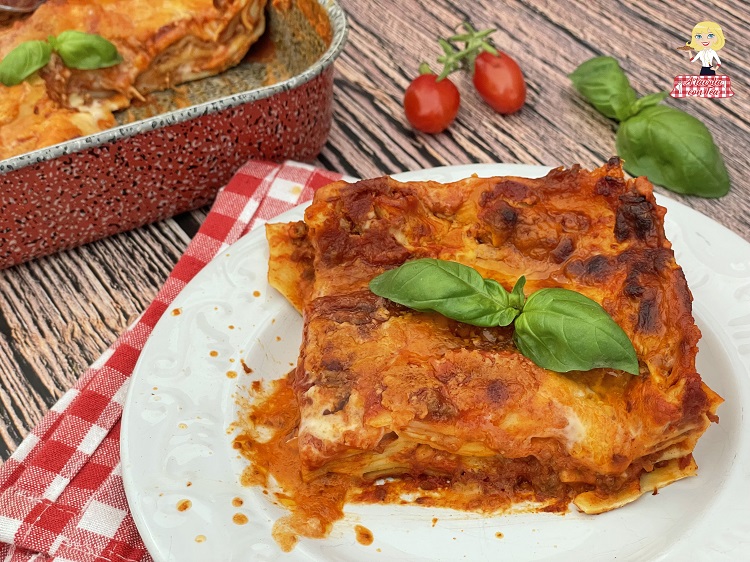
Lasagna: Alternate layers of fresh pasta with béchamel and ragù for a rich, comforting dish.
Ravioli: Fill the pasta with ricotta and spinach, then dress with melted butter and sage.
Creative ideas for main dishes with fresh egg pasta
Experiment with innovative ravioli fillings like mushrooms and truffle, or try making fresh pasta flavored with aromatic herbs for a fresh twist.
