
Glazed Carnival Bugie (frappe, chiacchiere) with chocolate
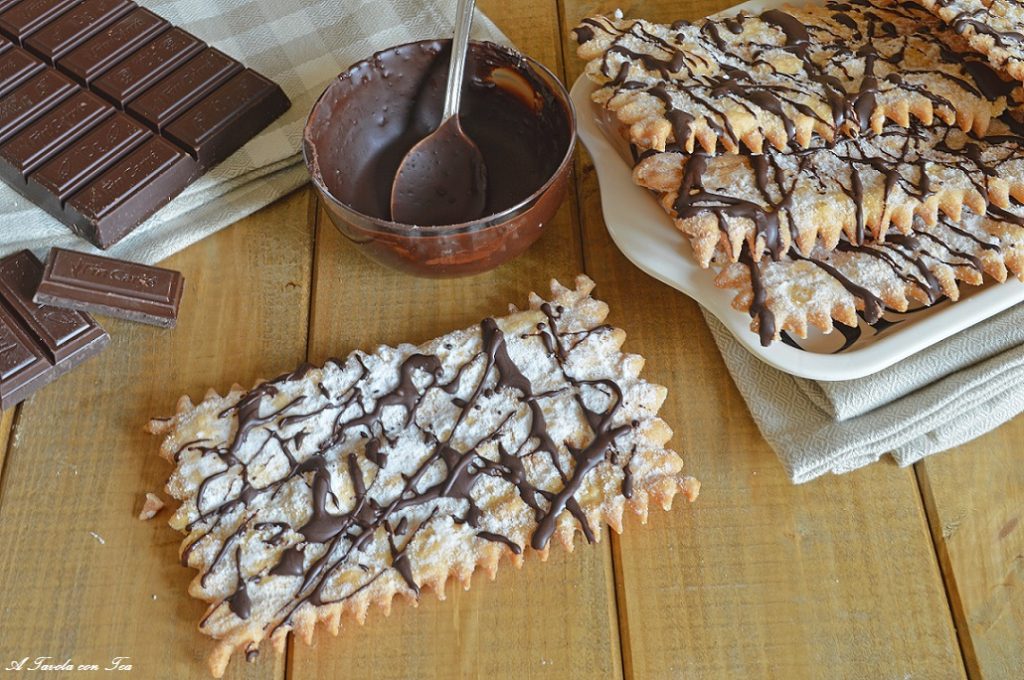
I have already shown you in the past how to prepare Carnival chiacchiere, a typical sweet of this season consisting of crispy, fragrant and delicate fried sheets so good you’d want to enjoy them all year round. Today I show you a version even more indulgent: Chiacchiere, bugie, frappe — call them what you like — coated with a dark chocolate glaze.
The procedure is absolutely the same as the traditional ones except for a drying phase before dipping them in melted dark chocolate.
They are easy and quick to make, and homemade they have that extra touch that makes the difference! The tricks for perfect results concern the dough and the frying, but don’t worry — you’ll find in my recipe all the indications to create Glazed Carnival Bugie with chocolate that rival pastry shop ones: super crisp, with a thin, crunchy sheet, full of bubbles, and despite being fried they are light as a cloud. Just looking at them will make your mouth water, but when at the first bite you hear the “crunch,” well, your taste buds will applaud!
One leads to another and don’t say I didn’t warn you!
- Difficulty: Easy
- Cost: Low cost
- Preparation time: 40 Minutes
- Cooking time: 10 Minutes
- Portions: Quantity for about 50 – 60 Chiacchiere
- Cuisine: Italian
Ingredients
- 2 1/3 (≈300 g) cups Type 00 flour
- 3 tbsp + 1 tsp (≈40 g) Sugar
- 1/4 cup (≈60 ml) Milk
- 2 tbsp (≈30 g) Butter (melted)
- 2 Whole eggs
- 2 tbsp Grand Marnier
- 1 Lemon (grated zest)
- 1 pinch Salt
- fl oz Peanut oil (for frying)
- as needed Powdered sugar (for decorating)
- 3.5 (≈100 g) oz Dark chocolate
Preparation
Take a large bowl and pour in the flour, sugar and the pinch of salt and mix well. Make a well in the center and put the eggs, the melted butter, the grated zest of one lemon (untreated), and the grappa. Mix the liquid ingredients well with a fork and gradually incorporate the flour until the liquids are completely absorbed and you have obtained a creamy dough. Finally add the milk and continue to blend until you obtain a dough that easily comes away from the side of the bowl. Form a ball, wrap it in plastic wrap and let it rest at room temperature for about 30 minutes.
After resting time, take the dough and divide it into 3 parts. You can roll the sheets either with a pasta machine (better) or by hand on a well-floured work surface using a rolling pin. You need to get a very thin sheet. I recommend, to obtain a sheet that puffs better during cooking, folding the dough onto itself several times as you roll it out.
If you use a pasta machine, start at setting 3-4 (medium thickness); at first it will seem thick and sticky but that’s normal. Fold the dough again and pass it through the pasta machine two more times at the same setting (3-4). Then switch to setting 2 and roll the sheet, folding and flouring it two more times until you obtain a very thin, smooth and even sheet.Trim the edges of the sheet you obtained with a fluted pastry wheel (the one used for ravioli), cutting rectangles about 8–10 cm long (about 3 1/8 to 4 inches). As you cut them, arrange them on a lightly floured tray so they don’t stick to each other. Continue until all the dough is used.
If you have a deep fryer you can use it; otherwise use not a shallow pan but a small pot with high sides and fill it with plenty of seed oil. Cooking will be slower because there will be fewer pieces at a time, but the result is definitely better. The oil temperature for perfect cooking should be 347°F (175°C). If you don’t have a kitchen thermometer to know when the oil is ready, test with a small piece of dough.
If the piece of dough colors immediately, the oil is too hot: let it cool by removing it from the heat for a few minutes. If the piece remains on the bottom, the oil is still cold and you must wait a bit longer. Only when the piece of dough rises to the surface without blackening at the edges and forming tiny bubbles is the oil ready and you can proceed with frying.
Proceed few at a time to immerse the bugie in the hot oil; bubbles will immediately form on the surface in contact with the oil — turn after 3–4 seconds, bubbles will form on the other side as well, a few more seconds until a light golden color is achieved, then drain with a slotted spoon. As soon as you drain them put them on a plate with absorbent paper and continue until all the dough is used. Let them cool.Melt the dark chocolate in a bain-marie, then take the bugie and, using a spoon, draw random stripes with the melted chocolate. Let them rest until completely cooled then dust them with powdered sugar before serving.
Notes
To flavor the dough I chose Grand Marnier; however you can replace it with any other liqueur you prefer or already have at home, grappa, rum or other aromatic liqueurs work well.
To obtain a thinner and more “bubbly” sheet during cooking I recommend, if you have one, using a pasta machine, but don’t worry if you roll by hand: your bugie will be slightly thicker and more rustic unless you are an expert at rolling pasta sheets!
