
Sicilian Two-Tone Glazed Pignolata: The Original Recipe with Two Glazes (Lemon and Chocolate)
Are you ready for a delicious trip to Sicily? Glazed pignolata is not just a dessert — it’s a Carnival icon (and more!) that brings an explosion of flavors and colors to the table.
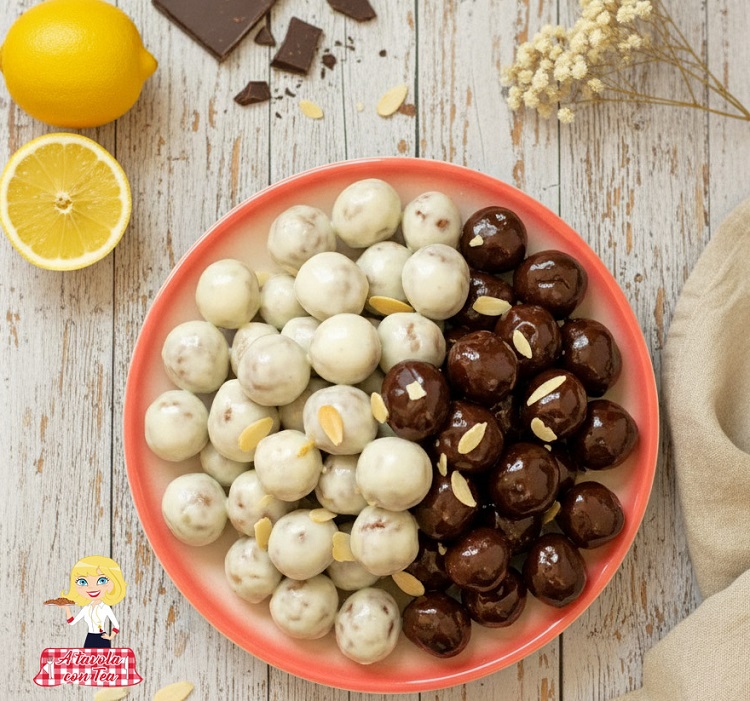
Unlike cicerchiata or struffoli, which are based on honey, pignolata (especially the Messina version) stands out for its elegant double glazing: half with fresh, bright lemon and half with enveloping dark chocolate.
Imagine: small balls soft inside and crunchy after a perfect fry, joined by a glaze that, once set, creates a delightful contrast of textures.
The base is a simple dough, enriched by the aroma of grappa and lemon zest, giving a unique and unmistakable fragrance.
This recipe requires a bit more effort than honey-only sweets, but I assure you the satisfaction of seeing the finished dessert, with its two perfectly divided and sparkling halves, repays every minute spent in the kitchen.
It’s a celebratory dessert, perfect to prepare the day before an event, since the glazes need time to solidify and show their best.
Get ready to work the dough, fry with precision and glaze with skill. This is the moment to bring out your Sicilian pastry chef side. Let’s start creating this two-tone wonder!
- Difficulty: Medium
- Cost: Very inexpensive
- Rest time: 50 Minutes
- Preparation time: 35 Minutes
- Cooking time: 15 Minutes
- Portions: 6/8 PERSONE
- Cooking methods: Frying
- Cuisine: Italian
Ingredients for GLAZED PIGNOLATA
- 2 1/2 cups 00 flour (Italian type)
- 2 eggs (whole eggs + 1 egg yolk (about 4.4 oz / 125 g))
- 2 tbsp butter (soft)
- 1 1/2 tbsp granulated sugar
- 1 1/3 tbsp grappa
- 1 lemon zest
- 1 pinch salt
- 1 egg white (about 1.3 oz (37 g))
- 1 tbsp lemon juice (strained)
- 1 2/3 cups powdered sugar
- 7 oz dark chocolate
- 2 tsp butter
- as needed vegetable oil for frying
Tools
- Kitchen scale
- Mixing bowl
- Rolling pin
- Pastry wheel
- 2 Mixing bowls
- Skimmer
- Parchment paper
Procedure for GLAZED PIGNOLATA
In a large bowl, sift the 00 flour. Add the soft butter in pieces, the salt, granulated sugar, grated lemon zest and the grappa. Finally, incorporate the two whole eggs and the extra yolk (keep the leftover egg white for the lemon glaze). Knead vigorously by hand to combine, then transfer the dough to a floured work surface. Work until you obtain a smooth, compact ball. Wrap it in plastic wrap and chill in the refrigerator for at least 2 hours.
After resting, take the dough and, using a bench scraper, divide it into pieces about 3/8 in (1 cm) wide. Roll each piece into thin ropes and cut small bites (gnocchetti) about 3/8 in (1 cm) long.
Heat the vegetable oil in a deep pan until it reaches 338°F (170°C) — using a thermometer is crucial for perfect frying. Immerse a few gnocchetti at a time with a skimmer to avoid temperature drops. Fry for about 3–4 minutes until evenly golden. Drain the bites and place them on absorbent paper to remove excess oil. Let cool completely.
In a bowl, pour the egg white (about 1.3 oz / 37 g) and begin to whisk. Gradually add the sifted powdered sugar, then stream in the strained lemon juice. Continue whisking until you obtain a dense, glossy, homogeneous mixture. Immediately pour the lemon glaze over half of the fried pignolata and gently mix to coat evenly.
Chop the dark chocolate and put it in a small saucepan. Add the butter and melt over a double boiler on moderate heat, stirring until you obtain a smooth, glossy mixture. Pour the melted chocolate over the remaining half of the pignolata, mix and transfer the dessert to a serving plate, arranging the two halves (lemon and chocolate) side by side to form the traditional two-tone volcano. Allow to solidify completely at room temperature before serving.
Ingredient Notes and Substitutions
Butter: Use soft butter at room temperature in the dough. Extra-virgin olive oil (about 1 1/3 tbsp / 20 g) can be used for a more rustic, lactose-free version.
Grappa: Contributes to flakiness in baking and aroma. Substitute with dry Marsala (about 1 1/3 tbsp / 20 g) for a Sicilian touch, or rum (about 1 tbsp / 15 g) for a sweeter flavor.
Gluten Free: For a gluten-free dough, replace 00 flour with a certified Gluten-Free Pastry Flour mix (about 2 1/2 cups / 300 g) and add 1 teaspoon of xanthan gum for proper elasticity.
Storage
Glazed pignolata can be kept at room temperature, covered with a cake dome or in an airtight container, for 3–4 days. Once the glaze has hardened, it helps preserve freshness. Avoid refrigeration, which would cause the chocolate glaze to become humid and the dough to lose crispness.
Variants and Alternatives to Try
Pignolata with Honey (Messina-style Pignoccata)
If you prefer the older version without glazes, reduce the butter in the dough to about 1 tbsp (15 g) and, instead of glazes: melt about 7/8 cup honey (300 g) with 1/4 cup granulated sugar (50 g) and a pinch of cinnamon over low heat.
Dip all the fried balls in the honey and warm them quickly. Garnish with toasted almonds (about 1/3 cup / 50 g) or candied citron pieces.
Pistachio Pignolata
A modern, very Sicilian twist: prepare the lemon glaze as in the recipe. For the second half, use 7 oz (200 g) white chocolate melted with 2 tsp (10 g) butter and add about 3 1/3 tbsp (50 g) pure pistachio cream to achieve an intense color and flavor. Decorate with chopped pistachios.
Pairings and Serving Suggestions
Pignolata is a classic celebration dessert, and its two-tone presentation makes it perfect for any party: birthdays, buffets, or as a centerpiece for Carnival.
Traditional: Serve with a fortified wine such as Dry Marsala (which echoes the aroma in the dough) or a naturally sweet Moscato to enhance the citrus notes.
Modern: Serve with a strong espresso or a bitter liqueur at the end of the meal (such as a Sicilian Amaro) to balance the sweetness of the glazes.
Origins and History: The Many-Faced Dessert
Pignolata has deep roots in Italian pastry tradition, with a history that overlaps with Neapolitan struffoli and Abruzzese cicerchiata. The name comes from the way it was originally presented, similar to a pine cone, or — in the case of pignolata — it may also refer to texture (hard) or ingredients (pine nuts). The two-tone glazed version is typical of the Messina area, where tradition says the two halves, lemon and chocolate, symbolize the union of opposites that together create perfection. Historically, it was prepared for winter festivities and Carnival, representing abundance and good wishes for the new year.
Tips for “Perfect Glazing”
To get that smooth, glossy finish that gets all the likes on social media, the secret is the consistency of the glaze:
Lemon glaze: It should be thick but not too runny, so it doesn’t run off. If the glaze is too thin (it runs off immediately), add a little sifted powdered sugar. If it’s too thick (doesn’t spread), add a few drops of lemon juice at a time.
Work quickly: Move fast with the glazes, especially the chocolate, which tends to set quickly. Divide the balls into two separate bowls and pour immediately.
The dividing “wall”: When assembling the pignolata, create a clean dividing line in the center of the plate, placing the balls carefully to emphasize the two-tone effect.
FAQ (Questions and Answers)
1. Can I use only the chocolate glaze or only the lemon glaze?
Absolutely! Although the two-tone version is the most traditional and showy, you can easily use only the chocolate glaze or only the lemon glaze, following the quantities for the chosen glaze for the entire amount of pignolata.
2. Why did my little bites open up during frying?
This happens when the dough hasn’t been worked enough or hasn’t rested sufficiently (at least 2 hours in the fridge) to develop gluten and compact. Also make sure the ropes are well formed before cutting.
3. Can I prepare the pignolata in advance?
Yes, absolutely! Pignolata is a dessert perfect for making ahead. You can prepare the dough a day in advance (kept in the fridge). Once completed and glazed, it keeps very well at room temperature for 3–4 days, becoming even firmer and easier to slice.
