
Gluten-Free and Lactose-Free Pancakes: the Perfect Recipe with Rice Flour
If you love pancakes but have to give them up because of gluten or lactose intolerances, I have the perfect solution for you!
Forget gummy batters or pancakes that look like bricks: here we are talking about extreme fluffiness and lightness.
This recipe has been designed for those who want the performance of the classic American pancake but need a gluten-free and dairy-free approach.
The magic is in using rice flour, a naturally gluten-free ingredient that, if handled correctly, delivers an incredibly delicate result — a real cloud! The secret is also in the management of sugars and liquids to prevent the batter from becoming too grainy.
I will guide you step by step to obtain a batter as smooth as silk and to cook each pancake to perfection: golden on the outside and moist inside.
No complicated electric whisks needed: just a bowl, a hand whisk and 15 minutes of your time to turn an ordinary morning into a dream brunch.
Prepare maple syrup, fresh fruit and chocolate, because once you try this recipe, you won’t go back!
This is not only a recipe for people with intolerances, but it can become your new favorite pancake recipe: light, easy and truly loved by everyone. Let’s start mixing this wonder!
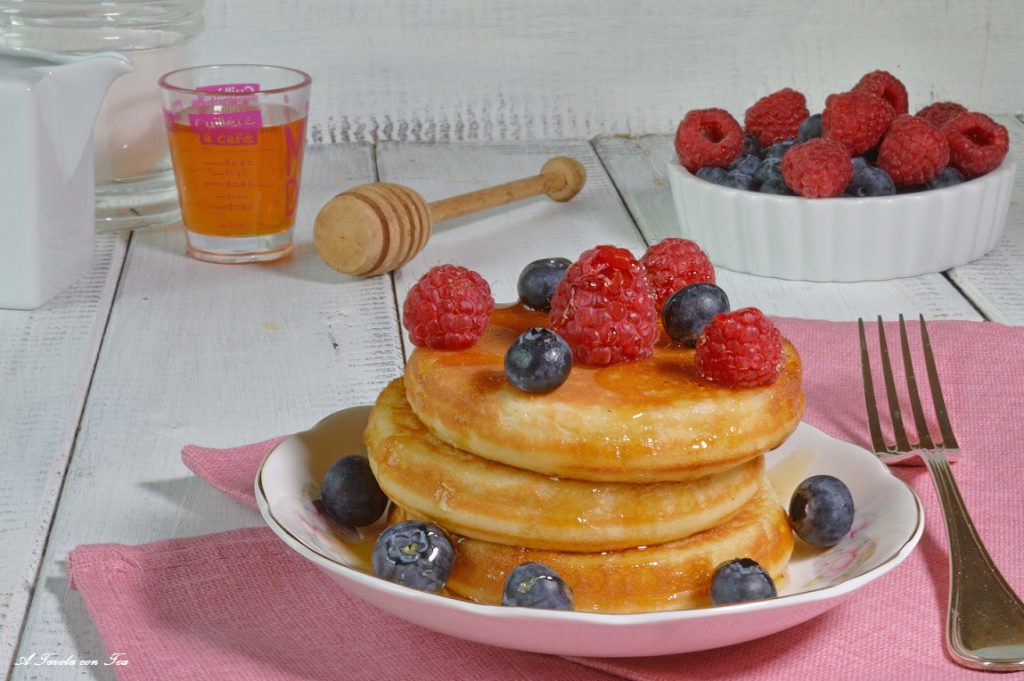
- Cost: Medium
- Preparation time: 10 Minutes
- Cooking time: 3 Minutes
- Portions: 7 PANCAKES
- Cooking methods: Stovetop
- Cuisine: Italian
For 7 pancakes about 3-4 inches in diameter
- 1 2/3 cups rice flour
- 7 fl oz Lactose-free milk (or soy milk)
- 1 egg
- 1/4 cup sugar
- as needed vegetable oil (or rice oil to grease the pan)
- 1 1/4 tsp gluten-free baking powder
Pancake preparation
In a large bowl, beat the whole egg with the sugar using a hand whisk. It’s not necessary to whisk until fluffy, only to combine the ingredients well. Continue mixing and gradually add the milk in a steady stream.
Sift the rice flour and the baking powder directly into the bowl with the liquid mixture. This step is crucial to avoid lumps and to obtain a fluffy pancake. Stir gently, starting from the center and moving outward, until the batter is smooth and homogeneous.
Heat a nonstick skillet over low heat. Lightly oil the bottom with a very small amount of oil and remove the excess with a sheet of paper towel. This ensures even browning. Pour a ladle of batter into the center of the pan.
Cook the pancake over low heat. When you see small bubbles appearing on the surface and the edges begin to pull away, it’s time to flip! Use a spatula and cook for another 1-2 minutes, until golden.
Continue cooking the rest of the batter, stacking the pancakes as they are ready (this helps keep them warm and fluffy). Serve immediately.
Ingredient Notes and Substitutions
Milk:
Lactose-Free (Dairy-Free): To make the recipe completely lactose-free, substitute cow’s milk with a plant-based milk, particularly rice milk, unsweetened almond milk or soy milk. The amount remains 7 fl oz (about 3/4 cup + 2 tbsp).
With Lactose (Softer Option): If you have no lactose issues, whole cow’s milk gives greater softness because of its fat content.
In the refrigerator they keep well for 2-3 days if properly covered with plastic wrap or stored in an airtight container.
Rice Flour:
Rice flour is essential for the light texture of this gluten-free pancake. If not available, you can use a gluten-free flour blend for pastries. Pure buckwheat flour is not recommended as it would make the pancake too dense and strongly flavored.
Baking Powder:
Make sure the baking powder is certified gluten-free (GF), as indicated in the recipe.
Storage
Pancakes are best eaten fresh, while still warm and fluffy. However:
At room temperature: If you have leftover batter, you can store it in the refrigerator, covered with plastic wrap, for up to 24 hours. Stir well before cooking the remaining pancakes.
Cooked: You can store cooked pancakes in an airtight container for 2 days. To reheat and restore fluffiness, use the toaster, microwave or a nonstick skillet for a few seconds.
Freezing: Ideal for freezing: separate pancakes with parchment paper. Thaw in the refrigerator and reheat in a skillet or toaster.
Recipe Alternatives and Variations
Variation Substitution/Addition Amount
Protein Pancakes Replace 50 g of Rice Flour with vanilla protein powder. New amounts will be 150 g Rice Flour + 50 g Protein Powder. Increase the milk to 7.7 fl oz (about 220 ml) if the batter is too thick.
Cocoa Pancakes Add 20 g unsweetened cocoa powder. Reduce the Rice Flour to 180 g.
Aromatic Pancakes Add grated organic lemon or orange zest, 1/2 teaspoon. Add to the batter together with the baking powder.
Pairings and Serving Suggestions
The pancake is the blank canvas of breakfast; it pairs wonderfully with sweet and savory options.
Classic Canadian: Pure maple syrup and fresh raspberries.
Gourmet: Greek yogurt (or coconut yogurt for lactose-free), honey and toasted pecans.
Decadent: Lactose-free chocolate spread, banana slices and chopped hazelnuts.
Origins and History of the Recipe
Although the modern image of the pancake is linked to the United States and Canada (where it became a brunch emblem), its history is millennia-old! The ancient Greeks already prepared an ancestor of the pancake called Tagenias, made of flour, olive oil, honey and curdled milk. In the Middle Ages the recipe spread across Europe with different names, often linked to Shrove Tuesday (like the French Crêpes or the Dutch Pannenkoeken), as a practical way to use up eggs and fat before Lent. The American version, with chemical leavening, appeared only in the 19th century, allowing the pancake to be taller, thicker and fluffier. Our Gluten-Free and Dairy-Free version is the modern evolution that combines history and wellness.
The Secret to Fluffiness (Don’t Overmix!)
A common mistake is to “overmix” the batter. Even though gluten is not developed here, mixing too long incorporates air that collapses during cooking, making the pancake gummy. The advice is to mix only until the flour lumps have just disappeared. Small residual lumps will not compromise the final result, but will help produce a much lighter pancake.
Can I prepare the batter in advance?
Yes, the batter can be prepared in advance and stored in the refrigerator, covered with plastic wrap, for up to 24 hours. Before use, stir gently, but note it may become slightly thicker.
How do I know when to flip the pancake?
The signal is threefold: 1) the edges begin to set and pull away from the bottom of the pan; 2) the batter is no longer shiny but matte; 3) several bubbles form on the surface and pop.
Why did my gluten-free pancakes break when I flipped them?
Most likely the batter was too runny or the heat was too high. Rice flour absorbs less, so low-heat cooking is essential to give the pancake time to set internally before flipping. Also be sure to grease the pan with only a thin film of fat.
