
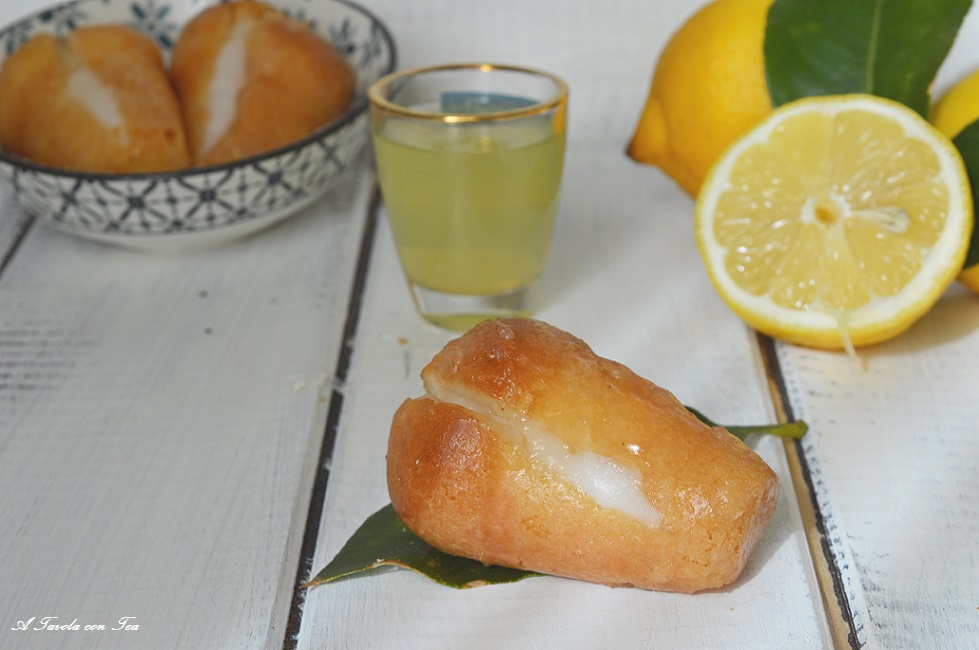
A typical dessert of the Neapolitan tradition, babà is usually soaked in rum. However, not everyone — myself included — likes the decidedly strong taste of that spirit. I decided to try one of the more fragrant, tasty and playful variations of this traditional Neapolitan dessert: limoncello babà. It’s ideal as the finale of a dinner because it pairs a sweet treat with a little digestif.
You won’t believe it, but since I tried this limoncello version it became one of my favorite desserts! They are sweeter, softer and more delicate than the classic ones — truly delicious. I recommend you try them and I’m sure even lovers of traditional rum babà will like them. Don’t be put off by the length of the recipe — I probably spent more time writing it than making them! Just follow the step-by-step instructions; it’s not complicated. I’ll also share all the tricks and you’ll see they turn out perfectly.
- Difficulty: Medium
- Cost: Medium
- Preparation time: 2 Hours 30 Minutes
- Cooking time: 25 Minutes
- Portions: 12 babà of about 2.3 oz each
- Cuisine: Italian
Ingredients
- 2 1/2 cups Manitoba flour
- 6 eggs Eggs (about 6 large)
- 7 tbsp Butter
- 1 tbsp Sugar
- 2 1/2 tsp Warm water
- 2 tsp Fresh brewer's yeast
- 1 tsp Salt
- 2 cups Sugar
- 7 fl oz Limoncello
- 4 1/4 cups Water
- 1 zest (from 1 orange) Orange zest (grated)
- 1 zest (from 1 lemon) Lemon zest (grated)
Preparation
Let’s start by preparing the syrup. Take an untreated orange and an untreated lemon, grate them and obtain the orange and lemon zests. Put a narrow pot with high sides on the stove and pour in the water together with the sugar and the orange and lemon zests. Bring to a boil; you will see that the sugar will have dissolved in the meantime. Turn off the heat, add the limoncello, cover the pot with a lid and let it rest.
Now let’s prepare the babà. Start by making the starter (lievitino). First dissolve the fresh brewer’s yeast in the warm water with a pinch of the sugar from the recipe. In a bowl put the dissolved yeast and 30 g of flour (taken from the total amount) and knead the ingredients until you obtain a soft but firm dough. Form a small ball and let the starter rest in a small bowl covered with plastic wrap until it has doubled in volume (at least 30 minutes).
At this point pour the remaining flour, which should be cold from the fridge (first trick), into the bowl of the mixer (if you don’t have one you can knead by hand) and add the starter prepared earlier.In another bowl put the whole eggs, cold from the fridge (second trick), and beat them with a fork to mix yolks and whites. When well mixed, add them to the flour little by little while the mixer continues to knead.
Once the eggs are fully incorporated, add the remaining sugar and the salt and continue kneading for at least 15–20 minutes. The dough will be ready when it easily pulls away from the sides of the mixer bowl and becomes elastic.
Continuing to knead, add the softened butter piece by piece, making sure the dough has fully absorbed each addition before adding more.
You’ll see the dough become much softer and more elastic (this will take another 15 minutes of work). At this point the dough is ready: form it into a ball and let it rest covered with plastic wrap until it doubles in volume (approximately 2–3 hours).Meanwhile prepare the proper babà molds (they’re sold almost everywhere now; I recommend disposable ones). I used molds approximately 2 3/8 inches high with a diameter of about 1 5/8–2 inches. When the dough has risen, take it and deflate it slightly, then pinch off small pieces with your hands and form many balls weighing about 60–70 grams each; place them into the prepared molds.
Once all the babà are prepared, let them rise one last time until they are nicely puffed and reach the rim of the mold. Now they’re ready to bake.
Bake in a preheated convection oven at 352°F for about 25 minutes, positioning them in the lower part of the oven (another trick); they should not be too browned. Once baked, remove them and let them cool slightly, then take them out of the molds and let them cool on a rack.While they are cooling, heat the syrup to about 104°F and immerse the babà, turning them gently with a ladle—be careful as they can break.
When well soaked, remove them from the syrup with a slotted spoon and place them on a rack again so that some excess liquid drains off.
Here are your babà! Serve them plain or accompanied by whipped cream or pastry cream.
Notes
If you don’t eat them right away, store them in the refrigerator in a well-sealed container. Baked but unsoaked babà keep in the fridge for up to a week or in the freezer for 1 month.
Babà that have already been soaked keep in the refrigerator in an airtight container for 3–4 days, and you can also freeze them: they will keep for 1 month.
As explained in the recipe, for a perfect result it’s important that all ingredients are cold (butter, flour and eggs).
Of course, the classic version of babà involves rum; if you want to try them that way read my rum babà recipe Babà al Rum
