
How to make Neapolitan graffe with the Bimby: secrets for perfect frying
Neapolitan Graffe with the Bimby: The recipe for super-fluffy doughnuts
The main problem when making graffe at home is often the texture: they can turn out too heavy, absorb too much oil when fried, or become hard after a few hours.
Many think that the only way to make them fluffy is to add boiled potatoes, but that can make the dough harder to handle and affect shelf life.
The secret to a patisserie-level result lies in balancing the fats and managing the temperature of the liquids during the mixing phase with the Bimby.
In this version we will use the controlled heat of the Bimby at 99°F to properly activate the yeast and the “Dough” (Spiga) function to develop a strong, elastic gluten network, essential to trap the gases from fermentation.
You will get doughnuts that will puff instantly when fried, creating that sugary crust that encases an airy, vanilla-scented interior.
By following these steps, your graffe will not only look beautiful but will stay tender and fragrant as if just made.
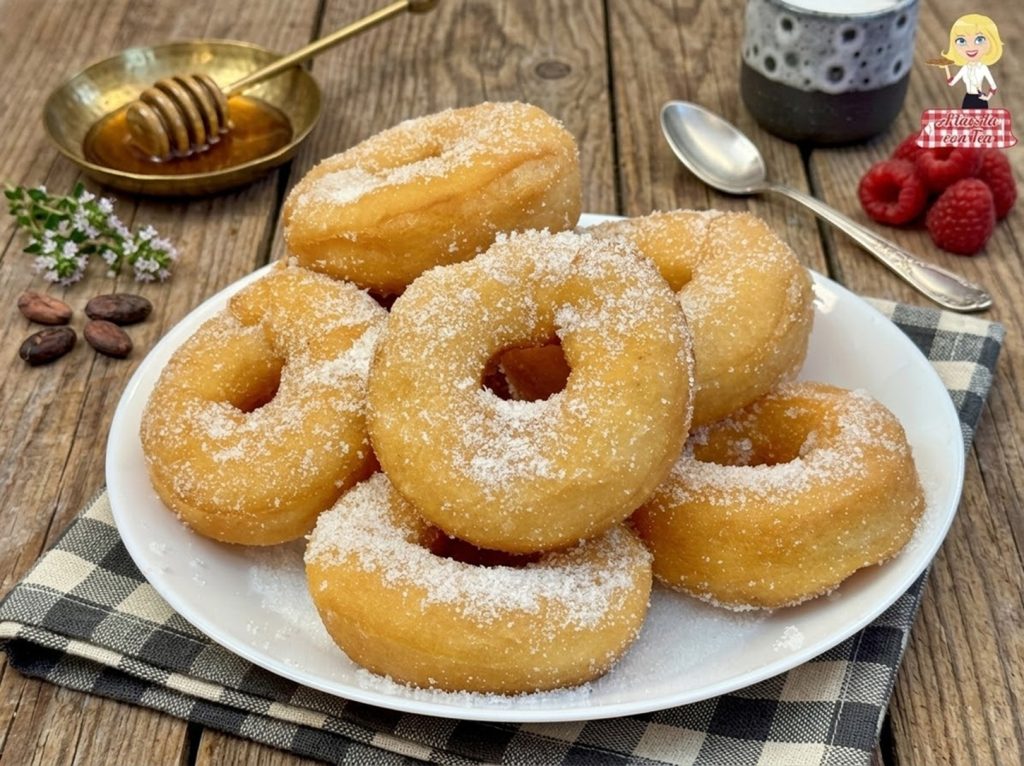
- Rest time: 2 Hours
- Preparation time: 20 Minutes
- Cooking time: 10 Minutes
- Portions: 16 graffe
- Cooking methods: Frying
- Cuisine: Italian
Ingredients for Neapolitan Graffe with Bimby
- 4 cups Manitoba flour (approx. 500 g)
- 1 1/8 cups water
- 1 cube fresh baker's yeast
- 3 1/2 tbsp butter (soft at room temperature)
- 2 1/2 tsp granulated sugar (plus extra for finishing)
- 1 pod vanilla (seeds only)
- 3/4 tsp fine salt
- as needed peanut oil (for frying)
Tools
- Kitchen scale
- Food processor
- Frying pan
- Absorbent paper
How to make Neapolitan graffe with the Bimby
In the Bimby bowl add the water, the crumbled yeast and the 2 1/2 tsp of sugar. Dissolve for 2 min./99°F/speed 1. This step ensures immediate fermentation.
Add the Manitoba flour, the soft butter in pieces, the vanilla seeds and the salt. Knead: 5 min./Dough mode (Spiga). The dough should be smooth and elastic.
Transfer the dough to a floured work surface, briefly shape it by hand and place it in a covered bowl. Let it rise in a warm place for 1 hour (until doubled).
Divide the dough into 16 pieces. Shape into balls, flatten them slightly until you obtain discs about 3 1/8 in and make a hole in the center with your fingers. Place them on a tray lined with parchment paper, cover with a cloth and let rise for another hour.
Heat a generous amount of peanut oil to about 338–347°F. Fry a few graffe at a time until golden on both sides. Drain on absorbent paper and, while still hot, roll them generously in granulated sugar.
Ingredients Notes and Substitutions
Flour: Manitoba is essential for its strength; if you use common all-purpose (00) flour, reduce the water by about 20–30 g.
Yeast: You can replace fresh yeast with 7 g of active dry yeast, but mix it with the flour first.
Aromatics: If you prefer a more citrusy note, add the grated zest of one organic lemon together with the vanilla.
Recipe Variations
Baked version: For a lighter version, bake at 356°F for 15–18 minutes, then brush with a little melted butter and roll in sugar.
Filling: Once cooled, you can cut them in half and fill with pastry cream or chocolate.
Storage
Graffe are best just made. If you have leftovers, store them in an airtight container for a maximum of one day. You can warm them for a few seconds in the microwave to restore softness.
Tips
Oil temperature: If the oil is too cold, the graffe will absorb oil; if it’s too hot, they’ll remain raw inside. Always do the toothpick test!
The sugar: Roll them in sugar while still hot, otherwise the granules won’t stick well.
FAQ (Questions and Answers)
Can I prepare the dough the night before?
Yes, reduce the yeast to 10 g and let it rise in the refrigerator overnight. Bring to room temperature before shaping the doughnuts.
Why did my graffe deflate during frying?
They probably overproved during the second rise. Respect the times and do not leave them in an excessively hot environment.
Which oil is best to use?
Peanut oil is best for frying pastries because of its high smoke point and neutral flavor.
