
Many of us have gone on a diet recently, and my household is no exception. For someone like me who loves to cook, it’s quite a disaster, so trying to make both my dieting family members and myself — who still wants to cook — happy, I’m looking for recipes that, even if light, keep me busy for a while.
Among the light dishes I’ve prepared, one of the most successful for being both a light and tasty meal is octopus carpaccio. Although it may not seem so, it’s easier to make than it appears. Besides being tasty and low-calorie, it’s even dramatic on the plate, which doesn’t hurt when you’re dieting because the eye wants its share at the table, too!
Perfect both as a main course accompanied by a hearty salad or as a light second course, it will win you over with its lightness and flavor.
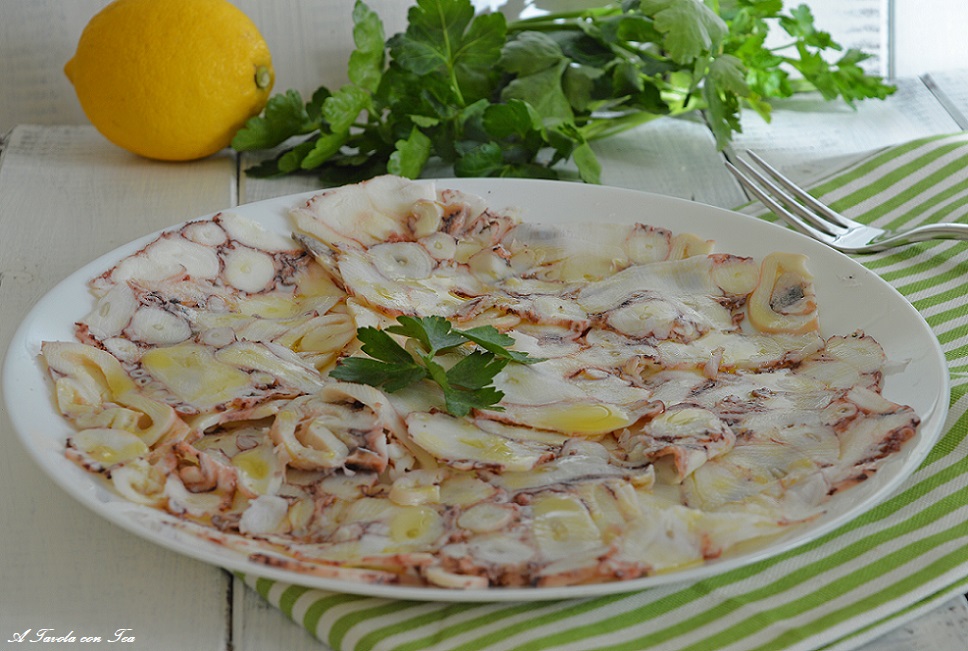
- Difficulty: Easy
- Cost: Medium
- Preparation time: 20 Minutes
- Cooking time: 50 Minutes
- Portions: 6 people
- Cuisine: Italian
Ingredients
- 2.2 lbs Octopus
- 1 Carrot
- 1 Onion
- 1 stalk Celery
- 1 glass White wine
- 1 Juice of 1 lemon
- 1 bunch Parsley
- 1 leaf Bay leaf
- 2 tbsps Extra virgin olive oil
- to taste Salt
- to taste Pepper
Preparation
First, a few notes about the octopus: if you buy it fresh, I recommend having the fishmonger clean it for you; if, like me, you buy it frozen, it is usually already cleaned. If you must clean it yourself, see the advice section of this recipe. In general, octopus is one of those ingredients that is paradoxically better purchased frozen than fresh because the freezing process breaks the fibers and makes the meat more tender.
With that said, let’s move on to the recipe. Start by cleaning the carrot, peeling the onion, and washing the celery stalk; then put all the vegetables, the bay leaf and the wine into a large pot with plenty of water.
As soon as the water starts to boil, plunge in the octopus (if frozen you can put it in still frozen) and cook over medium heat for about 50 minutes. Check with the tines of a fork that it is cooked: it should offer no resistance and be tender. At this point turn off the heat and let it cool in the cooking water.Prepare a plastic bottle (I use 1‑liter bottles — about 34 fl oz) and cut off the neck with a pair of scissors. Drain the octopus from the cooking water and insert it into the bottle. Press it well and place a weight on top — I used lead weights from an old scale, but a glass jar full of jam works perfectly; the important thing is that it exerts pressure and keeps the octopus compressed.
Leave it in the refrigerator overnight.After the resting time, remove the weight and cut the plastic bottle with scissors to extract the octopus, taking care not to damage it. Once removed, slice it thinly, preferably with a slicer. Take a serving plate, arrange some salad on the bottom and lay the octopus slices on top. Separately prepare an emulsion of lemon juice, olive oil, chopped parsley, salt and pepper. Dress the octopus with the prepared emulsion and serve.
Notes
To clean the octopus, place it on a cutting board and cut the head sack at the level of the eyes to remove them. Then remove the beak by cutting around the mouth with a small knife and digging until the beak comes out. Fresh octopus can be a bit tough after cooking; to tenderize it I recommend pounding it with a meat mallet for at least 5 minutes: it’s great stress relief and the octopus will be more tender. Rinse it under cold running water and remove the entrails from the sack. Now that the octopus is clean, you can proceed to cook it.
