
Original Emilian Fried Gnocchi: The Perfect Recipe, Soft and Puffy
If you’re here, you already know that Fried Gnocchi is not just a simple fried dough: it’s a true culinary institution of Emilia, a hymn to joy.
For me, the real magic of Fried Gnocchi has a name and surname: my Emilian friend’s grandmother. I literally forced her to take me to her house to see exactly how she made it.
From that day, I understood that forgetting greasy or heavy imitations is possible.
Fried Gnocchi, or “Fried Crescentina,” is a masterpiece of simplicity, but it hides its tricks.
The most common mistake is not giving enough importance to letting it rest, resulting in a heavy dough that absorbs too much oil.
The secret I learned in that Emilian kitchen lies in two fundamental steps:
The Lard and the Dough: The original ingredient, lard, makes the difference, but especially you must ensure it is incorporated only at the end of the dough, little by little, to achieve a smooth gluten structure.
The Long Wait: You must respect the slow and careful leavening and, if you want a truly light and digestible result, the maturation in the refrigerator (12-48 hours).
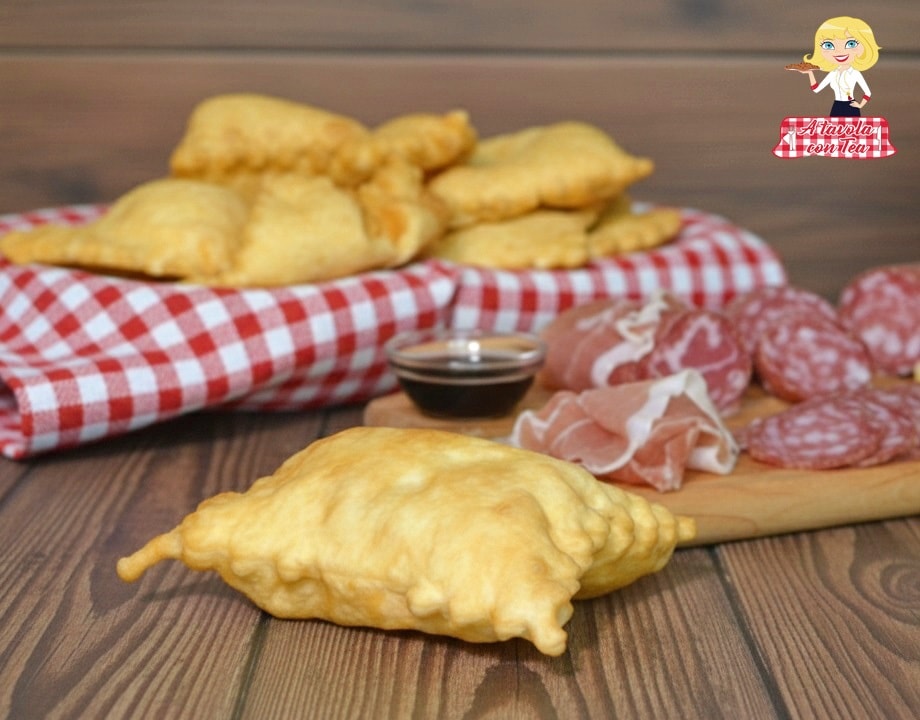
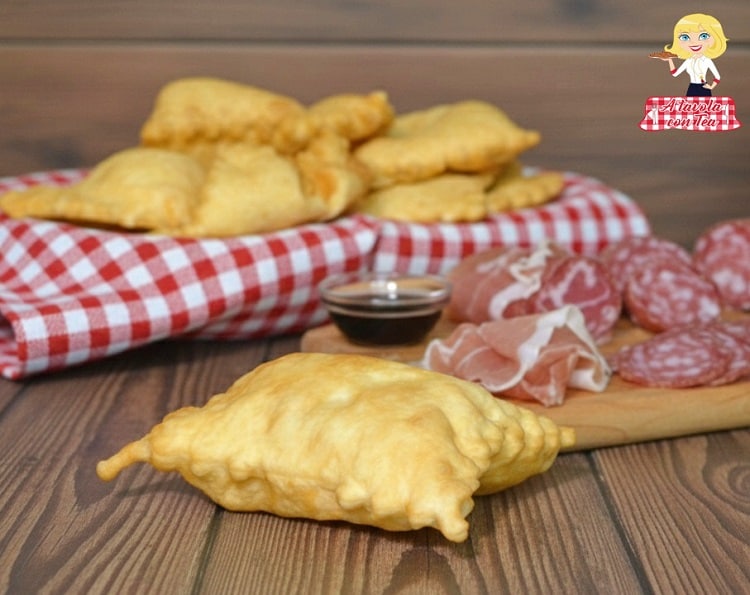
The goal? A final result that does not absorb oil, with those golden bubbles, crunchy on the outside and hollow on the inside.
I assure you that the satisfaction of seeing those pasta rhombuses magically inflate is priceless. This recipe is the faithful and perfected method, accessible to everyone.
Prepare a generous board of typical cured meats and fresh cheeses, and mentally thank the grandmother: get ready, because after tasting, all your guests will want her phone number to ask her for more recipes!
- Difficulty: Easy
- Cost: Very affordable
- Rest time: 3 Hours
- Preparation time: 10 Minutes
- Cooking time: 30 Minutes
- Portions: ABOUT 50 PIECES
- Cuisine: Italian
Original Emilian Fried Gnocchi Ingredients
- 4 cups all-purpose flour (or 2 cups Manitoba + 1.5 cups all-purpose flour)
- 1 cup water (approximately)
- 1 teaspoon instant dry yeast (or 8 g fresh)
- 2.5 oz lard (or butter/olive oil – see Notes)
- 1 teaspoon sugar
- 0.42 oz salt
- 1 quart vegetable oil (for frying or Lard)
Tools
- Bowl
- Cling film
- Rolling pin
- Frying pan
Step-by-Step Procedure
Start by taking 60 g of flour from the total and mixing it in a bowl with the dry yeast (if using fresh, dissolve it first in 50-60 g of warm water) and the sugar.
Add 50-60 g of water (taken from the total of 200 g) and mix well until you get a thick and homogeneous batter.
Cover with cling film and let it rise at room temperature (if it’s hot) or in a turned-off oven with the light on (if it’s cold). The dough should double in volume and show several bubbles on the surface. It will take about 1 hour.Once the batter has risen, add the remaining flour and water.
Knead vigorously (by hand or with a stand mixer) until all the liquids are completely absorbed. If the dough turns out too stiff and there are still flour residues, add a tablespoon of water at a time to compact.
Incorporate the softened lard (or chosen fat) one piece at a time. It is essential that each piece is completely absorbed before adding the next.
The dough should be smooth and very soft. Only at the end, add the salt and knead again to absorb evenly.Form a ball, make a cross cut on the top, and cover with cling film.
Let it rise in a warm place (turned-off oven with the light on) for about 2 hours, or until the dough has tripled in volume.
For a more digestible and aromatic Fried Gnocchi (maturation): After the two hours, turn the dough out, knead lightly into a ball, and let it mature in the fridge (in a covered bowl) for 12-48 hours. Before using it, bring it back to room temperature for 1-2 hours.Dust the work surface with a sprinkle of flour and roll out the dough with a rolling pin, giving it a rectangular shape. The ideal thickness is about 1/8 inch.
Cut strips about 2 inches wide and then cut rhombuses from them by slicing diagonally, with a length of about 2.5 inches.Heat plenty of high smoke point vegetable oil (or lard) in a high-sided saucepan. The ideal temperature is 350 °F.
The secret: Maintain a constant temperature. If you don’t have a thermometer, know that:
1 – Too hot: the gnocchi darkens immediately, move the saucepan off the heat to cool it down a bit.
2 – Too cold: the gnocchi absorbs oil and will be heavy, immediately increase the flame.
Immerse 1 or 2 pieces at a time. Wait for the gnocchi to puff up and turn it. It will be ready in about 1 minute.
Drain it quickly on absorbent paper and serve immediately, very hot!
Notes on Ingredients and Substitutions
The traditional Emilian Fried Gnocchi requires few, but precise ingredients.
Lard: It is the ingredient that gives the gnocchi its characteristic softness inside and crispness. If you substitute it, the result will still be good, but not identical to the original.
Alternatives to Lard:
Butter: Use 2.5 oz. It provides a good flavor and acceptable texture.
Extra Virgin Olive Oil (EVO oil): Use 2-3 tablespoons (oil weighs less than lard). It will make the dough more “Mediterranean” and a bit less fluffy.
The Flour: The combination of all-purpose flour (medium strength) and Manitoba (strong flour, rich in gluten) ensures the structure needed for bubbles when frying. If you use only all-purpose flour, you may need to slightly reduce the water.
Storage
Leavened Dough: The dough ready for rolling can be stored in the fridge, well covered with cling film, for 24-48 hours (maturation). Remember to let it come to room temperature for at least 1-2 hours before rolling it out.
Cooked Fried Gnocchi: Fried Gnocchi should be eaten immediately after frying, still very hot. Once cold, it loses its crunchiness and lightness. It is not advisable to store it.
Recipe Alternatives and Variants
Vegetarian Fried Gnocchi (Without Lard): Replace the 2.5 oz of lard with 2.5 oz of melted and cooled butter, or 2-3 tablespoons of EVO oil.
Milk Fried Gnocchi: Replace about half of the water (1/2 cup) with 1/2 cup of warm whole milk. This will make the dough even softer and the flavor slightly sweeter, perfect for sweet pairings (e.g., with Nutella).
Whole Wheat Version: Replace 150 g of all-purpose flour with 150 g of whole wheat flour. It will require more water (add gradually) and may rise more slowly. The result will be more rustic.
Perfect Use and Pairings
Fried Gnocchi is the emblem of comfort food and does not allow discussions about its prime pairing:
Emilian Platter: Serve it very hot with typical Emilia-Romagna cured meats: Parma or Modena Prosciutto Crudo, Felino Salami, Culatello, and Bologna Mortadella cut into cubes.
Cheeses: It pairs perfectly with fresh or creamy cheeses like Squacquerone di Romagna DOP, Robiola, or simply a good Parmigiano Reggiano DOP.
Sweet: A delicious variant is to pair it with spreadable creams, like Nutella or a fruit jam.
Origins and History of the Recipe
Fried Gnocchi has its roots in the peasant tradition of Emilia-Romagna, particularly in the provinces of Modena and Reggio Emilia. Born from the need to transform simple ingredients such as flour, water, and animal fats (lard was always available after pig slaughtering) into a substantial meal. Originally it was fried in the lard itself, giving it an even more intense flavor. It was the poor food, ideal for accompanying the prized cured meats of the area and making them a complete and filling dish. Even today, it’s a ritual that celebrates the tradition and generosity of Emilian cuisine, a must at every festival and tavern.
The Secret for “Bubble” Gnocchi: A Matter of Forces!
Have you ever wondered why a perfect Fried Gnocchi inflates so much as to create an empty pocket inside? The secret is not magic, but chemistry! During leavening, the gases produced (carbon dioxide) are trapped in the strong gluten mesh of the dough (reinforced by the flour mix). When the dough enters the hot oil, the internal moisture instantly turns into steam and the gluten network, which has become elastic due to the heat, allows this steam to expand quickly. The result? That wonderful soft bubble just waiting to be filled with a slice of Prosciutto!
FAQ (Questions and Answers)
1. Why doesn’t my Fried Gnocchi inflate?
Answer: The main reasons are two: A) The oil temperature is too low (below 340°F), so the dough cooks slowly and absorbs fat without inflating. B) The leavening was insufficient or the dough was not rolled out thin enough (it should be about 1/8 inch).
2. Can I use only all-purpose flour?
Answer: Yes, it is possible, but all-purpose flour has lower strength. I recommend using flour with a strength (W) of at least 260. Otherwise, add a little extra pinch of yeast and make sure not to overdo it with water to avoid making the dough too weak.
3. Is it better to fry with oil or lard?
Answer: The original Emilian recipe calls for frying in lard, which provides a more authentic taste and a drier fry (it has a very high smoke point). If you prefer, peanut oil or high oleic sunflower oil are excellent alternatives. Choose an oil with a high smoke point!
