
Modena Bensone: original recipe and trick for a soft dough even after baking
If you also ended up with a traditional dessert, seemingly simple like the Modena Bensone, that turned out too dry or dense, don’t worry, it happened to me too but now I know how to fix it.
This is a wonderful pantry dessert that relies entirely on its texture: it should be crumbly, yes, but also soft, otherwise it risks feeling like a hard biscuit.
I worked for a long time on this recipe and discovered that the secret to a Bensone that stays soft for days is not just the ingredient proportions, but how we combine them.
It’s not a dough that should be worked too much, otherwise, it develops a gluten network that makes it hard when cooked.
Today, I will explain two important tricks.
The first is the temperature of the ingredients: the butter should be soft (like an ointment), but not melted. This allows you to work it quickly and accurately, achieving that perfect crumble we are looking for.
The second is the right rest in the refrigerator, which stabilizes the dough and allows you to roll it out without adding too much flour.
I arrived at this final recipe after many attempts and, I confess, even some Bensone with jam that leaked onto the bottom of the oven.
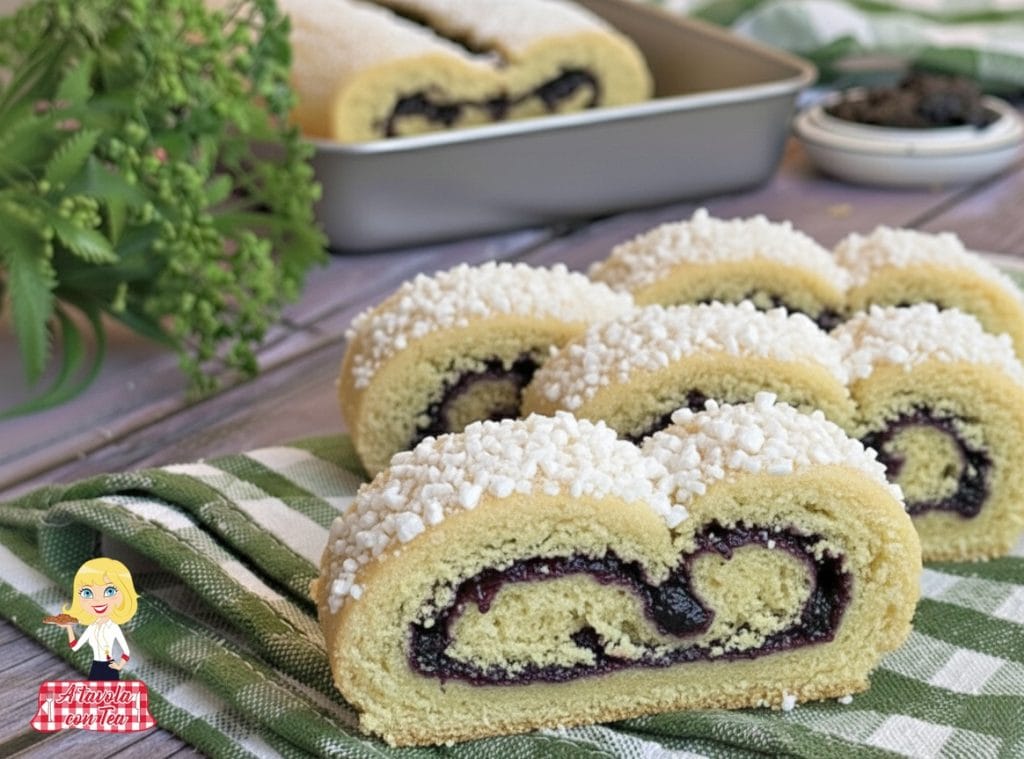
But now I have a method that always works and guarantees you a soft and perfectly sealed dessert, fragrant with lemon and vanilla.
- Difficulty: Very Easy
- Cost: Affordable
- Rest time: 40 Minutes
- Preparation time: 20 Minutes
- Portions: 8
- Cooking methods: Oven
- Cuisine: Italian
Ingredients for Modena Bensone (8-10 people)
- 4 cups all-purpose flour
- 3/4 cup sugar
- 7 tbsps butter
- 2 eggs (+ 1 yolk)
- 1 packet baking powder
- 1 lemon zest
- 1/2 tsp vanilla extract
- 3 tbsps milk
- 1 pinch salt
- 5.8 oz blueberry jam
- as needed sugar granules
Tools
- Food Scale
- Stand Mixer
- Parchment Paper
- Baking Tray
Procedure for Modena Bensone with Jam
Combine the Dry Ingredients: In the bowl of the stand mixer (or on the work surface), quickly mix the sifted flour with the sugar, baking powder, and a pinch of salt.
Add the Fats: Incorporate the soft butter in pieces. Work with your hands or the mixer paddle until you get a “sandy” mixture (like crumble).
Add the Wet Ingredients: Add the 2 whole eggs and the yolk, lemon zest, vanilla, and 3 tablespoons of milk. Work just until you get a homogeneous dough. If it’s too hard, add the last tablespoon of milk.
Rest: Wrap the dough in plastic wrap and let it rest in the refrigerator for half an hour. This stabilizes the butter and makes the dough easier to roll out.Roll Out the Dough: Briefly work the rested dough to warm it slightly. Roll it out on a sheet of parchment paper, forming a rectangle about 10 – 12 inches.
Filling: Spread the blueberry jam in the center, leaving a 0.5-1 inch border all around.
The Three-Fold Method (To Seal): Using the parchment paper, fold one long side of the dough over the jam, then fold the other side over, as if closing a package. The seam should go underneath. This way, the top of the dessert will be smooth.Prepare the Surface: Transfer the Bensone to the baking tray. Make a slight cut along the center for almost the entire length (this aids in even baking and shows the filling).
Brush and Decorate: Beat the remaining egg lightly. Brush the surface evenly and sprinkle with sugar granules.
Bake: Bake in a preheated static oven at 350°F for about 40 minutes. It should be golden brown.
Cool: Remove from oven, let cool completely, and serve.
Notes on Ingredients and Substitutions
Butter: It should be at room temperature and worked briefly. If it’s too cold, the dough will be difficult to handle. If melted, it will make the dough too sticky.
Milk: Use it sparingly. Add the initial 3 tablespoons and the optional fourth only if the dough struggles to combine. Too much milk will make it gummy.
Jam: Traditionally, plum or cherry jam is used, but blueberries create a perfect contrast.
Storage
The Bensone keeps perfectly for 4-5 days at room temperature, covered with a glass dome or in an airtight container.
My tip: If stored for too long, a brief pass in a fan oven at 212°F for 5 minutes will make it fragrant again like freshly baked.
Recipe Alternatives and Variants
Cocoa Bensone: Replace 1/4 cup of flour with 1/4 cup of unsweetened cocoa for a dark dough that pairs well with citrus fillings (e.g., orange jam).
Spiced Bensone: Add a pinch of cinnamon and nutmeg to the dough for a more autumnal and aromatic version.
Recommended Uses and Pairings
Ideal Time: Great for breakfast, but its true calling is accompanying afternoon coffee or tea.
Traditional Pairing: In Emilia, it’s often served with a glass of dry Lambrusco, which by contrast enhances the sweetness of the jam.
Origins and History of the Recipe
The Bensone is the quintessential traditional Modenese and Emilian baked dessert. It originated as a simple and ritual dessert, often prepared for religious occasions, and its loaf shape lends well to sharing. Originally, the dough had no fillings, just a sprinkle of sugar, while the jam variation developed over time. It is a dessert that tells the story of homemade and rural cuisine.
Why Does Resting in the Fridge Make a Difference?
The half-hour rest in the refrigerator is not a step to skip. When working with dough that includes butter, the heat from our hands tends to melt the fat. Placing it in the fridge allows the butter to solidify, making the dough more stable and less sticky. This means that when you roll it out, you won’t need to add more flour, thus avoiding unnecessary hardening of the dough. The result: a Bensone that’s easier to handle and softer after baking.
FAQ (Questions and Answers)
1. My Bensone came out too hard/dry. Where did I go wrong?
The main reasons are two: 1) Too Much Flour during rolling (added to handle a dough that’s too warm/sticky). 2) Overworking the dough with the butter, making it too elastic. Always work the minimum necessary.
2. The jam leaked out during baking. How can I prevent this?
The key is the Three-Fold Method (step 6): make sure the edges are well sealed and that the final seam is underneath the dessert, in contact with the parchment paper. The central cut should be light and not reach the edges.
3. Can I substitute butter with oil?
You can replace the 100 g of butter with approximately 80 ml of vegetable oil (sunflower or rice). Keep in mind the texture will be different: more like a cake and less crumbly. If you want the classic crumble, use butter.
