
Pasta and Chickpeas Tuscan-Style: The Comfort Food That Smells Like Home
Dear lovers of tradition and the good things from the past, there is a dish that tastes like home, family and quiet Sundays: pasta and chickpeas.
Today I take you to beautiful Tuscany, land of straightforward and generous flavors, to reveal the recipe for Pasta and Chickpeas Tuscan-Style.
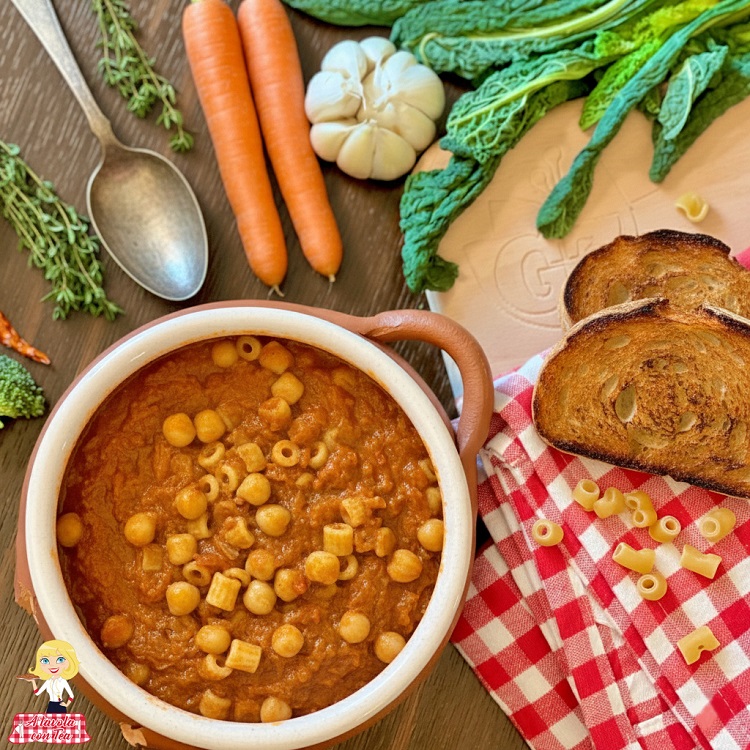
Forget watery, sad soups — this is a real bowl of comfort! A rustic, irresistible one-pot dish where the chickpeas become incredibly creamy thanks to a small trick I will share with you, and they pair perfectly with the sweet taste of tomato and the aromatic note of rosemary.
The beauty of this dish lies in its simplicity: few ingredients, lots of patience and the result is a masterpiece. It’s almost a self-cooking dish, an ode to “slow” cooking, the kind that gives us the deepest and most enveloping flavors.
Perfect for the first cold evenings, for a recharging lunch or when you simply need a hug. Its dense, velvety texture wraps you from the first spoonful and the aroma that fills the house will make you feel safe right away.
Ready to discover all the secrets for an unforgettable pasta and chickpeas? Let’s get to work!
- Difficulty: Easy
- Cost: Budget-friendly
- Preparation time: 30 Minutes
- Cooking time: 2 Hours
- Portions: 4
- Cooking methods: Stove
- Cuisine: Italian
Ingredients for 4 people
- 1 cup dried chickpeas
- 5 oz pasta (type: ditalini)
- 1 cup canned peeled tomatoes
- 1 clove garlic
- 1 sprig rosemary
- to taste extra virgin olive oil
- to taste salt
- 1 pinch black pepper
Tools
- Kitchen scale
- Bowl
- Pot
- Blender
- Skillet
Procedure PASTA AND CHICKPEAS TUSCAN-STYLE
First of all, soak the chickpeas in plenty of warm water for about 12 hours. After this time, drain and rinse them well. Transfer them to a large pot with about 2 liters of lightly salted water. Cover with a lid and cook over low heat for about 3 hours, or until they become tender. After about an hour and a half of cooking, take 3 ladles of chickpeas, blend them with some of their cooking liquid and return the resulting purée to the pot. This step will make the soup incredibly creamy.
In a large nonstick skillet, heat a drizzle of oil with the rosemary and the slightly crushed garlic clove. Chop the peeled tomatoes into pieces and add them to the skillet. Cook for about ten minutes, until the sauce is flavorful. Remove the garlic and pour the sauce into the pot with the chickpeas. Add salt and pepper and stir well.
Check the cooking time of the pasta you chose. Add it to the pot with the chickpeas following the time indicated on the package. When cooked, turn off the heat. Plate the hot Pasta and Chickpeas, finishing each portion with a drizzle of extra virgin olive oil. Serve immediately and enjoy your dish!
Notes on Ingredients and Smart Substitutions
Chickpeas: Soaking for 12 hours is essential for dried chickpeas. For extra flavor, you can add a couple of bay leaves to the cooking water. For a quicker version, use canned chickpeas: in that case, you won’t need to soak them and cooking time will be greatly reduced (you’ll only need to heat them together with the sauce).
Pasta: Ditalini are classic, but you can use any small short pasta shapes such as tubetti, small tubes or small shells.
Tomato: For an even more intense flavor, you can use tomato passata or fresh cherry tomatoes in summer.
Garlic and Rosemary: They are essential for flavor. If you don’t like garlic, you can remove it right after it has flavored the oil, before adding the tomato.
Storage: Even Better Reheated!
Pasta and chickpeas is one of those recipes that gets better the next day. You can store it in the refrigerator in an airtight container for 2-3 days. Before reheating, add a little broth or water to bring back creaminess, since the pasta will tend to absorb liquid. You can also freeze it in single portions and it will keep for about 2-3 months.
Creative Alternatives and Variations: Change the Flavor with a Few Tweaks
1 – Spicy Version: Add a pinch of chili flakes to the soffritto for an extra lively kick.
2 – Pancetta Version: Brown about 3.5 oz of diced pancetta together with the oil and garlic for a more savory and enveloping flavor.
3 – Veggie Version: For an even richer dish, add half a carrot and one stalk of celery to the soffritto, cut into very small dice.
Usage and Pairings: A Dish That Fits Everything
One-Pot Meal: Serve the pasta and chickpeas hot with a drizzle of raw olive oil and toasted bread. It’s a complete and satisfying meal.
Starter: In smaller portions, it can be served as an appetizer in a Tuscan-themed dinner.
Origins and History of the Recipe: A Journey into Peasant Past
Pasta and chickpeas is a pillar of peasant, humble cuisine, spread throughout Italy with endless regional variations. Its history is rooted in the need to create a nourishing and substantial dish with simple, easy-to-find ingredients. In Tuscany, in particular, the recipe was perfected with the addition of rosemary, a typical regional herb, and with the use of tomato, which enriched both flavor and color.
The use of blending part of the chickpeas is not just a modern trick, but an ancient wisdom to make the soup creamy and bind all the ingredients, turning a simple legume into a refined and tasty dish. It’s a recipe that tells the story of a people tied to their land, able to create unforgettable flavors with so little.
Why this soup is close to my heart
There are dishes that tell a story, and pasta and chickpeas is one of them. For me, this dish means warm evenings after a slightly gray day. It’s the aroma that welcomes you as soon as you open the door, that taste that makes you feel safe. Preparing this soup is not just cooking, it’s a ritual, a way to take care of yourself and the people you love. Every time I make it, I feel like I’m coming home, one meal at a time.
My secret for a creamy soup
The trick to getting an incredibly creamy pasta and chickpeas soup, without using thickeners or odd tricks, is all in the cooking and patience. My secret is to blend a small portion of the chickpeas directly with their cooking liquid. This creates a natural purée that, when returned to the pot, wraps and binds all the ingredients, giving a velvety texture and an even more intense flavor. Try it and see!
FAQ (Questions and Answers)
1. Can I use canned chickpeas?
Yes, for a much faster version you can use canned chickpeas. In this case, you should still blend a portion and add it to the tomato sauce. Cooking will be much shorter, just enough time to flavor everything and cook the pasta.
2. Can I use a different type of pasta?
Certainly. Ditalini are traditional, but the recipe adapts very well to any short pasta shape, such as tubetti, small tubes or small shells. The important thing is that they pair well with the soup.
3. If the soup turns out too thick, what can I do?
If the soup is too thick, you can simply add some hot vegetable broth or hot water until you reach your preferred consistency. Be careful to adjust salt and pepper.
