
PASTRY CREAM perfect for filling pastries or making cakes
Pastry cream is the base for countless pastry preparations. It can be the perfect filling for cream puffs, the filling for puff pastry or sponge cakes. Don’t forget that it’s also great served on its own, perhaps accompanied by crunchy cookies.
It’s very easy to make as long as you follow a few simple guidelines to avoid the ever-looming “culinary disaster.” Who hasn’t experienced cream “breaking”—that is, turning into an unappealing lumpy mass, loose and unrecoverable despite every attempt to fix it, ending up having to discard it?
To prevent problems like this (or others), nothing difficult or impossible is required. Just follow a few simple tips and next time your pastry cream will be as good and perfect as that of the best pastry chef.
It’s a very versatile preparation. By slightly changing the amounts of some ingredients you can obtain different consistencies appropriate to the use you have in mind!
If you want to omit the heavy cream, for example, which makes the cream richer and silkier, simply replace it with the same amount of milk.
Instead of a vanilla bean, you can flavor the cream with untreated orange or lemon zest.
To thicken it more, use more cornstarch, or reduce the amount if you prefer to enjoy it by the spoonful.
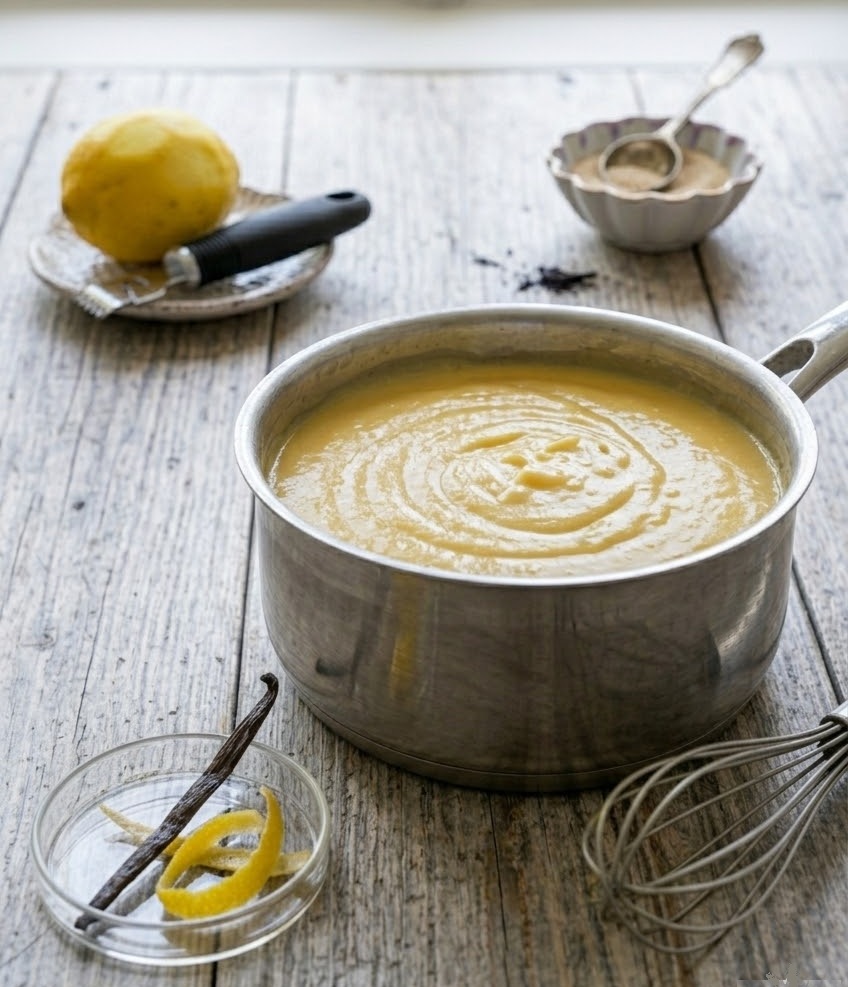
- Difficulty: Very easy
- Cost: Low cost
- Preparation time: 15 Minutes
- Cooking time: 10 Minutes
- Portions: 4 servings
- Cooking methods: Stovetop
- Cuisine: Italian
- Energy 137.56 (Kcal)
- Carbohydrates 18.86 (g) of which sugars 15.16 (g)
- Proteins 2.73 (g)
- Fat 6.01 (g) of which saturated 3.35 (g)of which unsaturated 2.66 (g)
- Fibers 0.04 (g)
- Sodium 4.11 (mg)
Indicative values for a portion of 50 g processed in an automated way starting from the nutritional information available on the CREA* and FoodData Central** databases. It is not food and / or nutritional advice.
* CREATES Food and Nutrition Research Center: https://www.crea.gov.it/alimenti-e-nutrizione https://www.alimentinutrizione.it ** U.S. Department of Agriculture, Agricultural Research Service. FoodData Central, 2019. https://fdc.nal.usda.gov
Ingredients
- 2 1/8 cups whole milk
- 3/4 cup granulated sugar
- 3 tbsp cornstarch
- 5-6 egg yolks egg yolks (about 5-6 yolks)
- 1 pod vanilla bean
- 1 lemon zest
- 3 tbsp rice starch (only if you want a thicker cream; alternatively replace with cornstarch)
- 2 tbsp butter (optional see note below)
Tools
- Saucepan
DIRECTIONS
First, split the vanilla bean lengthwise and scrape out the seeds (set them aside) from the inside with the blade of a knife.
Place the milk in a saucepan and bring it to a boil with the lemon zest and the vanilla bean seeds infused in it. Meanwhile, whisk the egg yolks and sugar in a bowl with a hand whisk until slightly frothy. Then add the cornstarch (and the rice starch if you decided to use it) to the yolk and sugar mixture and whisk until smooth.
Once the milk has come to a boil, strain it and pour it into the bowl containing the eggs, sugar and cornstarch, stirring well until everything is dissolved. Pour the mixture back into the saucepan and return it to medium heat, stirring continuously with a whisk to prevent lumps or sticking to the bottom. As soon as the mixture starts to form the first bubbles, remove the pastry cream from the heat and pour it into a plate or shallow baking dish.
When the pastry cream has cooled slightly, add the butter cut into cubes and stir until it is completely melted and incorporated into the cream. Cover the cream with plastic wrap directly on the surface to prevent a skin from forming. Let the cream cool completely and then refrigerate for at least 2 hours before using. At the time of use, pour it into a bowl and whisk vigorously with a hand whisk to make it soft and creamy again.
-
STORAGE
You can store pastry cream in the refrigerator for 2-3 days covered with plastic wrap, or you can freeze it in which case it will keep for a month.
SECRETS FOR A PERFECT PASTRY CREAM
1 – When you separate the yolks from the whites, be very careful that part of the whites does not end up in the bowl with the yolks, otherwise they will be harder to whip.
2 – As soon as you add the sugar to the yolks, start whisking immediately; this is very important for the success of your cream. Sugar, in contact with the yolks, tends to absorb their watery part, crystallize the proteins and make the mixture grainy.
3 – The order in which the ingredients are mixed is not casual, so respecting it is important for the success of the recipe.
4 – Using starch instead of flour does not negatively affect the cream’s yield; on the contrary, besides making it gluten-free, it avoids the unpleasant flour aftertaste that can sometimes be noticeable and lumps are less likely to form.
5 – You can skip adding the butter and omit the last step, although I recommend it to obtain a richer and tastier pastry cream.
6 – When you put the mixture back on the heat, do not use the same saucepan in which you boiled the milk because it will have a milk residue on the bottom and the cream can easily stick or burn.
7 – If by mistake you didn’t whisk the pastry cream well during cooking and lumps have formed, don’t worry—you can still fix it. Pass the hot pastry cream through a fine-mesh sieve, pressing and stirring with a spoon to force it through the mesh; you’ll see how smooth it becomes.
