
Creamy Porcini Mushroom Risotto: The Classic Recipe to Showcase the King of the Table
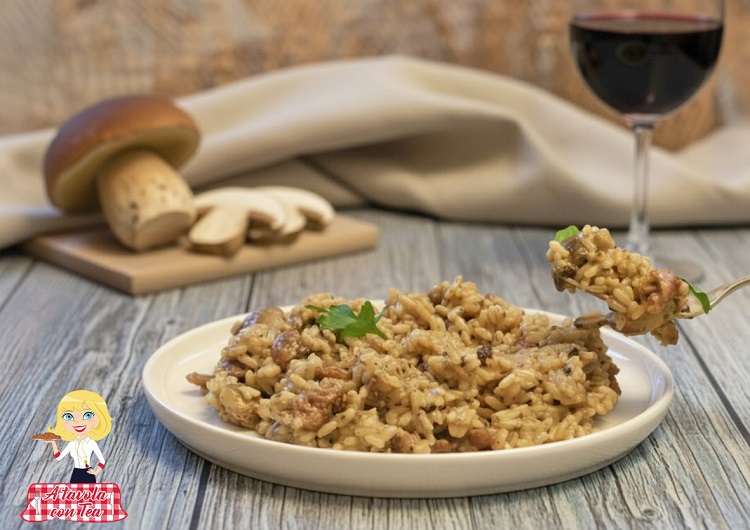
If there’s a dish that, more than any other, smells like home, the woods and autumnal magic, it’s Porcini Mushroom Risotto.
You don’t have to be a starred chef to bring it to the table, but I assure you that, following my advice, your result will be worthy of a restaurant! This risotto is a true hymn to the porcini mushroom, an ingredient that, with its unmistakable earthy aroma, transforms a simple grain of rice into a gourmet experience.
The secret to a perfect risotto lies in two key steps I must share with you: toasting the rice and the final finishing (mantecatura).
Toasting seals the starch on the outside of the grain, ensuring it stays al dente, while adding butter and Parmesan off the heat creates that enveloping creaminess — the so-called “wave” — that makes the real difference.
In this recipe we will use both fresh and dried porcini mushrooms: the perfect pairing to intensify the aroma and depth of flavor. Forget bland, watery risottos!
Get ready for a creamy, fragrant, comforting risotto in every spoonful. Are you ready?
Grab your favorite Carnaroli rice and let’s welcome autumn!
- Difficulty: Easy
- Cost: Medium
- Preparation time: 15 Minutes
- Cooking time: 25 Minutes
- Portions: 4
- Cooking methods: Stovetop
- Cuisine: Italian
Ingredients PORCINI MUSHROOM RISOTTO
- 1 3/4 cup Carnaroli rice
- 9 oz fresh porcini mushrooms (fresh)
- 2 oz porcini mushrooms (dried)
- 1/2 white onion (or shallot)
- 1/4 cup dry white wine
- 1 vegetable bouillon cube
- 6 1/3 cup water
- 1/2 cup grated Parmesan
- to taste chopped parsley
- to taste extra virgin olive oil
- 1 tbsp butter (for finishing (cold))
Tools
- Kitchen scale
- Small bowl
- Sieve
- Pot
- Saucepan
Procedure PORCINI MUSHROOM RISOTTO
Soak the dried porcini in a bowl with hot water for about 20 minutes. Drain them well and roughly chop. Reserve the soaking liquid by filtering it: it’s full of flavor and can be used in addition to the broth. Meanwhile, heat about 6 1/3 cups of water and dissolve the vegetable bouillon cube in it (or use hot vegetable broth). Clean the fresh porcini by gently wiping them with a damp cloth or paper towel. Do not wash them! Slice them. Finely chop the onion.
In a large pot (ideally copper or with a thick base), pour a generous drizzle of extra virgin olive oil and sauté the chopped onion for a few minutes over medium-high heat until translucent. Add the Carnaroli rice and toast it for 2–3 minutes, stirring constantly, until the grains are translucent around the edges. Deglaze with 1/4 cup of dry white wine and let the alcohol evaporate completely over high heat.
Lower the heat to medium and add the rehydrated dried porcini and the fresh sliced porcini. Stir for a couple of minutes. Add a generous ladle of hot vegetable broth and stir. Continue cooking for about 15–18 minutes, adding the broth little by little, only as the previous addition has been absorbed. The rice should simmer gently.
When the rice is cooked (soft but still slightly firm in the center), turn off the heat. Add the cold tablespoon of butter and the grated Parmesan. Also stir in the chopped fresh parsley. Vigorously finish (mantecare) by stirring the risotto with wide movements to incorporate air and create the famous creamy “wave”.
Cover the pot and let the risotto rest for 1–2 minutes. This step is essential to stabilize the creaminess. Serve the Porcini Mushroom Risotto immediately and piping hot, perhaps with a drizzle of extra virgin olive oil and a few shavings of Parmesan.
Ingredient Notes and Substitutions
The Importance of the Rice
Carnaroli rice is the king of risottos because, thanks to its high starch content (amylose), it holds cooking perfectly, doesn’t overcook easily and releases a natural creaminess. As an alternative, you can use Arborio, but the cooking will be less “controllable.” Other rice types are not recommended.
Dried vs. Fresh Mushrooms
The combined use of dried and fresh mushrooms is the secret to an intense flavor. Dried mushrooms give depth and umami, while fresh ones add texture. Don’t skip the soaking and use the soaking water!
Substitutions
Butter: For a lactose-free version, you can replace the butter with a knob of extra virgin olive oil and the Parmesan with nutritional yeast (about 2–3 tablespoons) or a creamy plant-based cheese.
Wine: If you prefer not to use alcohol, you can deglaze with the same amount of vegetable broth, adding perhaps 1 teaspoon of apple cider vinegar to provide the acidity the wine would give.
Storage
Risotto is a dish best enjoyed immediately. Unfortunately, once cold, rice tends to release starch, losing its creaminess and becoming gummy. If you have leftovers:
Storage: Seal it in an airtight container and keep in the refrigerator for up to 1 day.
Creative reuse: Don’t throw it away! Use leftover risotto to make delicious fried croquettes or a fantastic baked rice timbale.
Recipe Alternatives and Variations
Porcini and Sausage Risotto: Add 3.5 oz (100 g) of crumbled sausage, browned separately before adding the mushrooms to the rice. This adds a savory, rustic note.
Porcini and Chestnuts: Add 1.8 oz (50 g) of precooked chestnuts (vacuum-packed ones are perfect), cut into pieces halfway through the rice cooking. A typically autumnal and very refined pairing.
Porcini and Truffle Risotto: For the finishing, replace half of the butter with truffle cream and finish the dish with thin slices of fresh truffle raw before serving.
Pairings
Porcini Mushroom Risotto is a substantial, rich first course. Table pairings: Being an earth dish, it pairs perfectly with delicate meat mains (such as pork tenderloin) or a simple plate of seasonal sautéed vegetables.
Wine pairing: Choose a medium-bodied red that is not too tannic, such as a Pinot Noir or a young Chianti Classico. If you prefer white, a well-oaked Chardonnay (or a white from Nebbiolo grapes, like Roero Arneis) with tertiary notes is ideal.
Origins and History of the Recipe
The art of risotto has its roots in the Po Valley, where rice cultivation has flourished since the 15th century. The risotto as we know it today, with its technique of ladling broth and the final finishing, established itself between the 17th and 18th centuries. The “porcini” variant is a tribute to the gastronomic tradition of Northern Italy, particularly the Apennine and Alpine regions. Porcini, gathered in the woods in autumn, were considered a luxury for few, so much so that they were called “vegetable meat.” Pairing such a prized ingredient with Carnaroli rice has become the ultimate expression of a rustic dish elevated to a classic of Italian cuisine.
FAQ (Questions and Answers)
1. Should rice be washed before toasting?
Absolutely NO! Rice for risotto (Carnaroli, Arborio) should never be washed. The starch on the surface is essential to bind the rice and guarantee creaminess during finishing.
2. Can I use only fresh porcini mushrooms?
Of course, the risotto will be excellent! However, dried mushrooms add a more intense, concentrated forest aroma and flavor that’s hard to replicate with only fresh ones. If you use only fresh, slightly increase the quantity.
3. Can I use cold broth?
NEVER! Broth must always be boiling when you add it to the rice. If the broth is cold, it drastically lowers the rice temperature, stopping the cooking and causing uneven starch release, compromising the final creaminess.
