
Rustic Pumpkin Spiderweb Pie: The Spookiest (and Tastiest!) Halloween Savory Pie
The most “frightening” time of the year is approaching, and with it comes the desire to bring something to the table that is both delicious, scenic, and Halloween-themed.
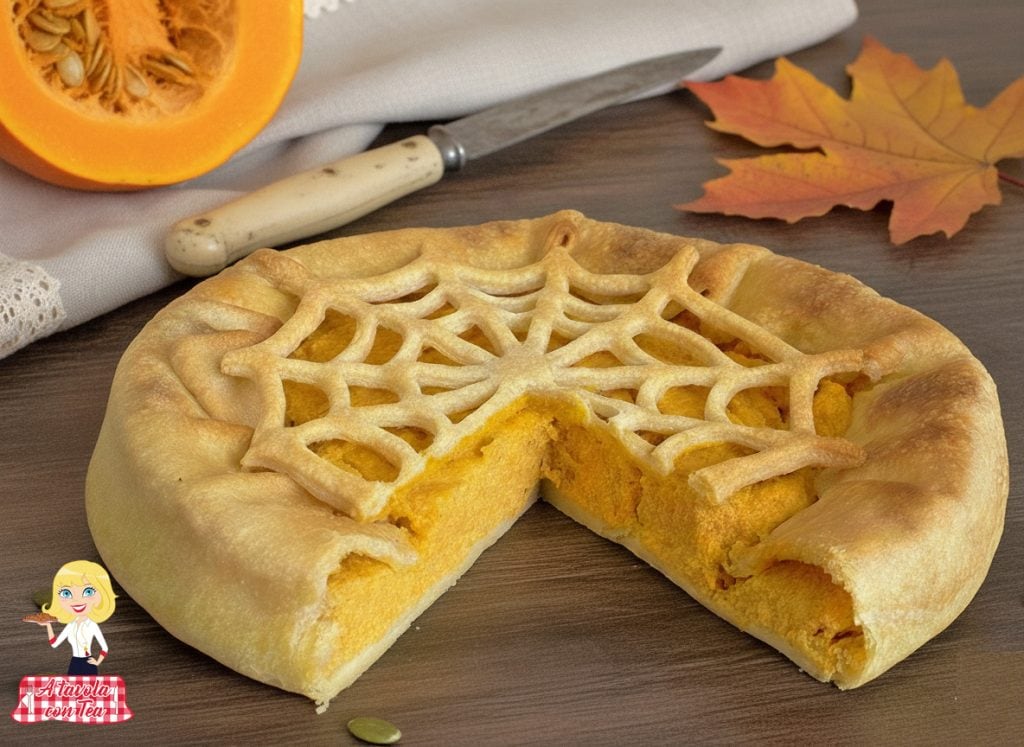
And here I am with the recipe that will make your guests tremble (with joy!): the Rustic Pumpkin Spiderweb Pie!
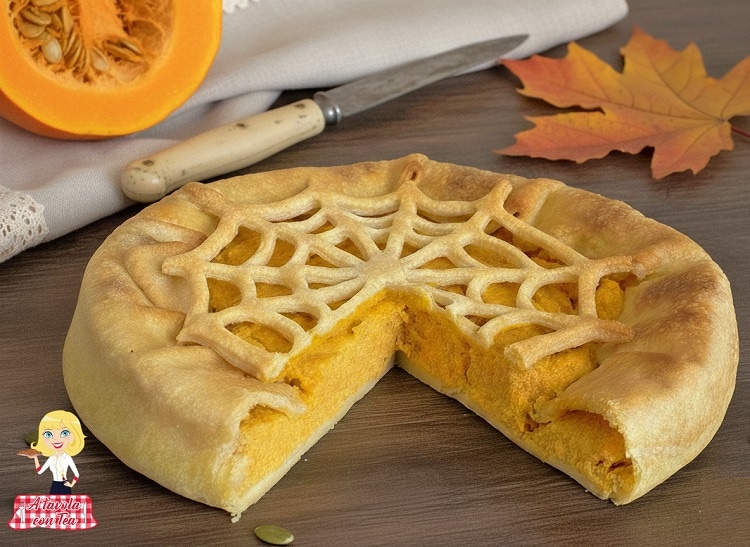
Forget the usual treats: this is a savory pie that celebrates the queen of autumn, the pumpkin, in a truly original and fun way. Imagine a velvety pumpkin, ricotta, and parmesan cream, enriched with aromatic notes of marjoram, enclosed in a fragrant puff pastry shell.
So far, so good. But the touch of magic, or perhaps “terror,” comes with the spiderweb decoration, made with the same dough and ready to host cute (or scary?) black olive spiders.
It’s a simple recipe to make but with a guaranteed WOW effect! Perfect for a Halloween buffet, an aperitif with friends, or simply to bring some cheer and mystery to an autumn dinner table.
I’ll guide you step by step, from cooking the pumpkin to creating the perfect spiderweb, up to the secret for edible spiders. Prepare your costumes and turn on the oven: your Rustic Pumpkin Spiderweb Pie is about to become the star of the evening!
- Difficulty: Very Easy
- Cost: Very Cheap
- Preparation time: 20 Minutes
- Portions: 6/8 PEOPLE
- Cooking methods: Oven, Stovetop
- Cuisine: Italian
Ingredients RUSTIC PUMPKIN SPIDERWEB PIE
- 2 rolls puff pastry (Alternatively shortcrust or homemade dough)
- 28.2 oz pumpkin (Already peeled and seeds removed)
- 1 cup cow's milk ricotta (Well-drained)
- 1 cup grated parmesan
- 3 eggs
- A few sprigs marjoram (Only fresh leaves)
- to taste salt
- 1 pinch black pepper
- milk (For brushing or egg yolk)
- black olives (pitted to make the spiders)
Tools
- Kitchen Scale
- Baking Pan
- Blender
- 2 Bowls
- Pastry Wheel
Procedure RUSTIC PUMPKIN SPIDERWEB PIE
Peel the pumpkin, remove the seeds and internal filaments, then cut it into slices about 0.39 inches thick. Arrange the pumpkin slices on a baking sheet lined with parchment paper. Lightly salt them.
Bake in a preheated fan oven at 356 °F for about 30-40 minutes, or until the pumpkin is tender and well cooked. Remove from the oven and let it cool.In a large bowl, place the cooked and warm pumpkin. Add the well-drained ricotta, eggs, grated Parmesan, marjoram leaves, salt, and pepper to taste.
Blend everything with an immersion blender (or in a food processor) until you get a smooth and homogeneous cream.Unroll the first puff pastry (or shortcrust/homemade dough) and place it in a round baking pan (about 9.5-10 inches in diameter) with its parchment paper. Prick the base with a fork. Pour the creamy pumpkin mixture onto the puff pastry base. Fold the edges of the puff pastry inward, forming a nice crust.
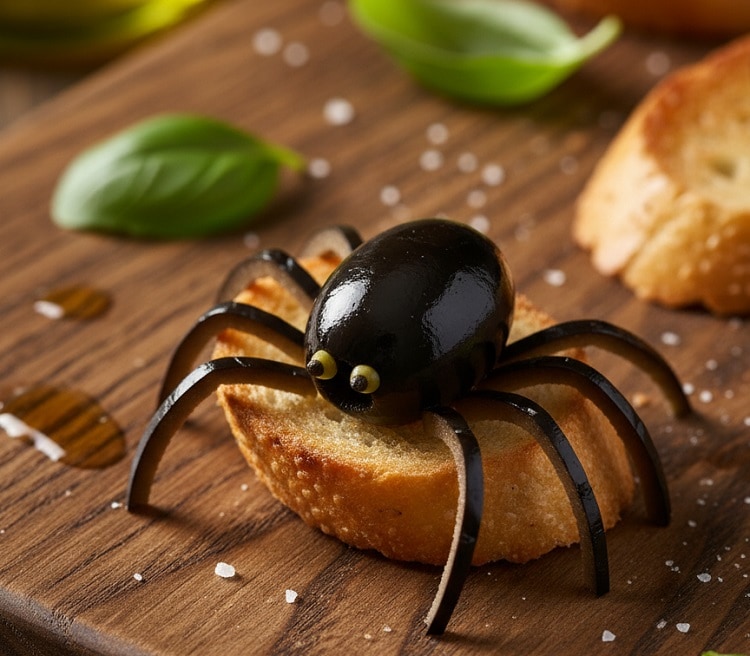
With the second roll of puff pastry, cut thin strips (about 0.2 – 0.4 inches wide). Arrange the strips on the surface of the pie to form a spiderweb: start with a cross in the center, then add diagonal lines and finally circles to connect them. Brush the edges of the pie and the web strips with a little milk (or a beaten yolk with a drop of milk for a more golden color).Bake in a preheated static oven at 356 °F for about 35-40 minutes, or until the puff pastry is golden and the filling is slightly set. Remove from the oven and let it cool before serving. For the spiders (optional): With pitted black olives, cut one in half (it will be the body) and others into thin slices (they will be the legs). Assemble the little spiders directly on the spiderweb before serving.
Detail of OLIVE SPIDER
Ingredient Notes and Substitutions
Puff Pastry: Puff pastry is the crispiest. If you prefer, you can use shortcrust pastry for a crumbly shell or homemade dough for a more rustic and controlled touch.
Pumpkin: Any variety of pumpkin is fine (e.g., Delica, Mantovana, Violina), the important thing is that it is flavorful and not too watery.
Ricotta: Use well-drained cow’s milk ricotta to avoid the filling releasing too much water. For a more intense flavor, you can use sheep ricotta (but in slightly lesser quantity, e.g., 200g, because it is more flavorful).
Marjoram: It gives a unique fragrance. You can substitute it with finely chopped thyme or rosemary.
Eggs: They are the main binding element. Not substitutable in this recipe.
Parmesan: Adds flavor and saltiness. You can substitute it with Grana Padano or Pecorino Romano (but the latter in lesser quantity due to its saltiness, e.g., 80g).
Storage
The Rustic Pumpkin Spiderweb Pie can be stored in the refrigerator, covered with plastic wrap or in an airtight container, for up to 2-3 days.
Reheating: Before serving, you can slightly warm it in a traditional oven at 302°F for 10-15 minutes to make the puff pastry crispy again.
Recipe Alternatives and Variations
Pumpkin and Sausage Savory Pie: Add 150g of crumbled and pan-fried sausage to the pumpkin filling before blending. This will give a more robust flavor.
Pumpkin and Mushroom: Prepare 100g of porcini mushrooms (fresh or frozen) or sautéed champignons and add them to the filling for a woodsy flavor.
Spicy Version: Add a pinch of chili powder or finely chopped fresh chili to the pumpkin mixture for an unexpected kick.
“Monstrous” Decoration: Instead of olive spiders, you can create “mozzarella ghosts” (using a round cookie cutter and a small cut for the tail) or “skulls” of puff pastry using a small skull-shaped cookie cutter to place on the spiderweb.
Perfect Uses and Pairings
This savory pie is a true autumn joker!
Halloween Buffet: It’s the queen of every Halloween buffet, perfect for impressing guests.
Main Dish: It can be served as a main dish, maybe accompanied by a simple green salad.
Picnic or Outings: Great even cold, perfect for an autumn picnic.
Wine Pairing: Pairs well with a light and aromatic white wine, such as a Vermentino or Greco di Tufo, which balance the pumpkin’s sweetness.
Origins: The Pumpkin, a Symbol of Autumn and Celebration
The pumpkin, the undisputed protagonist of this pie, has a millenary history. Originating from the Americas, it was introduced to Europe after the discovery of the New World and has since become a staple of autumn peasant cuisine. Rich in properties and versatile, the pumpkin has always been associated with the harvest festival and, more recently, the celebration of Halloween. The idea of the spiderweb is a modern and creative derivation of the classic pastry shell that encloses savory fillings, turning a simple rustic dish into a themed work of art.
The Secret to a Perfect Spiderweb (Without Stress!)
Creating the spiderweb may seem difficult, but it’s actually a piece of cake! The trick is to roll out the second pastry well and use a smooth or serrated pastry cutter to get regular strips. Always start with the main lines (the cross), then add the diagonal ones, trying to maintain uniform spacing. To join the strips, you can press lightly with your fingers or, if you prefer a more defined touch, place small pastry circles at the junction points of the strips, like real knots in the web. The decoration with olive spiders is the icing on the cake, simple yet effective!
FAQ (Questions and Answers)
1. Can I prepare the pumpkin filling in advance?
Answer: Absolutely yes! You can prepare the pumpkin cream even one or two days in advance and store it in the refrigerator in an airtight container. You will assemble the pie only shortly before baking it, saving time.
2. If I don’t have an immersion blender, how can I make the cream smooth?
Answer: You can mash the cooked pumpkin with a fork until it becomes a puree. Then, incorporate the other ingredients and mix vigorously with a hand whisk. The cream will be slightly less velvety but still delicious.
3. Can I freeze the already cooked savory pie?
Answer: Yes, once cooked and completely cooled, you can freeze the rustic pie (without the olive decorations). Wrap it well in plastic wrap and then in aluminum foil. It keeps in the freezer for about 1-2 months. To defrost, leave it in the refrigerator for several hours or overnight, then reheat in the oven.
