
Shortcrust pastry (pâte brisée). We often prefer to buy it ready-made, but making it at home takes practically no time. It is a French base made with the same ingredients as puff pastry, but unlike the latter it is not only much easier to prepare, it also requires very little time. I myself almost always buy ready-made puff pastry because I think “the juice isn’t worth the squeeze” — too laborious to prepare, and in the end we use it as a base for other recipes. Brisée, on the other hand, is incredibly simple and ready in a few minutes. So if you have little time but want to create something completely with your own hands, this is the basic preparation for you. And it only needs 3 ingredients we commonly always have at home.
It can be used for many recipes: savory pies, such as the famous quiche Lorraine, tartlets for your aperitifs or standing dinners, pasta timbales, to wrap a roast and cook it in a crust, but also for sweet preparations instead of shortcrust pastry. It can also be customized according to your tastes; you’ll find how at the end of the recipe.
Once you learn this basic recipe you won’t buy it anymore!
- Difficulty: Very easy
- Cost: Very inexpensive
- Preparation time: 10 Minutes
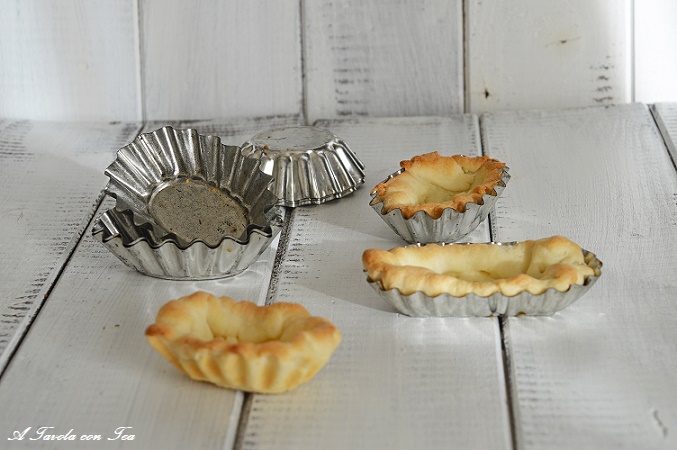
- Portions: 1 savory pie or 12 tartlets
- Cuisine: Italian
Ingredients
- 7 tbsp Butter (cold)
- 1 2/3 cups Type 00 flour
- 3 tbsp + 1 tsp Ice-cold water
- 1 pinch Salt
Preparation
As always, I remind you that to obtain a good result it is important to always use high-quality ingredients, both the flour and the butter, especially because this preparation is essentially made of just these two ingredients.
For flour, type 00 is perfectly fine. The butter, which is perhaps the most important element, according to the classic recipe must be cold from the refrigerator, as must the water you will use.Whether you proceed by hand or use a food processor (blade mixer), it is essential not to overwork the dough, otherwise it will warm up and the result will be compromised: the dough will become sticky and practically impossible to work.
Put the flour, the butter — which must be absolutely cold from the refrigerator — and a pinch of salt in the food processor and pulse for a few seconds. Then add the water, which must also be cold (better if iced), and continue to pulse for about 2 minutes. You will see a smooth and compact dough form. Your shortcrust pastry is already ready!
Remove it from the mixer and quickly knead it by hand to shape it into a loaf (not a ball so it will be easier to roll out later) and cover it with plastic wrap. Let it rest in the refrigerator for about 30 minutes before using. After the resting time, take the dough and roll it out with a rolling pin to the thickness needed for your chosen use. Consider that if your dough will become the base for a pie, the thickness should be about 3/16 inch (≈4–5 mm); if instead you need it to make tartlets or small pies it should be thinner, about 1/8 inch (≈3 mm).Depending on the recipe you intend to make, you will proceed differently. As with shortcrust pastry, cooking brisée can be traditional (as for quiche Lorraine) or blind-baked (as for tartlets filled with Russian salad or other preparations that do not require further baking); in the latter case only the base is baked and then filled cold.
For TRADITIONAL BAKING: once you have taken the dough out of the refrigerator, place it on a lightly floured work surface and roll it out with a rolling pin. You should obtain a sheet about 3/16 inch (≈4–5 mm) thick. Lay it into the tart pan, remove the excess dough by rolling the pin over the edges to level the surface. Place the chosen filling inside and bake in a preheated static oven as indicated in the recipe. Usually at 356°F for about 50 minutes. The edges should be slightly golden.
For BLIND BAKING: remove the dough from the refrigerator and roll the brisée with a rolling pin to about 3/16 inch (≈4–5 mm) thickness, and line a buttered and floured pan. Press the dough well against the edges of the pan with your fingers and remove the excess dough by rolling the rolling pin over the edges. At this point prick the bottom of the dough with the tines of a fork, cover it with parchment paper and place a layer of dried beans on top to weigh it down. Bake at 356°F for about 15–20 minutes. Remove from the oven, discard the beans and parchment paper and let it cool.
Notes
You can flavor the dough with aromatic herbs, spices or citrus zest (for sweet preparations). The most common is lemon: simply grate the zest of half a lemon together with the flour before proceeding with the dough.
Once ready it can be stored in the refrigerator for 2 days or frozen raw and kept for 1 month. When you want to use it, simply let it thaw at room temperature.
