
Shortcrust Pastry Foolproof Basic Recipe: the secret of the 3-2-1 method
How to make perfect shortcrust pastry at home: tips and tricks to avoid mistakes
Shortcrust Pastry: the Foolproof Basic Recipe (3-2-1 Method)
If you’re taking your first steps in the magical world of pastry, shortcrust pastry is the first real challenge to face. It’s a wonderful basic dough, unleavened, that opens the door to endless desserts: from classic jam tarts to crunchy cookies and elegant fresh fruit tarts.
Today I want to share with you my beloved version, the well-tested one from my mom Titti. Since I was a child she always repeated a magic sequence: 3 – 2 – 1. These are not random numbers, but the perfect proportions of flour, butter and sugar to achieve an impeccable result.
I know, shortcrust can be intimidating: “What if it becomes too sticky?”, “Why does it break while I roll it out?”. Don’t worry, I’ve been there too!
Often the mistake is simply overheating the dough or not respecting the resting times. In this guide I will reveal all the little tricks I’ve learned over the years to obtain an elastic, fragrant and easy-to-handle dough.
Once you’ve learned this base, you won’t leave it anymore!
- Difficulty: Very easy
- Cost: Very inexpensive
- Preparation time: 15 Minutes
- Cooking time: 45 Minutes
- Portions: Tart diameter 9 / 9.5 in – alternatively: 6 mini tarts or 12 small pastries
- Cooking methods: Oven
- Cuisine: Italian
Shortcrust Pastry Ingredients
- 2 1/2 cups All-purpose flour
- 7 oz Butter (cold)
- 1/2 cup Sugar
- 1 egg
- 1 packet Vanillin
- 1 pinch Salt
Tools
- Kitchen scale
- Bowl
- Rolling pin
How to make perfect shortcrust pastry at home: tips and tricks to avoid mistakes
In a large bowl (or in a stand mixer fitted with the paddle), sift together the flour with the sugar and a pinch of salt. Add the cold butter cut into small cubes. Work quickly with your fingertips until you get a sandy, crumbly mixture. 💡 Tip: Don’t work the dough too long to avoid warming the butter!
Add the vanillin and the egg. Knead quickly until the ingredients come together into a compact, elastic dough. If the dough becomes sticky, don’t add flour: put it immediately in the fridge to firm up.
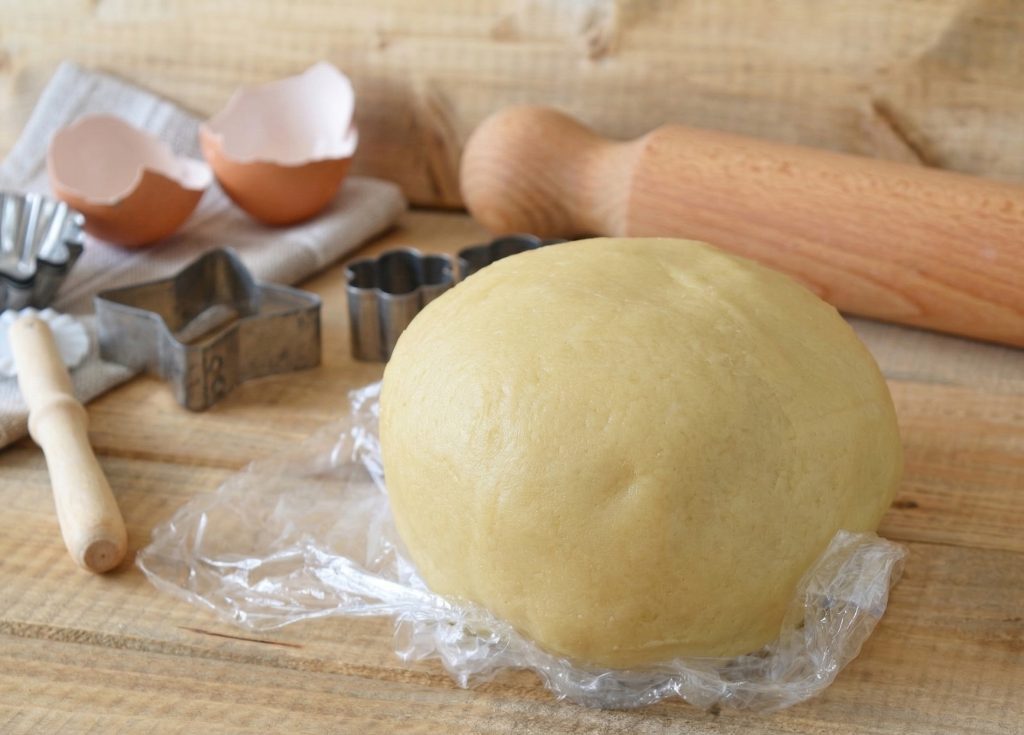
Flatten the dough into a disk (not a ball, so it cools evenly) and wrap it in plastic wrap. Let it rest in the refrigerator for at least 30 minutes.
Take the dough out and roll it on a lightly floured surface with a rolling pin to a thickness of about 7–8 mm (about 1/4–5/16 in). Place it in a tart pan (preferably with a removable bottom!).
For filled tarts: Add jam or filling and bake in a conventional oven at 338°F for about 45 minutes.If you need a base to be filled cold with cream and fruit: prick the bottom with a fork, cover with parchment paper and dried beans (or pie weights). Bake at 356°F for 15–20 minutes, then remove the weights and let cool.
Ingredient notes and substitutions
Butter: It’s the soul of shortcrust. It must be of excellent quality and strictly cold from the fridge. If you are lactose intolerant, you can use lactose-free butter, but avoid substituting with oil in this specific 3-2-1 recipe, as it would change the crumbly structure.
Sugar: I use granulated sugar for a more “crunchy” and rustic shortcrust. If you want a finer texture similar to pastry cookies, you can replace it with the same quantity of powdered sugar.
Flour: Type 00 (all-purpose) is perfect because it has relatively little gluten, which helps keep the shortcrust crumbly and not chewy. You can replace 10% of it with almond flour for a more aromatic touch.
Storage
The raw shortcrust disk can be stored in the fridge for 2–3 days. You can also freeze it, well wrapped, for up to 2 months. The baked tart stays crisp for 3–4 days under a glass dome.
Extra tips
Toasting: If you use the shortcrust for cookies, try baking them until they are just golden: they will become even more delicious once cooled.
No waste: Use leftover shortcrust scraps to cut small decorations with cookie cutters to place over the tart!
1. Why does my shortcrust crumble while I roll it out?
It’s probably too cold or has too little fat/moisture. Let it rest 5 minutes at room temperature before rolling and work it lightly with your hands to restore elasticity.
2. Can I prepare the dough the day before?
Absolutely yes! In fact, a long rest in the refrigerator (even overnight) improves the stability of the shortcrust during baking.
3. Why do the tart edges sink in the oven?
It happens when the dough goes into the oven too “warm.” After lining the tin, put the tart pan back in the fridge for another 15 minutes before baking: the thermal shock will help the edges stay high.
