
Spiced Hot Chocolate: An Orange-and-Cinnamon Hug for Your Christmas
After the gargantuan lunch with relatives, there’s a ritual you can’t miss: meeting friends in the evening.
When you’re already full, what could be better than a nice cup of hot chocolate? There’s always room for it.
The challenge with homemade hot chocolate is avoiding two common problems:
Consistency: Often, it turns out too thin and lacks that velvety, “coffee-shop” texture.
Lumps: Clumps of cocoa or thickener can be annoying.
I’ll reveal the secret for a thick, lump-free hot chocolate already perfumed with Orange and Cinnamon:
Dry Powders First: You must mix the cocoa and the thickener (starch) with the sugar together with a little cold or room-temperature milk before heating. That’s the trick for a smooth, lump-free mixture.
Stir Constantly: Once on the heat, use a whisk and stir continuously over low heat.
The longer you cook it, the thicker it becomes.
This recipe will give you a stress-free moment of pure pleasure.
It’s the perfect finishing touch to enjoy quietly with friends.
- Difficulty: Very easy
- Cost: Very economical
- Preparation time: 5 Minutes
- Cooking time: 5 Minutes
- Portions: 1
- Cooking methods: Stovetop
- Cuisine: Italian
Ingredients for about 7 fl oz (≈200 ml):
- 7 fl oz milk (can be dairy or plant-based (almond, oat, rice) if you prefer)
- 1 oz dark chocolate (min. 70% for a more intense flavor)
- 1/2 tsp ground cinnamon
- to taste orange zest (preferably organic)
- 1 tbsp sugar (or sweetener of choice)
- 1 tbsp unsweetened cocoa powder
- 1 tbsp cornstarch (1 tablespoon (Maizena))
- 1 stick cinnamon stick (optional, for decoration)
Tools
- Kitchen scale
- Saucepan
- Hand whisk
Method: Magic in a Few Steps
In a heavy-bottomed saucepan (or a small milk pot, as you prefer!), combine the cornstarch, sugar, unsweetened cocoa and ground cinnamon. Whisk well to eliminate any lumps. It’s important that the dry powders are perfectly combined before adding the liquids.
Gradually add the cold milk, continuing to whisk to prevent lumps. Place the pan on medium heat. Stir constantly, especially on the bottom, until the mixture begins to thicken. You’ll see it become increasingly creamy and velvety. It should not boil vigorously, but simmer gently.
Once it reaches the desired thickness, remove the pan from the heat. Add the dark chocolate chopped into pieces (it will melt immediately thanks to the residual heat) and add the finely grated orange zest. Whisk vigorously until the chocolate is completely melted and the mixture is smooth and glossy.
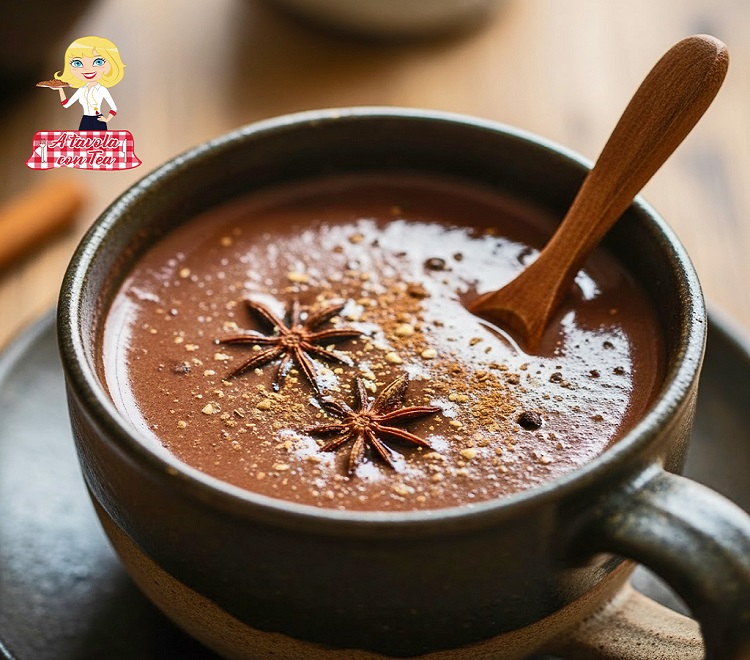
Pour our wonderful hot chocolate into a clear glass mug (to admire its inviting color!) and, if you want an even more Christmassy touch, garnish with a cinnamon stick. If desired, an extra dusting of ground cinnamon or a thin slice of dried orange will complete the work of art.
Notes on Ingredients and Clever Substitutions
Milk: I indicated cow’s milk, but this recipe works very well with plant-based milks too. Almond, oat or rice milk are great alternatives and give a slightly different but always delicious flavor. Canned coconut milk (the thicker variety) can provide extra creaminess and an exotic touch.
Dark Chocolate: 70% cocoa is ideal for an intense but balanced flavor. If you prefer a sweeter taste, use 50-60% chocolate. If you love the strong taste of pure cocoa, you can increase the dark chocolate percentage and slightly reduce the sugar.
Cornstarch (Maizena): It’s the secret ingredient for perfect thickness. Alternatively, you can use potato starch in the same amount, or a level teaspoon of all-purpose flour (which may leave a slightly floury aftertaste).
Sugar: Adjust according to your taste and the type of chocolate you use. You can replace it with honey, agave or maple syrup, or a natural sweetener. Start with one tablespoon and add more if necessary.
Orange zest: Use organic oranges to be sure the peel is free of treatments. Use only the orange part — the white pith is bitter!
Storage: A Pleasure to Reheat
This hot chocolate is best just made. However, if any is left over, you can store it in the refrigerator in an airtight container for up to 2 days. When ready to enjoy again, warm gently in a saucepan over low heat, stirring often. If it becomes too thick, add a splash of milk to bring it back to the desired consistency.
Creative Alternatives and Variations: Not Just Orange and Cinnamon!
The base of this hot chocolate is fantastic for experimenting. Here are some ideas to personalize it:
1 – Chili Hot Chocolate: For spice lovers! Add a pinch of chili powder (or a tiny piece of fresh chili) together with the spices. Be careful with quantities; start small!
2 – Mint Hot Chocolate: Melt a small square of mint-flavored dark chocolate together with the regular chocolate, or add a few drops of peppermint extract after cooking (about 2-3 drops).
3 – Rum or Grand Marnier Hot Chocolate: For an adult version! After turning off the heat, add 1 tablespoon of rum or Grand Marnier. The alcohol will evaporate a bit, leaving a delicious aroma.
4 – Hazelnut Hot Chocolate: Replace 50 ml of milk with 50 ml of heavy cream (about 1.7 fl oz — roughly 3 tbsp + 1 tsp) and add 1 tablespoon of hazelnut spread (like Nutella or gianduia) together with the dark chocolate.
Use and Pairings: The Perfect Moment
This hot chocolate is the queen of winter breaks!
Pure Delight: Enjoy it on its own in a warm mug, perhaps with a soft blanket and a good book.
With Cream and Marshmallows: If you want to go all out on sweetness, add a dollop of fresh whipped cream and a few marshmallows on top.
Sweet Pairing: It pairs divinely with dry cookies, rusks, pandoro or panettone. Also perfect for dipping churros!
Pour-Over Dessert: Served in small dessert glasses, it becomes a tasty and not-too-heavy after-dinner treat.
Origins and History of Hot Chocolate: A Journey Through Time
The history of hot chocolate is fascinating and ancient! Its roots go back to the Maya and Aztec civilizations, where cocoa was not only a drink but a sacred and ritual element. It wasn’t sweet like ours, but bitter, spiced with chili and other herbs, often used in religious ceremonies. Christopher Columbus was the first European to come into contact with it, but it was the Spanish, in particular Hernán Cortés, who brought cocoa to Europe in the 16th century.
There the drink transformed: initially reserved for the aristocracy and royal courts, it then slowly spread, sweetened with sugar and flavored with vanilla and cinnamon. The first “chocolate houses” were born in London and Paris in the 17th century, becoming places of meeting and social life. From an aristocratic and medicinal beverage, hot chocolate has over time become a symbol of comfort, warmth and conviviality, loved all over the world, especially during the cold months. Our orange-and-cinnamon version is a tribute to this rich historical tradition, reinterpreted with a modern, festive touch.
Extra Tips to Engage Your Audience
Add a “step-by-step” gallery for photos: “Not sure how it’s done? Check my step-by-step shots so you don’t get it wrong!” This could encourage visitors to stay longer on the page.
Section “Why You’ll Love It”: “This Spiced Hot Chocolate is the recipe you’ve been looking for because:
It’s ready in less than 10 minutes!
It uses ingredients you probably already have in the pantry.
It instantly puts you in the Christmas mood.
Perfect even for those who don’t love cooking!”
FAQ (Questions & Answers)
1. Can I prepare the hot chocolate in advance?
Yes, you can prepare it a few hours in advance and store it in the refrigerator. When ready to serve, warm it gently over low heat, adding a splash of milk if needed to thin it slightly.
2. What can I use instead of cornstarch?
You can replace cornstarch with potato starch using the same amounts. A level teaspoon of all-purpose flour can also work, but cornstarch or potato starch ensures a silkier, lump-free texture.
3. Can I make it thicker or thinner?
Of course! If you prefer it thicker, increase the cornstarch by half a teaspoon. If you want it thinner, reduce the cornstarch or add a little extra milk during cooking until you reach the desired consistency.
