
Ligurian stewed tripe, the traditional recipe that feels like home
When you think of grandma’s recipes—the ones that warm the heart and make you feel at home—Ligurian stewed tripe is surely among the first to come to mind.
This dish, simple and genuine, is a true symbol of peasant cuisine, able to transform humble ingredients into flavor masterpieces.
Don’t be fooled by its “rustic” reputation: preparing tripe is an art that requires patience and love, but the result rewards every effort.
In Liguria, tripe is not just a meal but a story passed down from generation to generation.
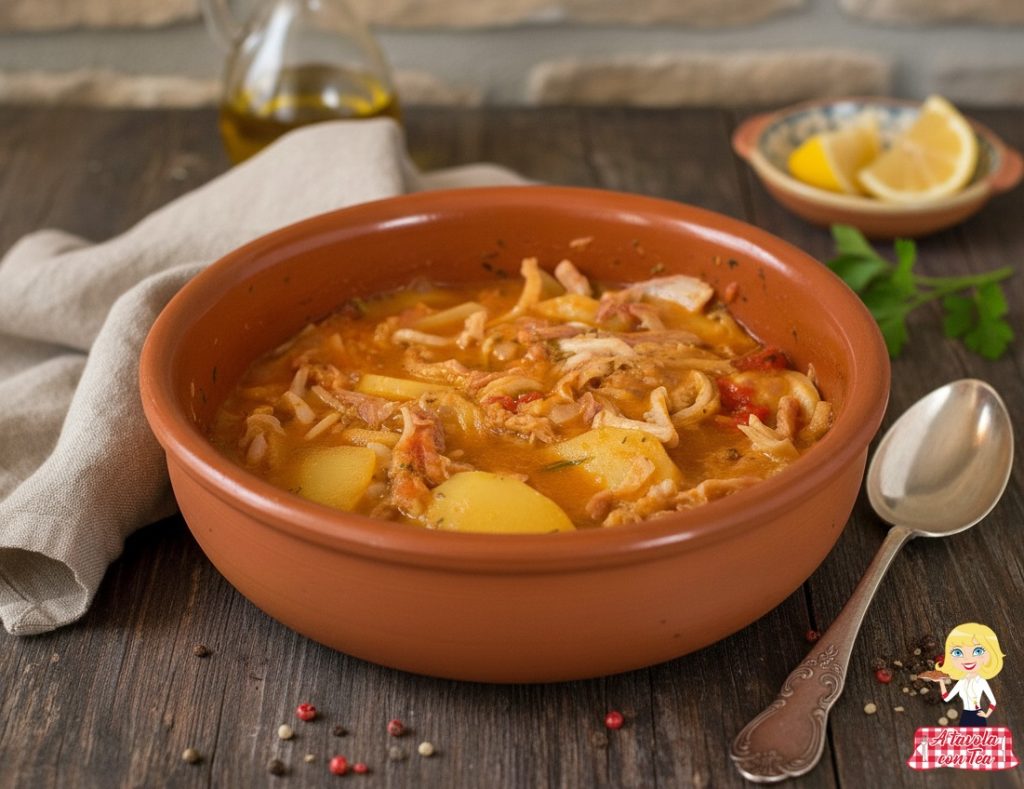
It is made with a few simple ingredients, where the vegetables in the soffritto and the aroma of rosemary enhance the unique flavor of mixed tripe—the kind the butcher calls “tripe alla ligure.” Potatoes, when added, make it even more comforting, almost a one-dish meal.
Of course, for purists the color should be slightly pink so as not to cover the authentic taste of the tripe, but everyone can adapt the recipe to their own preference.
Let yourself be guided on this culinary journey to discover a dish that smells of the past but is perfect to enjoy today, perhaps with a generous sprinkling of grated Parmesan and a grind of fresh pepper.
Get ready to bring a piece of gastronomic history to the table.
- Preparation time: 15 Minutes
- Cooking time: 1 Hour
- Portions: 4
- Cooking methods: Stovetop
- Cuisine: Italian
Ingredients STEWED TRIPE LIGURIAN-STYLE
- 1.5 lb tripe (mixed)
- 1 onion
- 1 stalk celery
- 1 carrot
- 1 bunch parsley
- 1 glass dry white wine
- 4 potatoes
- 2 peeled tomatoes
- 1.8 oz pine nuts
- 1/2 bouillon cube (vegetable)
- rosemary (a sprig)
- to taste salt
- 1 pinch black pepper
Tools
- Unglazed earthenware pot
- Spoon
- Grater
- Ladle
Procedure STEWED TRIPE LIGURIAN-STYLE
Prepare a soffritto in an earthenware pot (or a heavy-bottomed pot) with finely chopped onion, celery, carrot and parsley.
Add the mixed tripe cut into strips (you can have your butcher prepare them for you). Brown them well, then deglaze with a glass of dry white wine. Let the wine evaporate completely.
At this point, add sliced potatoes if you want a heartier dish, and the peeled tomatoes (one or two depending on how “red” you want the sauce).
Continue cooking for at least 45 minutes, adding a little broth if the sauce becomes too dry. Add the rosemary and pine nuts and continue cooking for another 15 minutes. Adjust salt and pepper.
Turn off the heat and let the dish rest for at least 15 minutes. Serve the tripe hot, with plenty of grated Parmesan and fresh ground pepper if you like.
Notes on ingredients
For the tripe, ask your butcher for “tripe alla ligure,” a mix of different parts such as the cuff and foiolo. Make sure they are already pre-cooked to shorten the times.
Peeled tomatoes are the traditional choice, but you can also use tomato purée for a smoother sauce. Adjust the quantity to obtain a slightly pink sauce.
Potatoes are optional, but they add body and a touch of sweetness that pairs well with the dish.
Storage
Ligurian stewed tripe keeps in the refrigerator in an airtight container for 2-3 days. In fact, it tastes even better the next day because the flavors have had time to meld perfectly. You can also freeze it for a couple of months.
Variations and alternatives
Tripe with beans: if you love legumes, you can add precooked borlotti beans. Add them in the last 15-20 minutes of cooking.
Without tomato: for a milder flavor and in line with some traditions, you can omit the tomato and cook the tripe in white only.
Tripe with vegetables: in addition to carrot, celery and onion, you can enrich the soffritto with a clove of garlic or even a handful of fresh peas in the last minutes of cooking.
Pairings and serving
This is a dish best enjoyed on its own, perhaps accompanied by slices of toasted homemade bread, perfect for making the “scarpetta”. For a wine pairing, choose a light, fresh Ligurian red wine, such as Pigato or Rossese di Dolceacqua.
Origins and history of the recipe
Ligurian stewed tripe has its roots in “cucina di recupero” (resourceful cooking). Historically, tripe—the cow’s stomach—was considered a poor ingredient and was used to create nutritious and hearty dishes. Each region of Italy has its own recipe, but in Liguria they stand out for the simplicity of the ingredients and the presence of typical local aromas, such as rosemary and olive oil.
FAQ (Questions & Answers)
1. Why should the tripe rest after cooking?
Resting for 15-20 minutes is essential because it allows the flavors to settle. Tripe, like other meats, benefits from a short rest off the heat, becoming more tender and flavorful.
2. Do tripe give off a strong smell during cooking? How can I reduce it?
If the tripe is well cleaned and pre-cooked, the smell will not be a problem. For extra safety, you can wash it in water and vinegar before cooking. During preparation, adding rosemary and white wine will help create an inviting aroma.
3. Can I use only one type of tripe, for example Moncalieri tripe?
Of course, you can use a single type of tripe, but the combination of different parts, as proposed in the recipe, guarantees a richer and more complex texture and flavor.
